
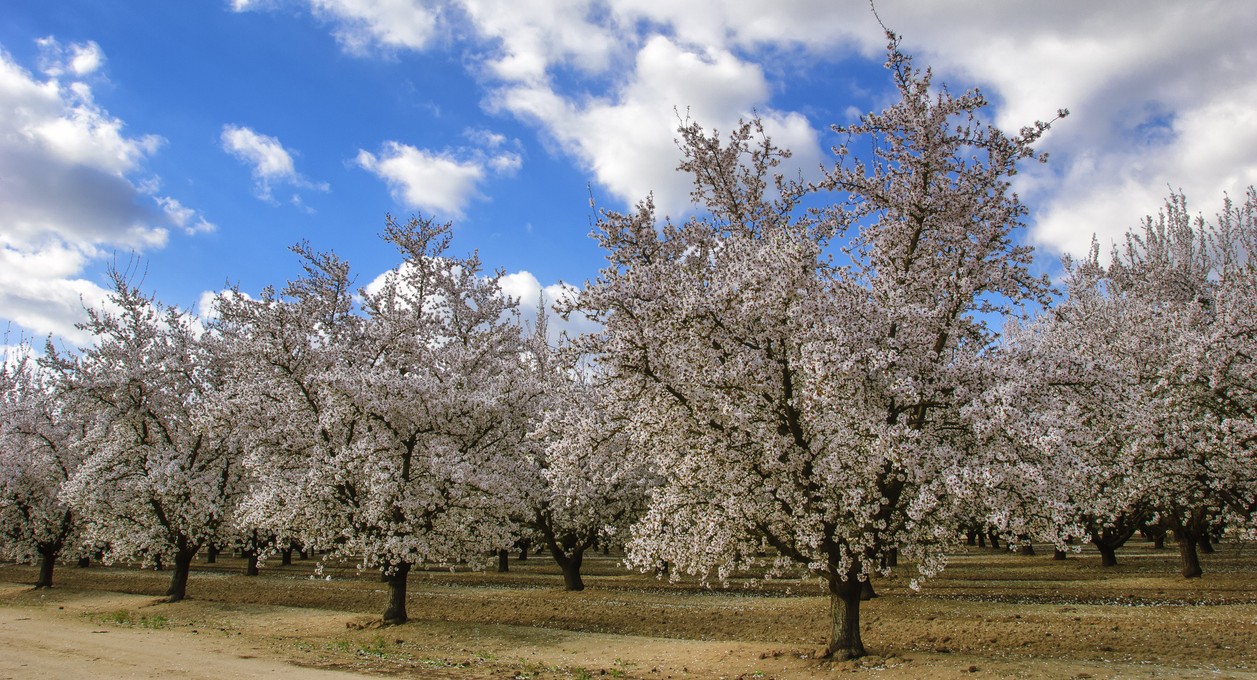
Altman claims 38,000 ChatGPT queries equal one almond’s water use, but experts say public data center water data is too sparse to verify his math.
By Rachel Becker, Cal Matters
This story was originally published by CalMatters. Sign up for their newsletters.
As Gov. Gavin Newsom weighs whether to require data centers to disclose how much water they use, OpenAI CEO Sam Altman says concerns over AI’s water use don’t hold “up to any scrutiny.”
On the Sources Podcast with Alex Heath released Tuesday, Altman said that it takes 38,000 ChatGPT queries to use as much water as producing a single almond in California.
“If you look at a modern very large data center, it uses the equivalent amount of water as an office building in terms of, you know, people like running the sinks and the toilets and whatever,” Altman told Heath.
The problem, experts say, is that it’s impossible to verify those numbers given what’s public about the secretive industry.
“The information we have is so limited,” said Shaolei Ren, a professor of electrical and computer engineering at UC Riverside.
Far too many factors affect how much water data centers use to boil it down to any one convenient statistic, Ren said, rattling off a handful of variables: the data center’s location, the temperature outside, the type of cooling system, the length of the prompt, the reasoning required, the output. All affect how much water the data center uses.
“This is the whole reason that these bills need the governor’s signature,” said Michael Kiparsky, director of the Wheeler Water Institute at the UC Berkeley Center for Law, Energy, & the Environment. “There’s no published data — certainly not for California — and what is public seems all over the place.”
Over the past two weeks, California lawmakers passed two bills by Assemblymember Diane Papan aimed at increasing transparency; both now await Newsom’s signature.
One would require operators to report their water sources and usage when seeking business permits. The other would block local governments from approving new data centers unless developers disclose their water plans. They’d also have to pay for any water upgrades needed to connect to the local supply.
It’s the San Mateo Democrat’s second attempt at more transparency around data center water use. Newsom vetoed her bill last year, saying he was “reluctant to impose rigid reporting requirements … without understanding the full impact on businesses and the consumers of their technology.”
The heavy-hitting tech industry and business groups again opposed the bills. But now, as data center fights erupt across the state and local governments ban the facilities outright amid a wider bipartisan backlash, the question of how much water data centers really use is gaining urgency.
What the data actually shows
Regardless of whether it takes thousands of queries to match the water needed to produce a single almond in California (a number that varies substantially over time and space, according to a 2019 study), the Congressional Research Service says data centers are using more water than they used to.
One study reported the facilities directly used about 17 billion gallons in 2023, up from 5.6 billion gallons in 2014. Another report found that hyperscale data centers could use 150 billion gallons of water from 2025 to 2030 — which is as much water as 4.6 million households use in the U.S. in a year.
Annual water use isn’t the whole story, Ren cautioned. The hottest days, when data centers require the most cooling, can substantially increase peak water demand, according to Ren’s research, which is under review by a scientific journal and available online as a preprint.
“For community water systems, the peak capacity is more important because they need to be designed and built to accommodate the peak demand at all times, similar to our power grid,” Ren said.
Ren’s team found that data center cooling systems could call for 697 to 1.45 billion more gallons of peak water capacity per day. It’s comparable to New York City’s average daily supply, the study says. And unlike irrigation water typically used for farms, water for data centers is often treated, potable water from public water systems, the team reported.
That’s a problem, because water systems across the country — and certainly in California — are “aging, fragmented, and/or financially constrained, thus lacking sufficient available capacity to meet the additional peak water demands of large data centers.”
The researchers pointed to examples in Georgia and Virginia where water suppliers worried they “just don’t have the water” to accommodate peak demand from the data centers drawing from their systems simultaneously.
Ren said water use could drop by as much as 50% if data centers opt for less water-intensive cooling systems, like dry cooling, but there are tradeoffs — such as increased energy needs.
And that, too, requires water.
This article was originally published on CalMatters and was republished under the Creative Commons Attribution-NonCommercial-NoDerivatives license.

