
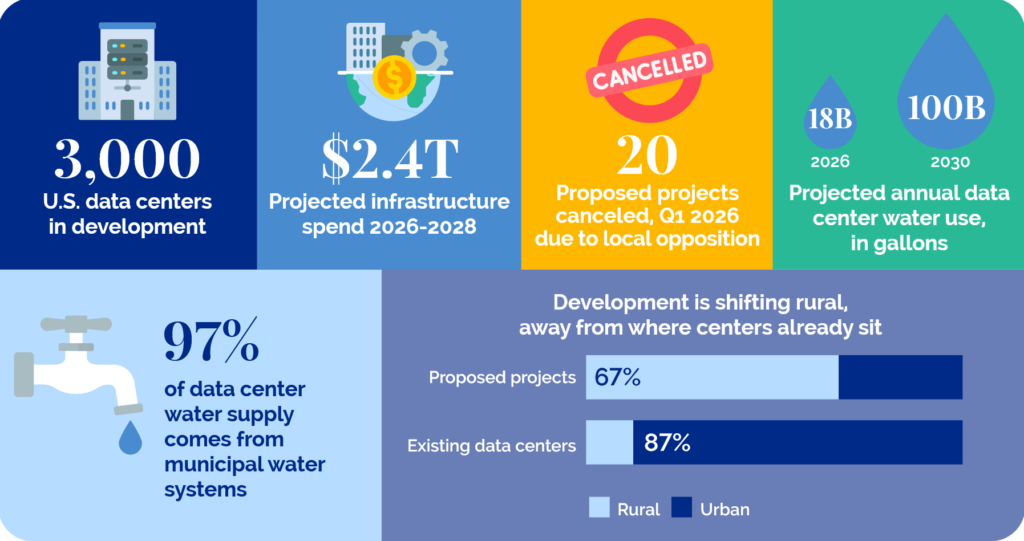
Data centers are a major topic in 2026, with near-daily news coverage. They are being built in the United States at an unprecedented pace and scale, with nearly 3,000 projects in development and an estimated $700 billion in investment this year alone. But concerns about their impacts have fueled significant resistance, prompting some proposed projects to be canceled and cities and counties across the country to adopt construction moratoriums. Water use is often among the chief concerns.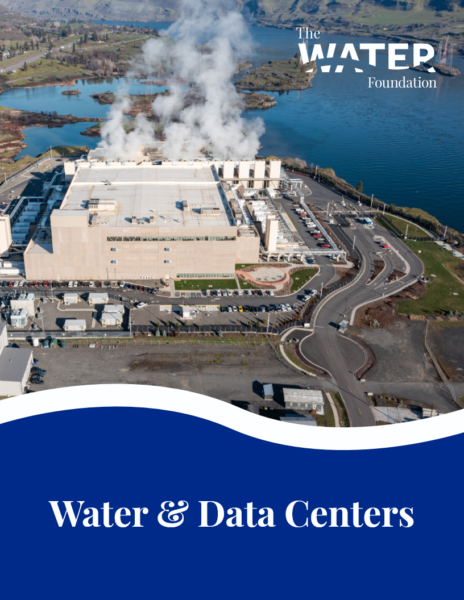
A new white paper from the Water Foundation says those concerns are justified. Its white paper explains the water-related impacts of data centers and outlines how communities and funders can work together to protect watersheds, strengthen water infrastructure, and safeguard public health. It also recommends ways to improve data center water efficiency and reduce water use.
Data centers use water mainly to cool heat-generating servers, and the amount they consume depends largely on cooling system design. Direct water use is now estimated at 17 billion to 19 billion gallons a year and is projected to reach 60 billion to 110 billion gallons by 2030. Their indirect water footprint from electricity use may be even larger; one analysis estimated that data center power demand required 211 billion gallons of water in 2023. Actual impacts vary, however, depending on location, the types of water used and discharged, and the condition of the infrastructure supporting the facility.
Since 2022, two-thirds of new data center construction has occurred in areas already facing high water stress. Most data centers rely on municipal water systems, which may need expensive upgrades to meet new demand—costs that often fall on residential ratepayers rather than developers. Heavy water use can strain watersheds, while discharge from data centers can harm local waterways through heat pollution and contaminants.
The paper offers five recommendations for addressing and mitigating the water-related harms of data center development:
- Center communities in decision making. National organizations should provide technical assistance and capacity building so communities can assess proposed projects, oppose them if needed, or negotiate enforceable community benefits.
- Match siting and design to local conditions. Projects should reflect local water and energy realities, favoring mild climates, recycled-water access, appropriate cooling systems, and consideration of cumulative impacts.
- Require greater transparency. Companies should publicly report projected and actual water use, consumption, and peak demand so policymakers and communities can understand regional and seasonal impacts.
- Make developers pay the full cost. Developers should cover infrastructure upgrades, new system capacity, and broader watershed benefits tied to their facilities.
- Protect community self-determination. Development should not move faster than communities can evaluate impacts and adopt protections; moratoriums can provide that time.
The paper urges officials and community groups to evaluate data centers in context: to assess local and cumulative impacts, decide whether a project should be built, and, if it proceeds, determine what protections and community benefits to require.
The paper concludes, “The rapid expansion of data centers is a crucial challenge for the water movement. It is also an opportunity to create a new answer to the question of who bears the cost of industrial water use, and who gets a say in that decision. How advocates and practitioners respond now will shape not only local water outcomes but broader norms around corporate accountability and environmental justice for years to come.”
Click here for the full report. | Click here for a two-page summary.

