
The companies affected by a water curtailment order want a due process hearing and compensation for what they call the taking of their water rights.
By Alan Riquelmy, Courthouse News Service
Three California companies argued Tuesday before a Ninth Circuit panel that the state wrongly curtailed their water rights and denied them a due process hearing and compensation.
Los Molinos Mutual Water Company, Stanford Vina Ranch Irrigation Company and Peyton Pacific Properties appealed a lower court’s decision, arguing the State Water Resources Control Board characterized an adjudicatory action as legislative, bypassing their constitutional rights.
“They made findings of fact that the diversions had to cease and were unreasonable,” said the companies’ attorney Jackson Minasian, adding: “They’re going to keep doing this.”
The three-judge panel made no decision Tuesday.
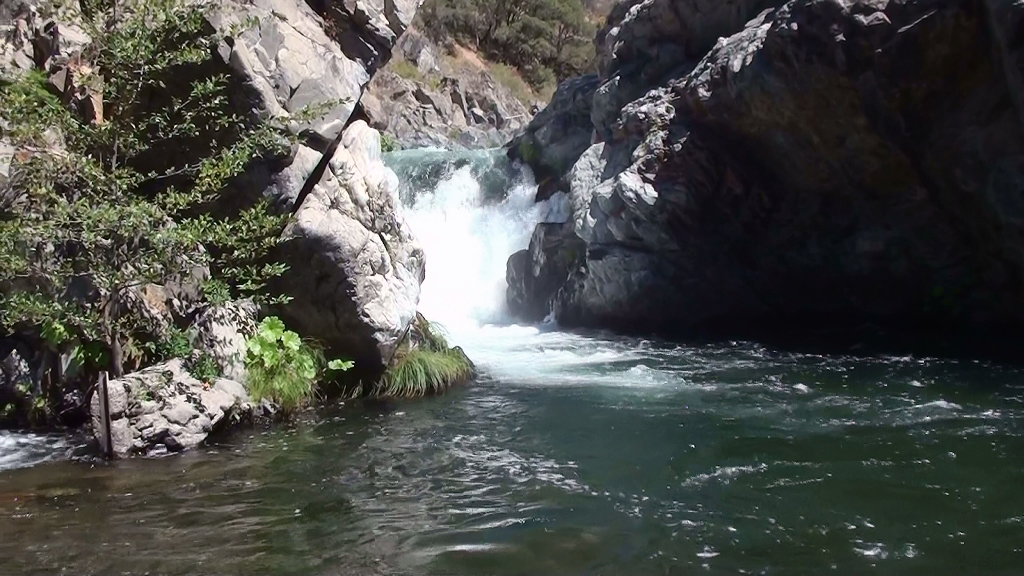
The appeal focuses on water rights held in Mill and Deer creeks in Tehama County. Those rights allow the companies to divert water for some 11,000 acres of land with orchards, pasture and other uses.
In April 2021, Governor Gavin Newsom declared a drought state of emergency, leading state agencies to take action and protect salmon, steelhead and other fish.
Minasian said California has stopped the diversions four times in seven years. The state will have future droughts, which means it will again issue curtailment orders for the water. When that happens, Minasian wants a due process hearing and compensation for the taking of the water.
“The salmon and steelhead come back every year,” Minasian said. “They’re taking it for free and they keep doing it.”
In court documents, Minasian argued the three-judge panel should create restrictions on the state’s ability to frame an action as “quasi-legislative,” which enables it to take property from small groups without due process or paying for it.
The state ordered the companies to cease using their water rights, which Minasian called adjudicatory. The use of that legal pathway warrants a hearing.
U.S. Circuit Judge Danielle Forrest, a Donald Trump appointee, noted that the lower court determined the curtailment of water rights wasn’t a taking. Minasian said the decision was wrongly decided, adding it had little bearing on the appeal.
U.S. Circuit Judge Lawrence VanDyke, also appointed by Trump, called Minasian’s taking claim convoluted. He said a simpler solution would have led the companies to state court.
VanDyke also said the companies wanted the appeals court to rule on a future action the state could take, which Minasian said would occur again, as California will continue to face droughts.
Deputy Attorney General Margaret Tides agreed with that.
“There will be a drought in California,” she said, adding that the state water board has the authority to issue curtailment orders. “We’re talking weather and water.”
Tides told the appeals panel that it was the fourth court to hear the same arguments. One plaintiff asked for the same relief — a due process hearing and compensation — after the state water board enacted curtailment orders in 2014.
“They lost that case,” she added.
The company also failed to convince an appellate court, and the U.S. Supreme Court declined to review the case. Then, in 2021, the plaintiffs in this case filed suit in federal court. The lower court rejected their argument as well, Tides said.
The curtailment order was a legislative action, she added, meaning no due-process hearing was required. Tides noted that the companies want compensation — a claim they’re able to seek.
“It’s not that they can’t bring that claim, it’s that they have to do it in state court,” she added.
Given a chance to rebut, Minasian said droughts will return to California. It’s why his clients are asking for relief now, which would provide due process hearings and compensation for future takings.
“We know this is the way they’re going to do it,” he added.
The panel was rounded out by U.S. Circuit Judge John Owens, a Barack Obama appointee.

