
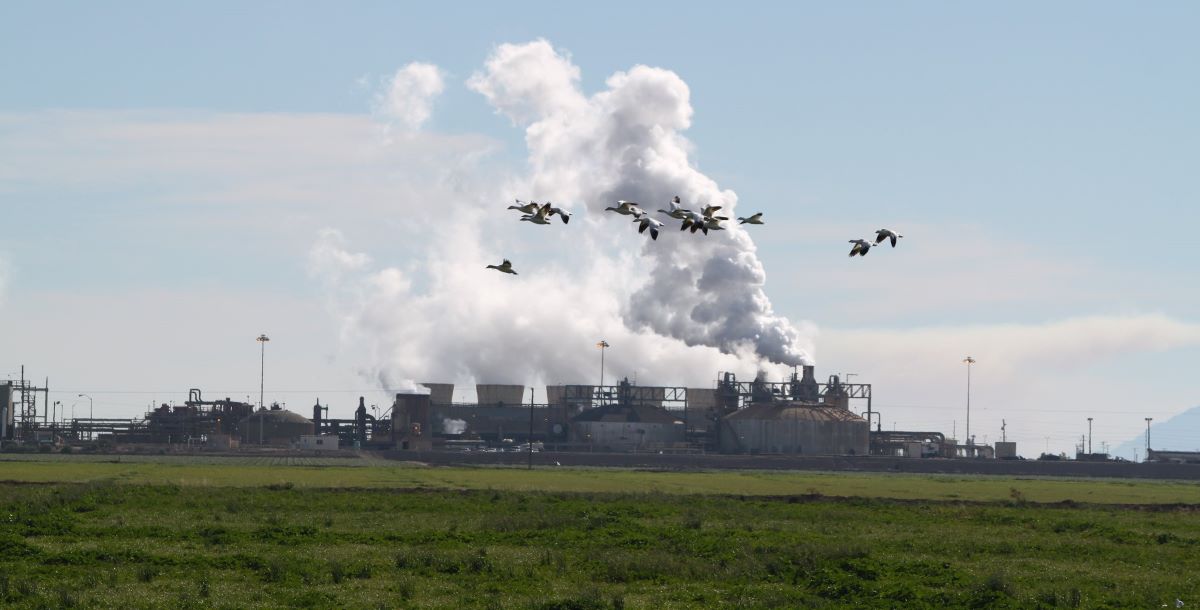
Controlled Thermal Resources, the project behind Hell’s Kitchen, says it can generate geothermal energy while also extracting lithium, though that has not been tested on a large scale yet.
By Quinn Welsch, Courthouse News Service
A proposed geothermal plant and lithium mine in California’s Imperial County will have to go back to the drawing board for further environmental analysis and review after California Courts of Appeals panel found the county did not sufficiently address environmental concerns.
The Comité Civico del Valle, a nonprofit environmental justice group based in Imperial County, filed a lawsuit against the county over its permitting process for the project, dubbed Hell’s Kitchen. Situated near the Salton Sea, the project would generate electricity from one of the largest geothermal fields in the world while simultaneously extracting lithium.
Comité Civico del Valle, joined by Earthworks, another environmental nonprofit, argued the Imperial County Board of Supervisors’ approval process of the original environmental impact report violated the California Environmental Quality Act, or CEQA.
The nonprofits took issue with the project’s potential impacts on water availability and air quality in the arid, agricultural region. They also claim the county failed to properly consult with local Native American tribes.
An Imperial County Superior Court judge ruled last year the proposed project did not violate environmental law, but the latest opinion from a California Courts of Appeals panel partially reverses that decision.
The three-judge panel found Imperial County ultimately failed to provide sufficient information in its environmental impact report, or EIR, to show enough water would be available in the county for the industrial project. Controlled Thermal Resources, the company behind Hell’s Kitchen, is also a defendant.
In a poetic flourish, the opinion began with a quote from Imperial County Judge Finis Farr in “The History of Imperial County,” published in 1918: “Its fruitful soil was caressed by the wasting water of an unregarded river and blossomed in perennial beauty.”
Associate Justice Julia Kelety, who authored the 55-page decision, highlighted the importance of water in the region.
“Water from the Colorado River is the sole source of fresh water for the county of Imperial and in particular, for agriculture in the Imperial Valley,” she wrote. “That water supply is not unlimited, and the available water is critical in one way or another to everyone who lives or works in the county. Any project that requires substantial water must be considered with great care to ensure that the county’s residents, businesses, and environment are not adversely affected by its planned water use.”
The panel disagreed that the county provided enough evidence for the project’s projected 50-year lifespan, which it noted was described inconsistently throughout the environmental report, sometimes as 30 years.
The court also found the defendants failed to address mitigation efforts in the event of water shortages from the Imperial Irrigation District; The defendants merely said they would work with the district to conserve water if necessary.
“Because government-mandated cutbacks in river water supply were foreseeable, even if the duration was unknown, CEQA required analysis of the potentially significant effects caused by these measures,” Kelety wrote. “Accordingly, we conclude that in omitting the required discussion of feasible mitigation measures addressing a future water supply shortage, the EIR failed to serve its purpose as an informational document in violation of CEQA.”
Additionally, the defendants failed to fully consider how the project would affect air quality in the region, especially as the Salton Sea recedes due to decreased water inflows, the panel found.
“Because pesticides and fertilizer from surrounding agricultural land have flowed into the Salton Sea for years, harmful chemical deposits are present in the playa and become airborne when the sea recedes,” Kelety wrote. “Yet, according to appellants, the EIR provides no discussion of how the project’s raw water use would impact water flow into the Salton Sea and the resulting impact on air quality. In their view, this violates CEQA. We agree.”
However, the panel upheld the Imperial County Superior Court’s ruling that the county adequately consulted with the regional Native American tribes to identify and mitigate the project’s impacts on cultural resources.
Kelety was joined by Chief Justice Terry O’Rourke and Associate Justice Truc Do in the opinion, filed in the Fourth District Court of Appeal.
The panel remanded the case to the Imperial County Superior Court. The county will have to address the deficiencies outlined by the appeals court.
California estimates there is enough lithium under the Salton Sea to provide one-third of the world’s current demand.
Proponents of the project say it could bring much-needed economic benefits, while critics say that will come at the cost of the community’s health.
Comité Civico del Valle Director Luis Olmeda said the decision was a “victory.”
Representatives for the county did not immediately respond to requests for comment.

