
A low-profile stormwater solution may help cities clean runoff without using extra land
Roadway runoff often carries pollutants such as copper, zinc, tire-derived chemicals, and hydrocarbons. At concentrations commonly found in stormwater, these contaminants can be toxic to aquatic species, especially salmon. Treating roadway runoff is therefore essential to protecting downstream waterways.
Common stormwater treatment practices, including vegetated green infrastructure, can reduce pollutant discharges to aquatic ecosystems, limit flooding and erosion, and help restore natural hydrologic processes. These systems typically direct runoff from streets or buildings through an inlet into a planted soil area, where vegetation and soil media help remove contaminants. Studies have shown that vegetated green stormwater infrastructure can be effective at reducing a wide range of stormwater pollutants.
However, in highly urbanized and industrial areas, space for vegetated green infrastructure is often limited or unavailable. These same areas frequently have high pollutant loads and would benefit from alternative treatment approaches. Results from a recent study, Reduction of Runoff Pollutants from Major Arterial Roads Using Porous Pavement, found that porous pavement may provide an effective way to treat stormwater in constrained urban settings without requiring additional land.
WHAT IS POROUS PAVEMENT?
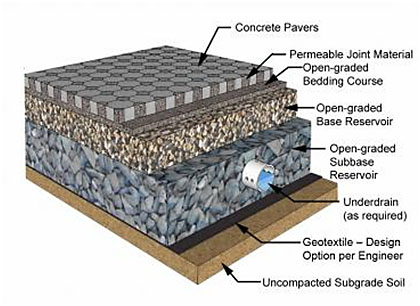 Porous pavement is created by reducing the sand and fine particles used in conventional pavement mixes. This produces small, connected pore spaces that allow stormwater to pass through the surface and drain into the aggregate base and underlying soil.
Porous overlays, also known as pervious friction courses, use a layer of porous asphalt, typically 25–76 mm or 1–3 inches thick, placed over conventional impervious pavement. These overlays drain stormwater beneath the surface to a stormwater inlet, providing many of the same benefits as full-depth porous pavement without allowing infiltration into the soil.
THE STUDY
The study assessed the long-term water quality benefits of porous pavement on a major arterial road, comparing a porous asphalt overlay and full-depth porous asphalt 9–16 years after installation.
The test site included a 3-inch porous asphalt overlay, an 8-inch full-depth porous asphalt section, and a conventional asphalt section, all installed in 2008 and draining to the existing stormwater system. Researchers collected grab samples during multiple storm events and analyzed them for metals, nutrients, total suspended solids, hydrocarbons, E. coli, and the tire-derived chemical 6PPD-quinone.
RESULTS
Overall, both porous pavement types substantially reduced runoff pollutants, including sediment, nitrogen, phosphorus, copper, lead, mercury, and zinc. Reductions exceeded 75% for total suspended solids (TSS), copper, lead, and the tire-derived chemical 6PPD-quinone, while turbidity decreased by more than 80% for both pavement types.
In general, pollutant concentrations were lower in runoff from the porous asphalt overlay and full-depth porous asphalt sections than from conventional asphalt. The largest reductions were observed for sediment, total recoverable metals, and 6PPD-quinone, which generally declined by more than 70%.
Runoff appeared much clearer after passing through the porous overlay and full-depth porous pavement, consistent with the lower TSS concentrations. Several pollutants exceeded water quality standards in runoff from conventional asphalt but met those standards after treatment by either porous pavement type.
Most metals were substantially reduced by both porous pavement types, with larger reductions generally observed for total-phase metals than for dissolved-phase metals. Concentrations of most metals were significantly lower in runoff from the porous pavement sections than from conventional pavement. Several metals exceeded water quality standards in conventional pavement runoff but met those standards after passing through either porous pavement type.
These results suggest that porous pavements can continue to remove many runoff pollutants effectively for up to 16 years after installation.
6PPD-QUINONE
6PPD-quinone concentrations were reduced by 80% in runoff from the porous overlay and by 90% in runoff from the full-depth porous pavement. These findings are consistent with parking lot experiments showing 52–100% removal of 6PPD-quinone by porous pavements.
Because 6PPD-quinone is a recently identified emerging contaminant, water quality standards have not yet been established. However, toxicity has been measured for several aquatic species and life stages and reported as median lethal concentrations (LC50). Current LC50 values for coho salmon are 0.095 µg/L for adults and 0.041 µg/L for juveniles. These thresholds were exceeded in all runoff samples from conventional pavement but were often met after treatment by both porous pavement types.
For other sensitive salmonid species, reported LC50 values are 0.51 µg/L for spotted char, 0.59 µg/L for brook trout, and 1.00 µg/L for rainbow trout. Runoff from conventional pavement often exceeded these levels, whereas all samples from both porous pavement types remained below these thresholds.
Installing porous pavement on heavily traveled roads may help reduce 6PPD-quinone concentrations in urban runoff to levels that are more protective of salmon. Although these results are encouraging, additional studies are needed to better evaluate the presence and removal of 6PPD-quinone in porous pavement systems.
6PPD-quinone has been shown to bind to particulate matter, which is likely removed during routine vacuum sweeping. Because 6PPD-quinone is an emerging contaminant, analytical methods are still being developed and refined. Additional sampling using standardized methods is needed to confirm these findings.
THE MANY CO-BENEFITS OF POROUS PAVEMENT
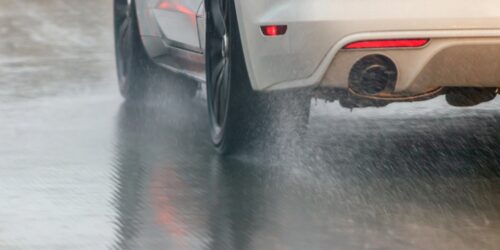
Porous pavement can improve road safety by reducing standing water, which helps limit hydroplaning and increase skid resistance. Its rough surface texture can provide additional traction, while reductions in tire noise, water spray, and improved nighttime visibility have also been observed.
Porous pavements can also lower maintenance costs. The primary maintenance concern is clogging of pore spaces, which can be minimized through vacuum sweeping at intervals ranging from annually to monthly, depending on sediment loads. Overall costs may also be reduced because porous pavements can lessen or eliminate the need for separate drainage systems and stormwater conveyance piping.
Porous pavements can help reduce the urban heat island effect and have been identified by the U.S. Environmental Protection Agency as “cool pavements,” a category of paving materials that reflect more solar energy and retain more water than conventional pavement.
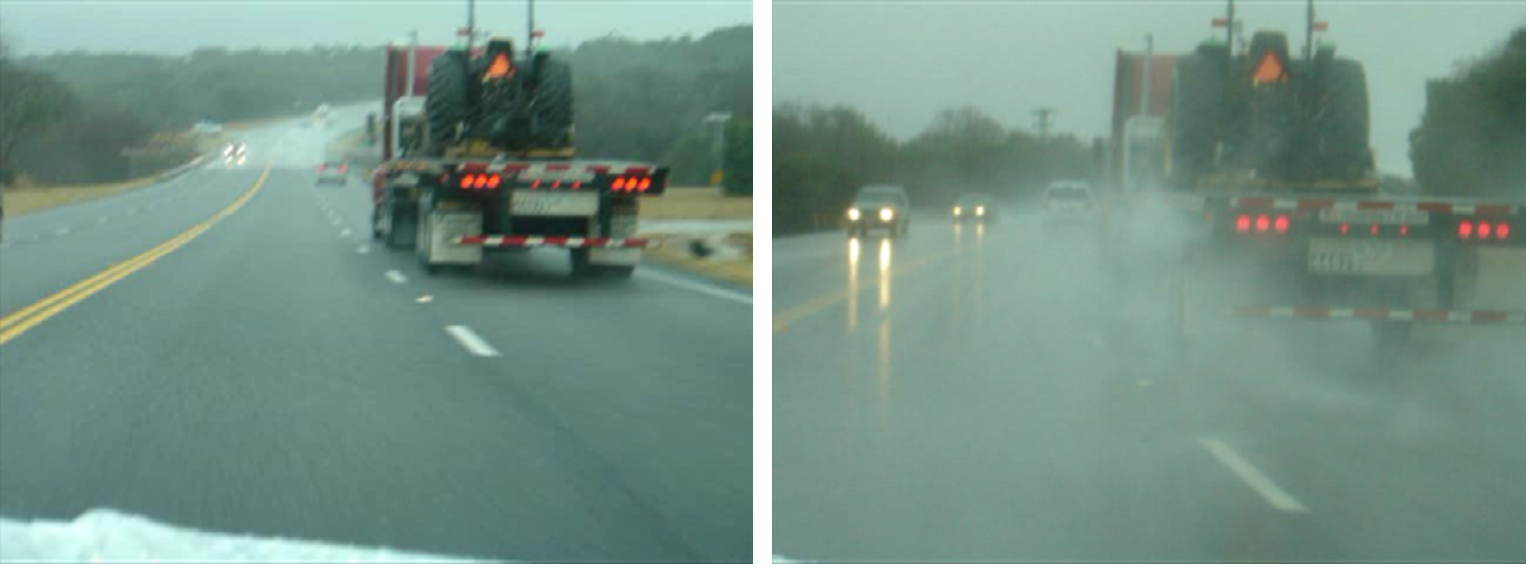
The Texas Department of Transportation evaluated porous asphalt sections from 2003 to 2011 and found that they reduced noise, increased skid resistance, lowered the number of crashes, injuries, and fatalities, and required little to no maintenance compared with conventional pavement. The agency also observed minimal raveling and delamination. Because porous pavements drain stormwater effectively, they may also require less repair for potholes and cracking than conventional pavement.
CONCLUSIONS
This study indicates that porous asphalt overlays and full-depth porous pavements can substantially reduce priority runoff pollutants on high-traffic roads, often to levels that meet water quality standards. Because standards vary by state, region, and country, stricter thresholds may not always be met. When properly installed, porous pavements have also proven durable in high-traffic applications and are widely used on highways and freeways in places such as Texas, the Netherlands, and New Zealand.
The authors note that the study is limited to one set of porous pavement installations on a single arterial road over several years. The road was also vacuum swept at least monthly, a higher maintenance frequency than many arterial roads receive, which may have contributed to stronger performance than would be expected on less frequently swept roads. Even so, the pollutant reductions observed in this study are consistent with published laboratory, parking lot, and highway studies, suggesting that properly maintained porous pavements on arterial roads can produce similar benefits.
Porous pavements can reduce the need for full stormwater conveyance or treatment systems and may lower pavement life-cycle maintenance costs. As a result, they can be a cost-effective way to reduce roadway pollutants with relatively little additional investment.
By reducing pollutants, flooding, and roadway hazards, porous pavements can help protect water resources while improving driver safety. The study concludes that transportation agencies should consider expanding the use of porous pavements, especially on heavily traveled urban roads.
RESEARCH ARTICLE: Reduction of Runoff Pollutants from Major Arterial Roads Using Porous Pavement
 by Katie Holzer and Cara Poor
Stormwater runoff from large roads is a major source of pollutants to receiving waters, and reduction of these pollutants is important for sustainable water resources and transportation networks. Porous pavements have been shown to substantially reduce many of these pollutants, but studies are lacking on arterial roads.
We sampled typical stormwater pollutants in runoff from sections of an arterial road 9–16 years after installation of three pavement types: control with conventional asphalt, porous asphalt overlay, and full-depth porous asphalt. Both types of porous pavements substantially reduced most of the stormwater pollutants measured.
Total suspended solids, turbidity, total lead, total copper, and 6PPD-quinone were all reduced by >75%. Total nitrogen, ammonia, total phosphorus, biochemical oxygen demand, total and dissolved copper, total mercury, total zinc, total polycyclic aromatic hydrocarbons, and di-2-ethylhexyl phthalate were all reduced by >50%. Reductions were lower or absent for nitrate, orthophosphate, E. coli, dissolved lead, and dissolved zinc. Most reductions were statistically significant.
Many pollutants exceeded applicable water quality standards in the control samples but met them with both types of porous pavement. This study demonstrates that porous overlays and full-depth porous asphalt can provide substantial reductions of several priority stormwater pollutants on arterial roads for many years after installation. Porous pavements have the potential to substantially enhance water quality of urban waterways and provide ecological benefits on urban thoroughfares.

