

State Water Board update highlights new monitoring tools, a statewide mapping effort, Caltrans stormwater research, and DTSC’s search for safer tire chemicals.
At its June 16 meeting, the State Water Resources Control Board received an informational update on California’s work to identify and manage constituents of emerging concern, including 6PPD and 6PPD-quinone, a tire-derived contaminant linked to toxicity in sensitive aquatic species.
Constituents of emerging concern, or CECs, include chemicals that are unregulated or only partly regulated in the environment, such as pharmaceuticals, flame retardants, PFAS, newer pesticides, and emerging commercial materials including nanomaterials. The State Water Board’s CEC Program is developing a statewide strategy, foundational guidance, and new monitoring tools to help identify, evaluate, and manage contaminants that may pose risks to California’s waters.
The update also highlighted statewide efforts to understand 6PPD, the primary antidegradant used in tires, and 6PPD-quinone, its transformation product. State Water Board staff were joined by DTSC and Caltrans to discuss interagency work on environmental pathways, monitoring, management options, and source-control strategies for tire-wear-related contaminants.
State Water Board’s CEC strategy and emerging monitoring tools
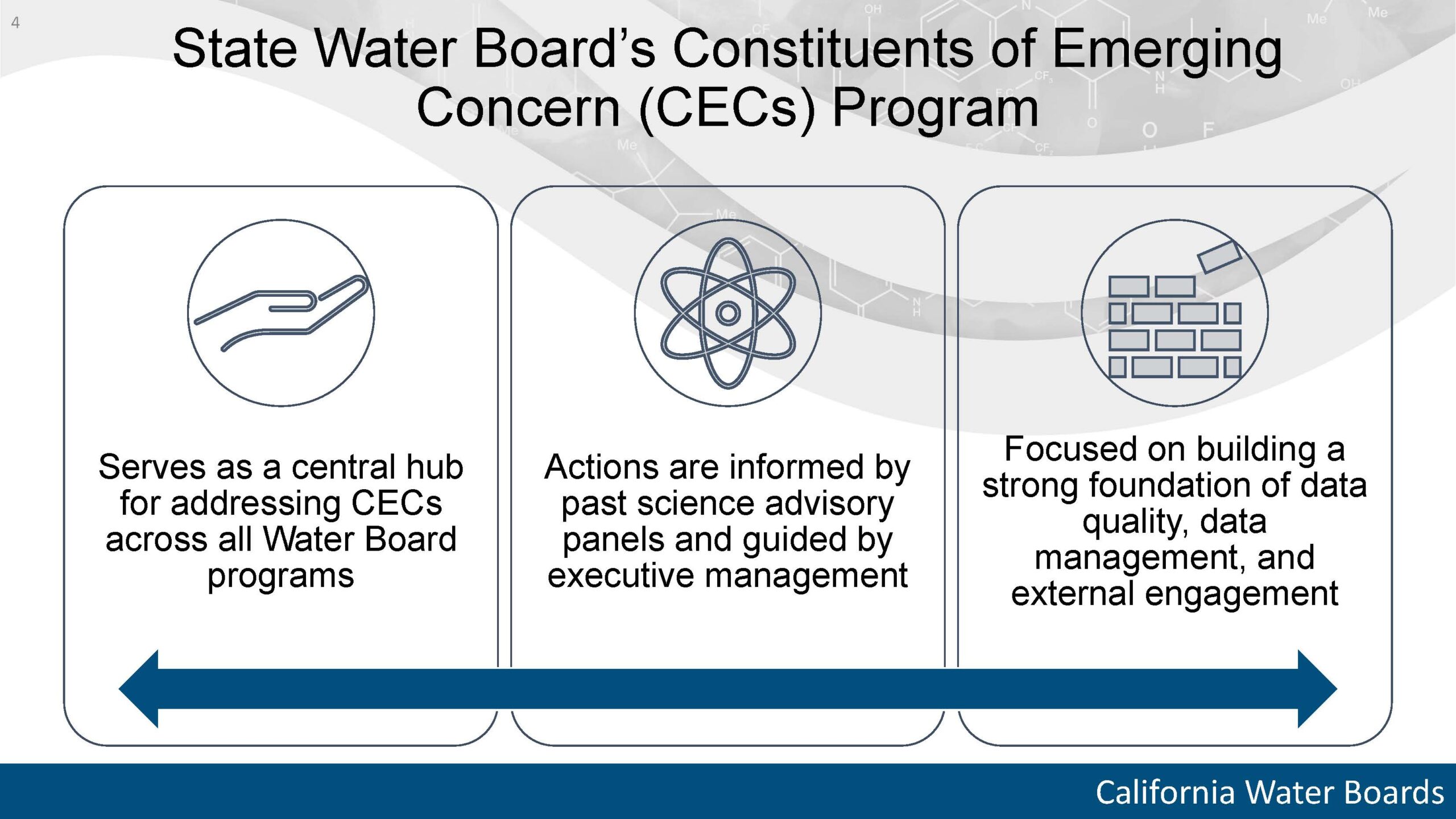 The Board’s CEC Program serves as a central hub and technical resource for Water Boards programs, including stormwater, drinking water, groundwater, recycled water, wastewater, and aquatic habitat. It supports consistent, science-based decisions by improving data quality, data sharing, and coordination across programs and agencies, with a broader goal of helping identify, assess, and manage CECs to protect human and ecological health statewide.
The CEC strategy is intended to move the Water Boards beyond a compound-by-compound approach toward class-based and effects-based management. It also aims to establish transparent, consistent statewide processes and provide a stronger scientific foundation for proactive decision-making. By emphasizing prevention and source control, the program seeks to shift from reactive responses to proactive protection of public health, ecological health, and water quality.
Many CECs are not detected through standard monitoring programs, and their health risks are not well characterized. To address those gaps, the CEC Program is building on traditional tools, such as targeted chemical analyses and toxicity tests, while expanding its analytical toolkit to better assess CEC issues in California. Next-generation approaches, including non-targeted chemical analyses and bioanalytical cell assays, can broaden the range of chemicals routinely monitored, improve the ability to anticipate CEC-related challenges, and help evaluate substances that are data-poor or lack traditional toxicity information.
The strategy also emphasizes class-based and effects-based approaches instead of evaluating chemicals one at a time. “This will allow us to respond faster to emerging issues, focus on mixtures, and use modern tools and understand risk more effectively,” said Sarabeth George, Engineering Geologist, Pretreatment and CEC Unit. “The strategy really gives us our direction. It’s what we prioritize, how we coordinate, and how we use new science to protect water quality.”
Pilot testing bioassays as early warning tools
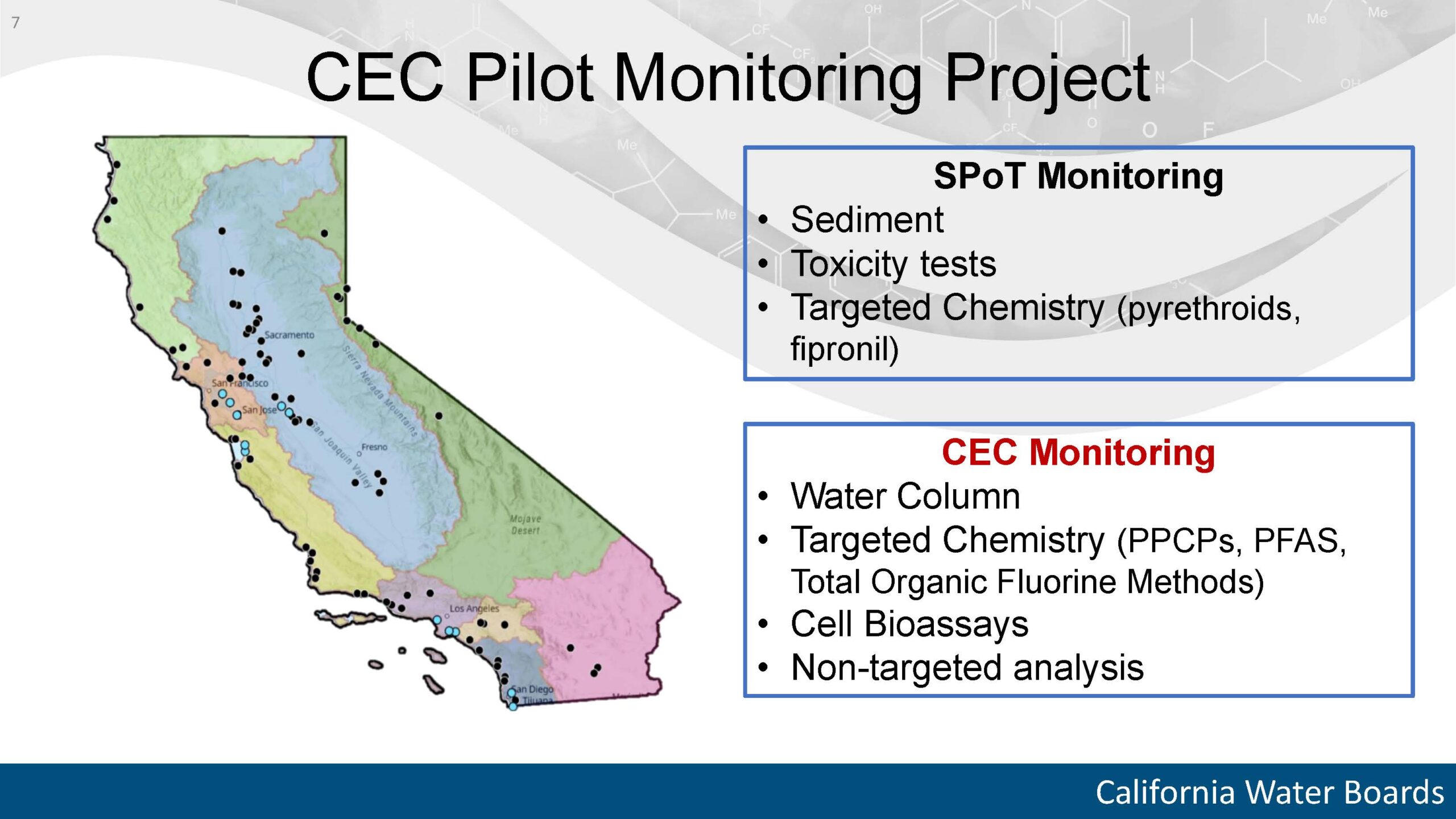 The CEC pilot project is testing whether advanced monitoring technologies recommended by a scientific advisory panel, including non-target analysis and bioanalytical cell assays, can be integrated into California’s watershed monitoring. The project compares these tools with conventional methods, such as targeted chemical analyses and bioassays, to improve detection and understanding of emerging contaminants in water and sediment.
The pilot is being conducted in collaboration with the Stream Pollution Trends program, or SPoT, which monitors sediment toxicity and contamination trends in California waterways. SPoT collects sediment samples annually from 60 to 90 sites and tests them for toxicity and targeted chemistry, primarily pyrethroids and fipronil.
For the pilot, the program added water-column testing, expanded targeted chemistry to include CECs such as pharmaceuticals and personal care products, PFAS, and total organic fluorine, and incorporated cell bioassays and non-targeted analysis. Non-targeted analysis screens broadly for known and unknown contaminants without relying on a predefined target list.
 2025 was the second year of monitoring. The slide shows the 2025 monitoring sites; the blue sites were selected for the presentation.
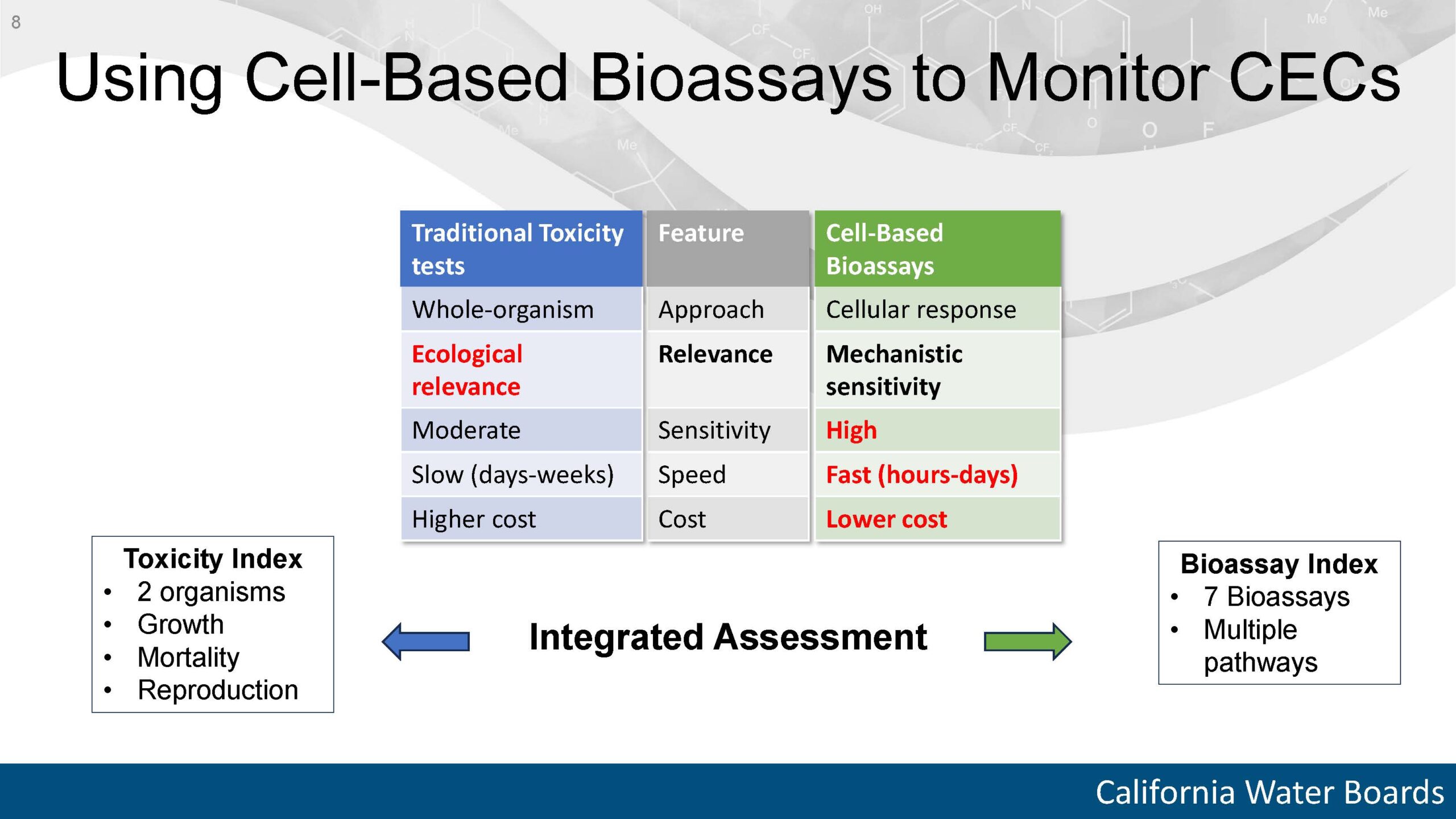
Toxicity tests and cell bioassays both measure biological responses, but at different levels. Traditional toxicity tests use whole organisms to assess endpoints such as growth, mortality, and reproduction. Cell bioassays measure cellular responses and specific biological pathways. The pilot is evaluating whether cell bioassays can detect contaminant impacts earlier and more efficiently, helping prioritize sites for additional monitoring or regulatory review.
“The advantage of using cell bioassays is that they’re usually more sensitive, they’re faster and cheaper, so they can be applied to a much larger number of samples,” said Manoela Romano de Orte, Ph.D. “You can think of cell bioassays as early warning tools to prioritize sites to apply more resource-intensive approaches like toxicity tests, and also a more detailed chemistry list.”
To compare conventional toxicity testing with cell bioassays, researchers developed two site-level measures: a toxicity index and a bioassay index for each of the 12 pilot sites. The toxicity index was based on two commonly used aquatic toxicology organisms and evaluated growth, mortality, and reproduction.
The slide compares the Integrated Toxicity Index with the Integrated Bioactivity Index. Green represents no toxicity or bioactivity, while red represents toxicity or bioactivity. The two indices produced the same result at eight of the 12 sites and different results at four sites.
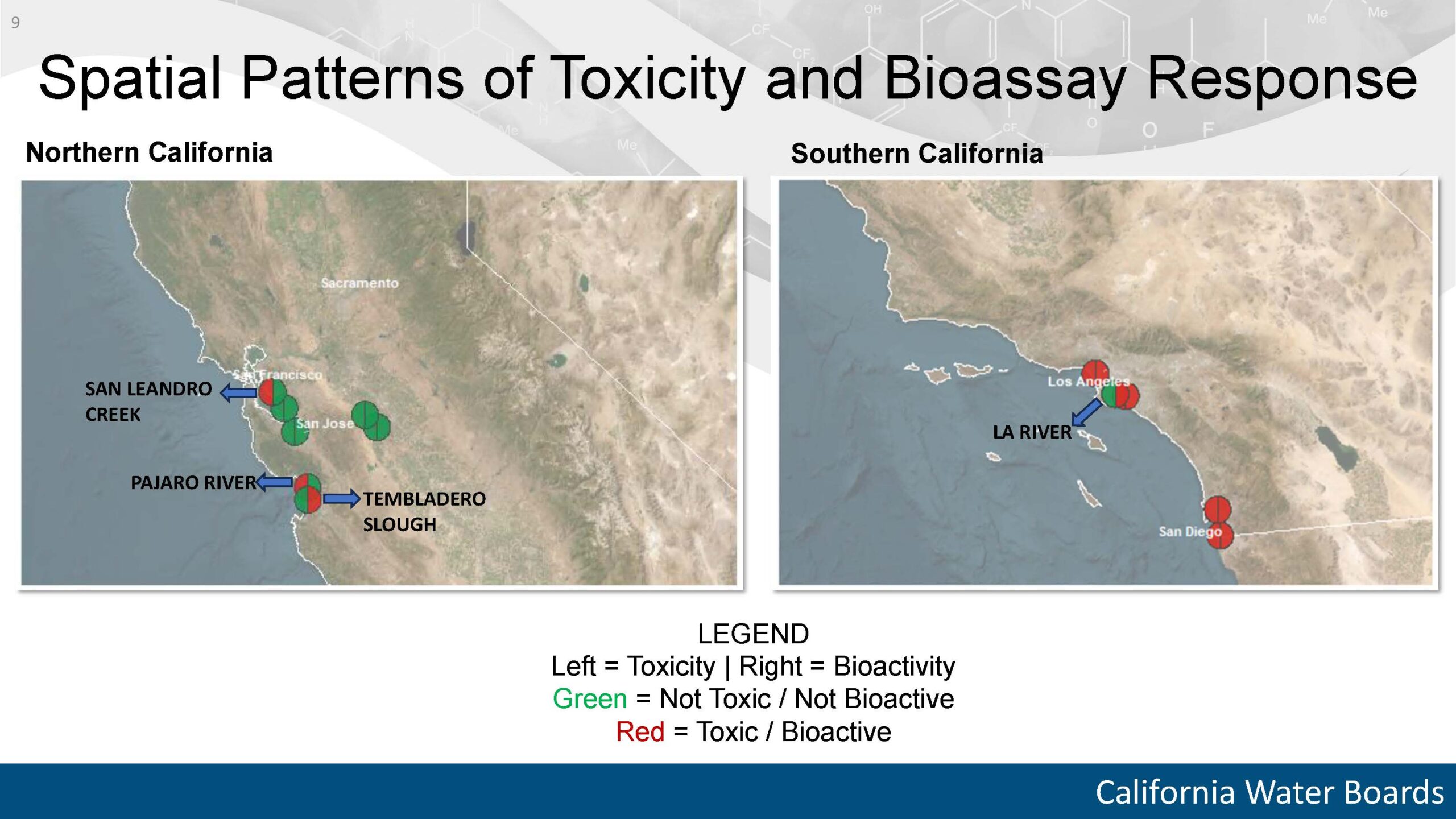
At San Leandro Creek and the Pajaro River, the toxicity index showed toxicity without corresponding bioactivity. Dr. Romano de Orte said the toxicity was driven by one organism that is highly sensitive to salinity changes, suggesting salinity, rather than a specific CEC, was likely the main driver.
At Tembladero and the Los Angeles River, the bioassay index showed bioactivity without corresponding toxicity. The Los Angeles River had the second-highest frequency of pharmaceuticals and personal care products, behind only the Tijuana River. Tembladero had the highest concentration of adsorbable organically bound fluorine, a screening measure used to detect PFAS and other fluorinated organic compounds, including compounds that may not be captured by targeted PFAS analyses.
“So, based on those results, it does seem like bioassay can be used as early warning tools,” said Manoela Romano de Orte, Ph.D. “However, I really want to highlight here that bioactivity does not necessarily mean there is a problem. These are very sensitive tools, and the results that we’re seeing here are only comparison among the sites included in this study. So, in order to put these results into perspective, we also compare the activity that we’ve seen from each individual bioassay with established effect-based trigger values, which are thresholds that, if exceeded, they do suggest potential site of concern.”
Effect-based trigger values were compiled from the literature for four of the seven bioassays with robust datasets; the results are shown on the lower left. In Southern California, all sites with bioactivity exceeded at least two thresholds, including the Los Angeles River, where there was no corresponding toxicity.
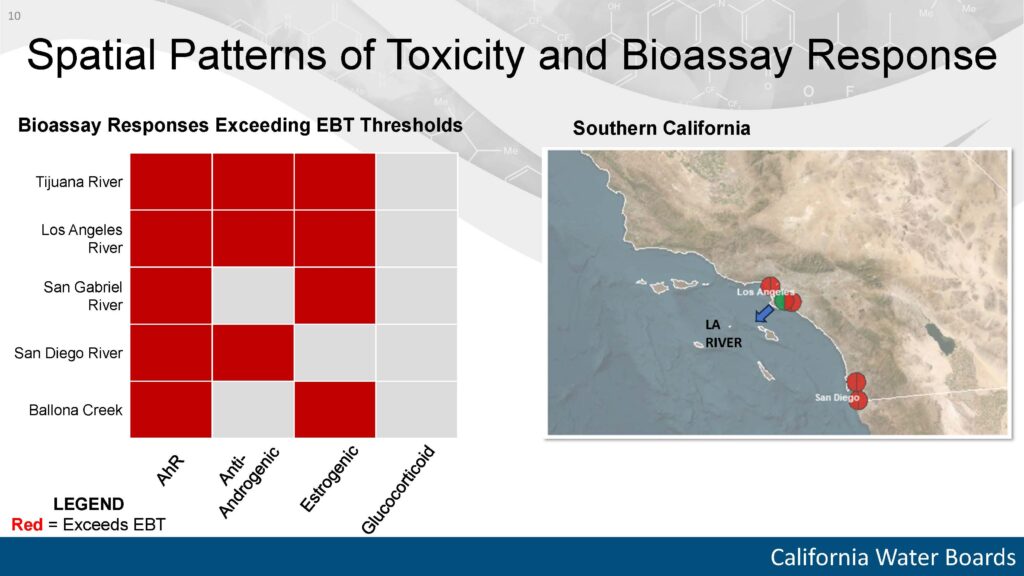
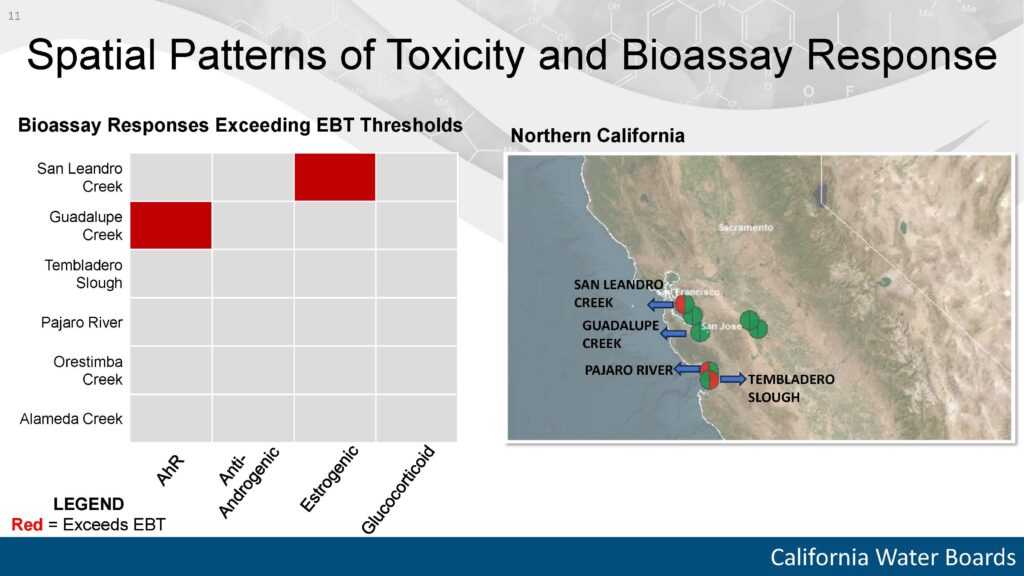
In Northern California, Tembladero showed bioactivity in the integrated index, but no individual bioassay exceeded an effect-based trigger value, as shown on the upper right slide. San Leandro Creek and Guadalupe Creek did not show bioactivity in the integrated index, but each exceeded one individual bioassay threshold, identifying them as potential sites of concern.
The pilot project was designed to test how non-targeted methods and emerging technologies can help identify potential CECs, not to make site-specific findings about current water quality conditions.
“The main takeaways are that cell bioassays show strong potential as early screening tools for water quality; they can detect biological activity before visible organism-level effects occur, and because of that, they support proactive and responsive environmental management. They can help distinguish contamination-related risks from other stressors, such as salinity and the water flea, and they are effective for site prioritization.”
In the coming year, the program plans to broaden monitoring to include more sites and a wider range of site types, strengthening the proof of concept while acknowledging the limits of the initial 12-site sample.
Mapping 6PPD Risk Across California
Tire wear is a significant and complex environmental concern. The tire industry produces more than 3.1 billion new tires each year, and as tires move across road surfaces, friction releases tiny tire wear particles into the environment. Globally, tires may be one of the largest sources of microplastics. Stormwater runoff is a major pathway carrying tire wear particles from roads into waterways.
 Tires are also the primary environmental source of 6PPD and 6PPD-quinone. 6PPD is the primary antidegradant used in tires. Its transformation product, 6PPD-quinone, was identified in 2020 as the toxicant associated with coho salmon mortality in Washington state. Those findings, published in A ubiquitous tire rubber-derived chemical induces acute mortality in coho salmon, spurred broader research on 6PPD-quinone and its potential impacts.
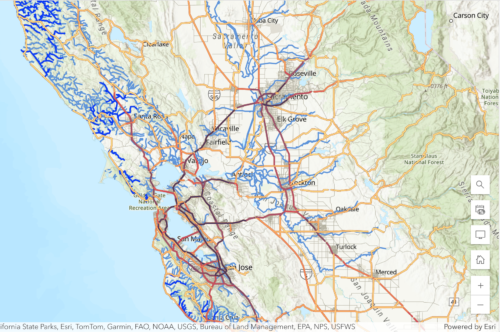
To help identify potential areas of concern in California, the CEC Program developed a public mapping tool that incorporates traffic volume, major roadways, and stormwater discharge information. The map is intended to help environmental programs identify monitoring locations and prioritize sampling sites.
The tool uses Caltrans average annual daily traffic data to flag high-traffic roadways that may be associated with higher 6PPD or 6PPD-quinone concentrations. It also incorporates California Department of Fish and Wildlife data on coho salmon and steelhead distribution because those species are sensitive to 6PPD-quinone. Statewide stormwater infrastructure data remain limited, although some municipalities have contributed local stormwater outfall datasets.
The CEC Program is also working with EPA Region 9, the North Coast Regional Water Board, and Tribal partners to use the mapping project to support monitoring in Northern California coho salmon habitat. The partners have identified priority monitoring sites, developed a quality assurance project plan, created a 6PPD-quinone monitoring template, and are seeking funding to begin monitoring.
Caltrans’ Stormwater Strategy for 6PPD-Quinone
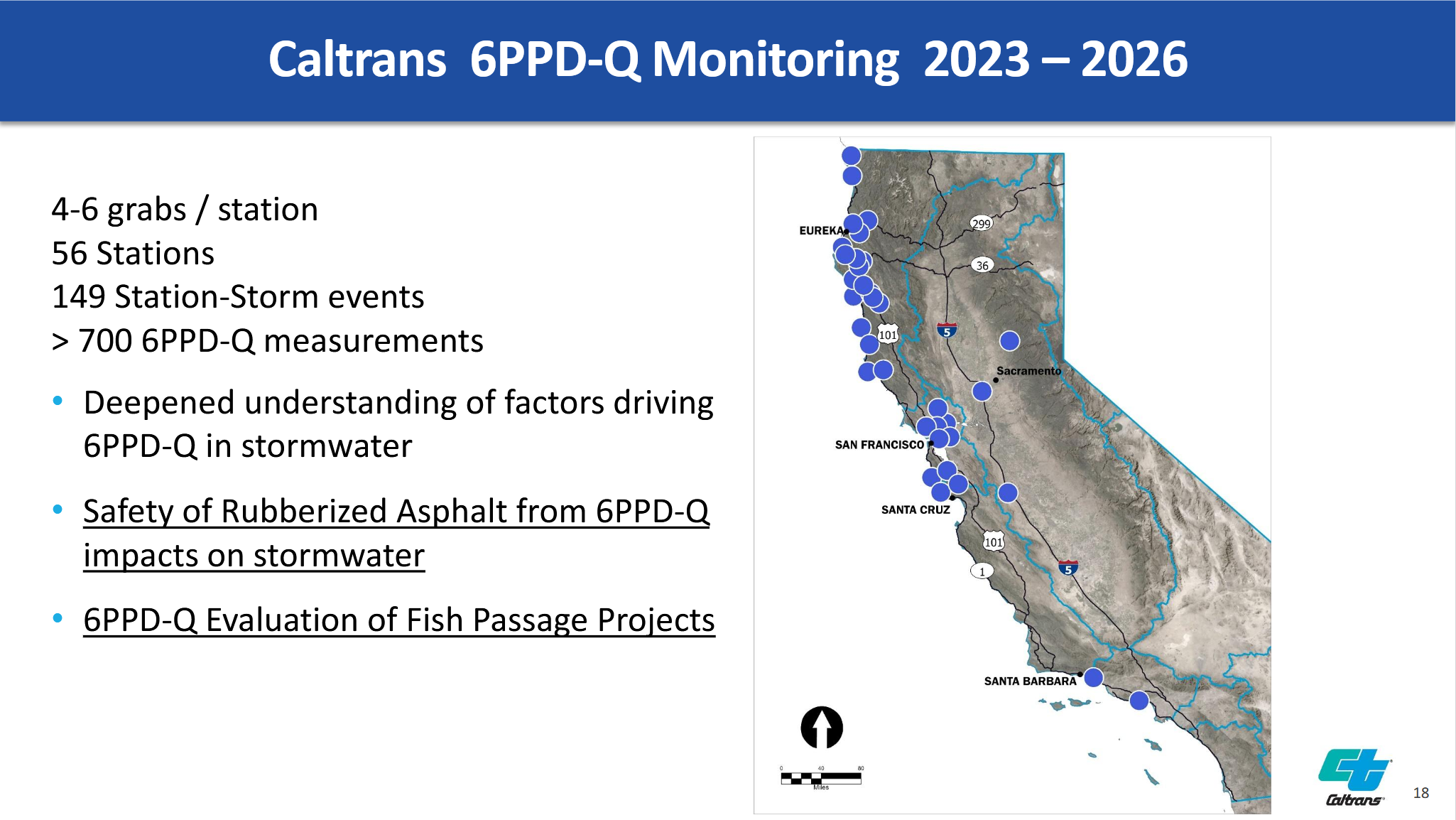 Caltrans monitors and manages 6PPD and its toxic transformation product, 6PPD-quinone, in stormwater runoff from roadways. The agency uses targeted treatment practices to reduce these contaminants before the runoff reaches local waterways. After 2021 reports linked a tire chemical to coho salmon mortality in lower Puget Sound, Caltrans refocused its statewide stormwater monitoring program on 6PPD-quinone, with monitoring beginning in January 2023.
The data have improved Caltrans’ understanding of the factors that influence 6PPD-quinone in stormwater. “After our fourth year monitoring a total of 701 measurements from 56 locations, our data provides new insights,” said Mr. Laca with the Office of Stormwater Program Development, Caltrans Division of Environmental Analysis. “Data covering a higher range of average annual daily traffic extend the applicability of our findings. We have now enough data that we can start to tease out secondary factors affecting 6PPD-quinone in roadway stormwater.”
Evaluating Rubberized Asphalt and 6PPD-Quinone Risk
A key question for Caltrans is whether rubberized asphalt increases 6PPD-quinone in stormwater. Caltrans reuses 2 million to 3 million tires each year in rubberized asphalt pavement, typically as thin, structurally stable highway maintenance layers. Based on published research, Caltrans does not expect rubberized asphalt to increase 6PPD-quinone in stormwater, but it is monitoring field conditions to compare real-world results with bench-scale predictions. Initial findings in the white paper update found no detected impacts from rubberized asphalt.
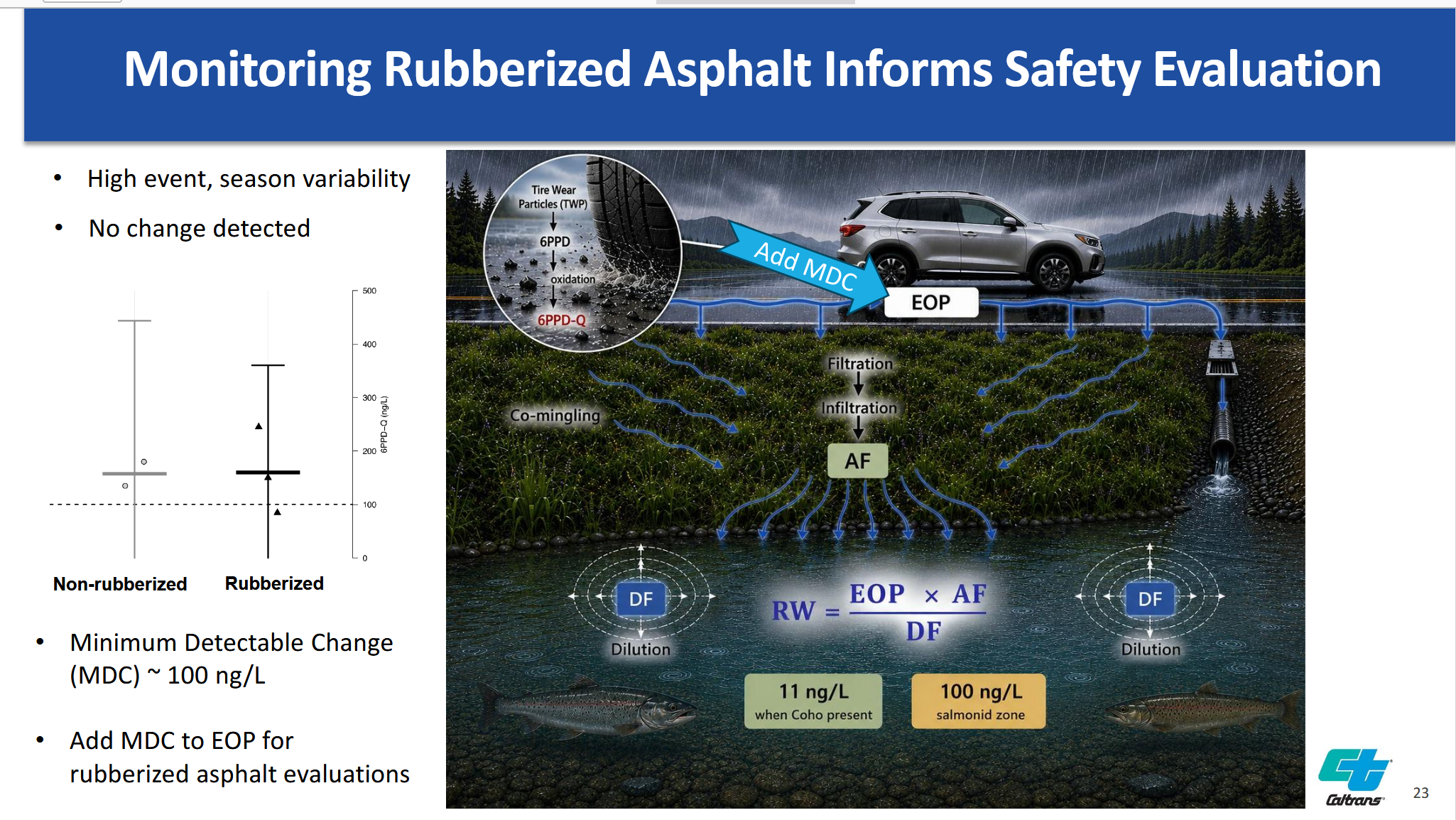 Caltrans evaluated rubberized asphalt using before-and-after studies, where pavement was installed after baseline monitoring, and side-by-side studies, where different pavement types were monitored during the same storms. Both approaches found no detected change in 6PPD-quinone stormwater concentrations attributable to rubberized asphalt.
“I was a doubter,” said Dr. Khalil E. Phelan Abusaba, Ph.D., Managing Environmental Scientist with Brown and Caldwell. “I was very skeptical about rubberized asphalt walking up on this. How could it not be contributing? In the preparation of rubberized asphalt, they take ground-up crumb rubber and they mix it into the asphalt binder at about 20%. So, right out of the gate … five times less generation capacity … The bench-scale studies that are realistic tend to put the leachable number down around five to 10, maybe as much as 25 nanograms per liter. We’re trying to verify that from the field, but basic principles plus bench-scale studies lead us to conclude that it should be a low number if it’s detectable at all.”
Caltrans also found substantial variability in 6PPD-quinone results by storm event and season, regardless of pavement type. Concentrations were typically highest in the first grab sample of a storm and declined in later samples. They were also generally higher during the first storm of the season, consistent with buildup and wash-off patterns for roadway pollutants.
Evaluating 6PPD-Quinone Risk at Fish Passage Projects
The Legislature has also directed Caltrans to restore streams near roadway crossings where migratory fish passage is blocked from upstream habitat. Caltrans is assessing whether receiving waters near fish passage projects may exceed 6PPD-quinone thresholds of concern and using those findings to inform treatment evaluations for other roadway projects.
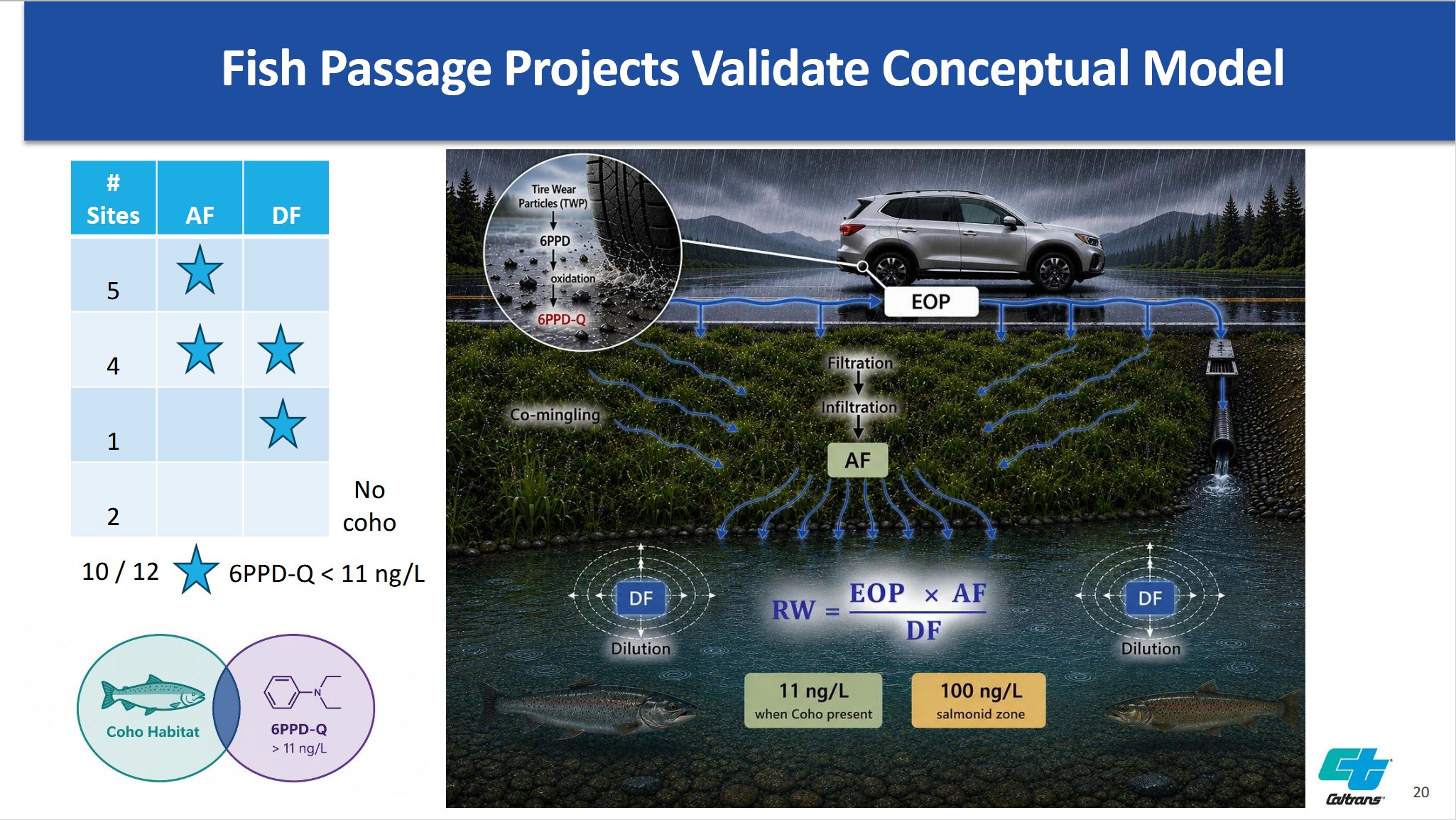 Caltrans assessed 12 fish passage projects to determine whether receiving waters were likely to exceed 11 nanograms per liter for 6PPD-quinone. Five sites were screened out based on attenuation alone, and four more were screened out based on attenuation and receiving-water dilution. Two sites had direct discharges to creeks, little attenuation, and relatively low dilution. They were the only sites where receiving-water monitoring occasionally found 6PPD-quinone above 11 nanograms per liter, though concentrations remained below 100 nanograms per liter. Neither site is coho salmon habitat. Overall, 10 of the 12 sites were not at risk of exceeding 11 nanograms per liter, and none exceeded 100 nanograms per liter.
The goal is to protect aquatic life, especially threatened and endangered species. For coho salmon streams, EPA’s 11 nanograms per liter guidance is the benchmark because it is protective of sensitive juvenile coho. Where coho are absent, Caltrans uses 100 nanograms per liter as a benchmark for rainbow trout and steelhead, the next most sensitive threatened or endangered species. However, Khalil E. Phelan Abusaba, Ph.D. noted neither benchmark is established policy. Caltrans uses them to categorize receiving-water risk for 6PPD-quinone as low, medium, or high. In many cases, attenuation and dilution assessments are straightforward.
“We know enough now to say with confidence that overlap between coho habitat and 6PPD-quinone above 11 nanograms per liter is the exception, not the rule,” said Dr. Phelan Abusaba. “On the North Coast, where coho habitat abounds, most roadway runoff receives designed or natural treatment before reaching receiving waters.”
Caltrans’ Next Steps for Adaptive 6PPD-Quinone Management
Caltrans uses an adaptive management approach to implement its stormwater permit. The agency develops programs for pollutants of concern, evaluates outcomes, refines the programs, and repeats the process.
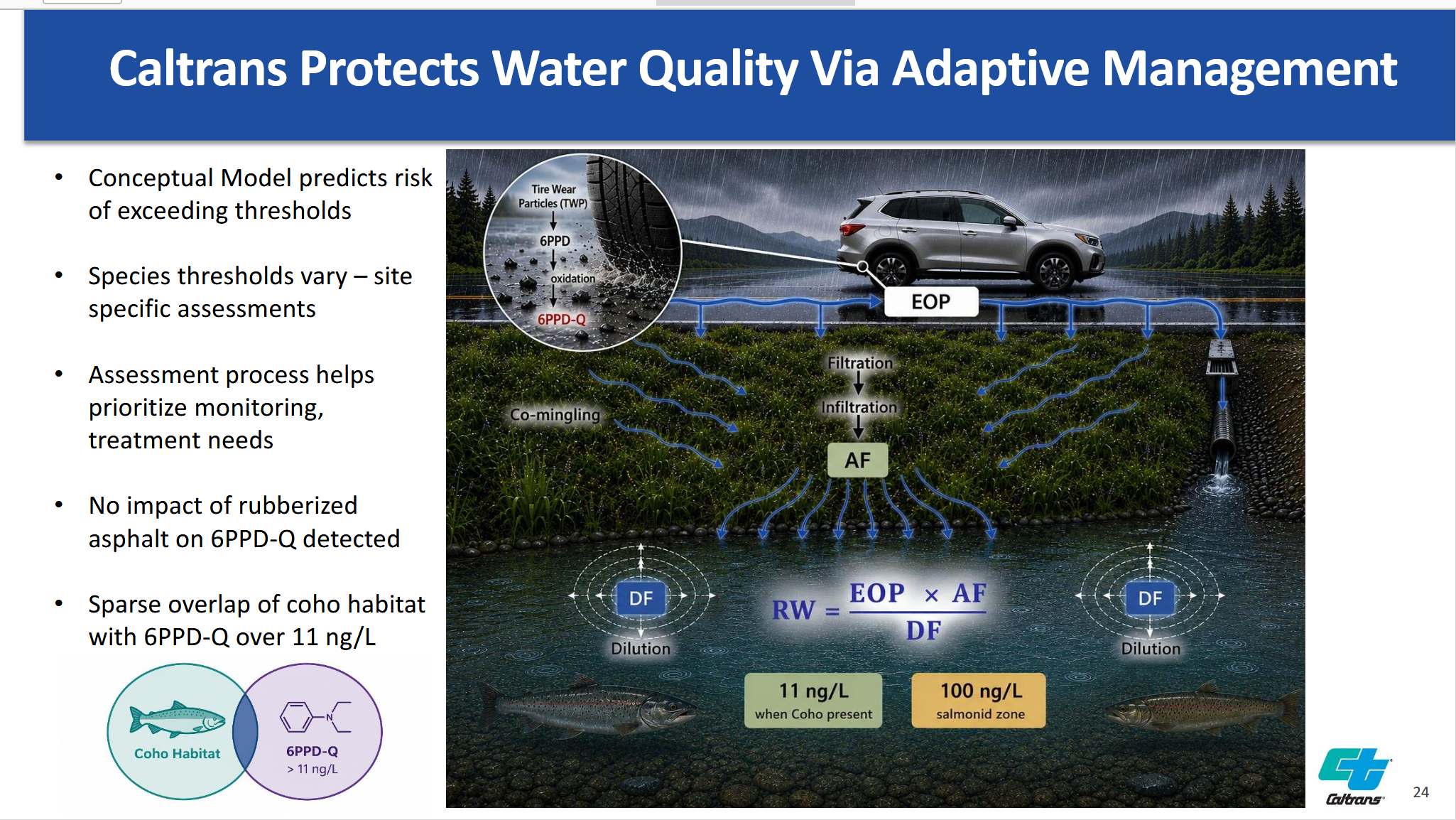 Caltrans is beginning its third cycle of adaptive implementation, Dr. Phelan Abusaba said. Monitoring will continue to refine understanding of minimum detectable change for rubberized asphalt, complete fish passage receiving-water evaluations, and provide project development teams with information about receiving-water risk where it may affect roadway project planning. Caltrans will also continue monitoring treatment effectiveness, with attention to natural treatment processes that reduce 6PPD-quinone concentrations.
“Infiltration remains Caltrans’ preferred treatment approach where feasible. We will continue developing guidance for flow-path evaluations so project developers can estimate attenuation and dilution factors and better evaluate receiving-water risk as part of project planning and design,” he continued. “Caltrans will continue to dialogue with your staff and other regulatory stakeholders about how we use this science to make policy decisions that are defensible, implementable, and respectful to the environment.”
DTSC’s Safer Alternatives Process for 6PPD in Tires
The Department of Toxic Substance Control’s Safer Consumer Products Program regulates harmful chemicals in consumer products and promotes chemically safer products for people and the environment. The program was established in October 2013.
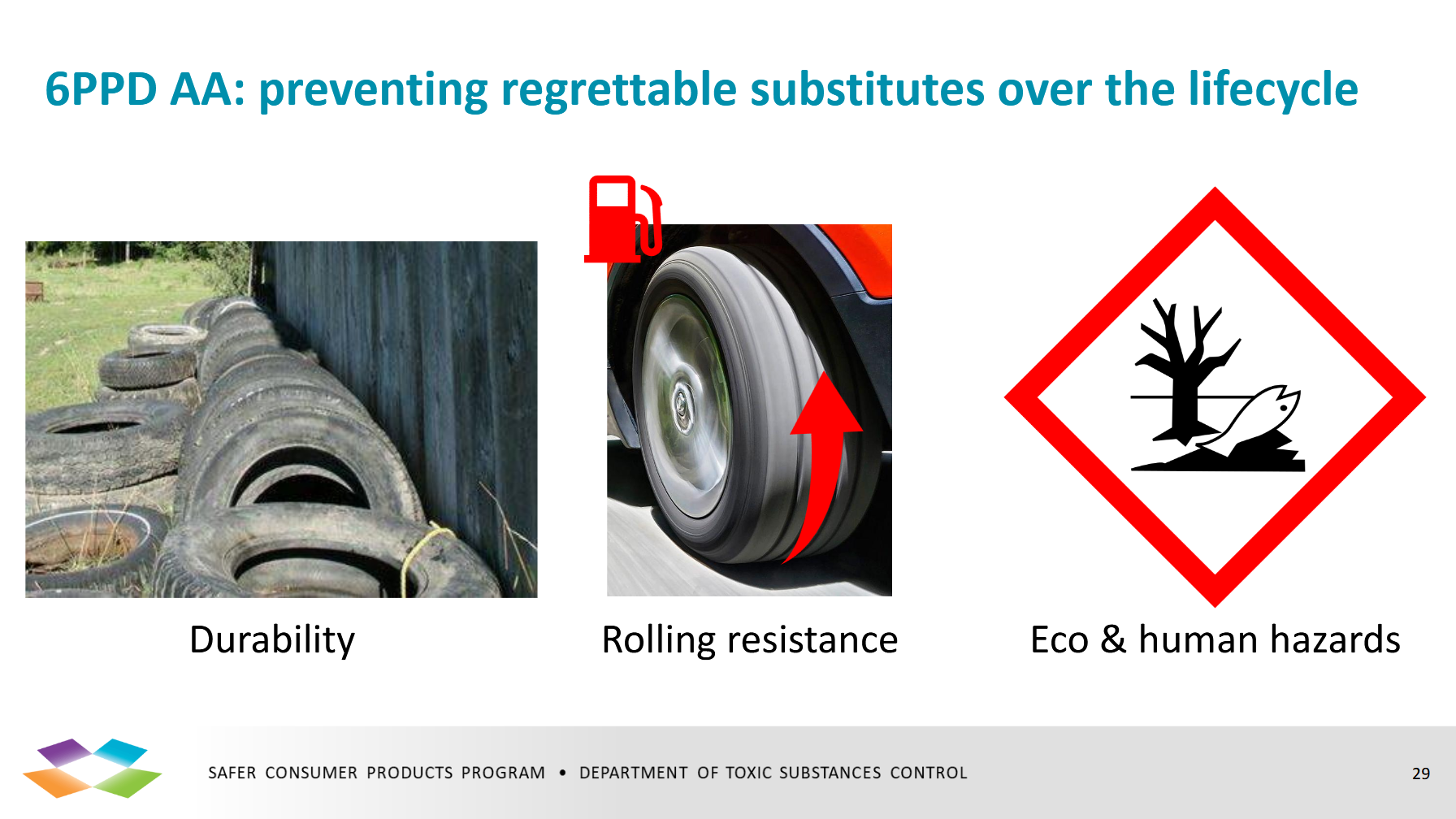 The program’s regulations are not bans. Manufacturers may comply by completing an alternatives analysis, which evaluates the health and environmental impacts of a regulated product and its alternatives to identify safer options and avoid regrettable substitutes. For 6PPD-quinone alternatives, potential concerns include reduced tire durability, increased scrap tire generation, and higher rolling resistance that could affect fuel economy.
“Toxicity to coho was the impetus for our regulation, and beyond that, we know that the replacement for 6PPD-quinone will be widely dispersed in the environment with broad exposure to humans and animals alike,” said Dr. Kelly Grant, Research Scientist III with DTSC Safer Consumer Products. “So alternatives must be assessed for a broad set of ecological and human health hazards.”
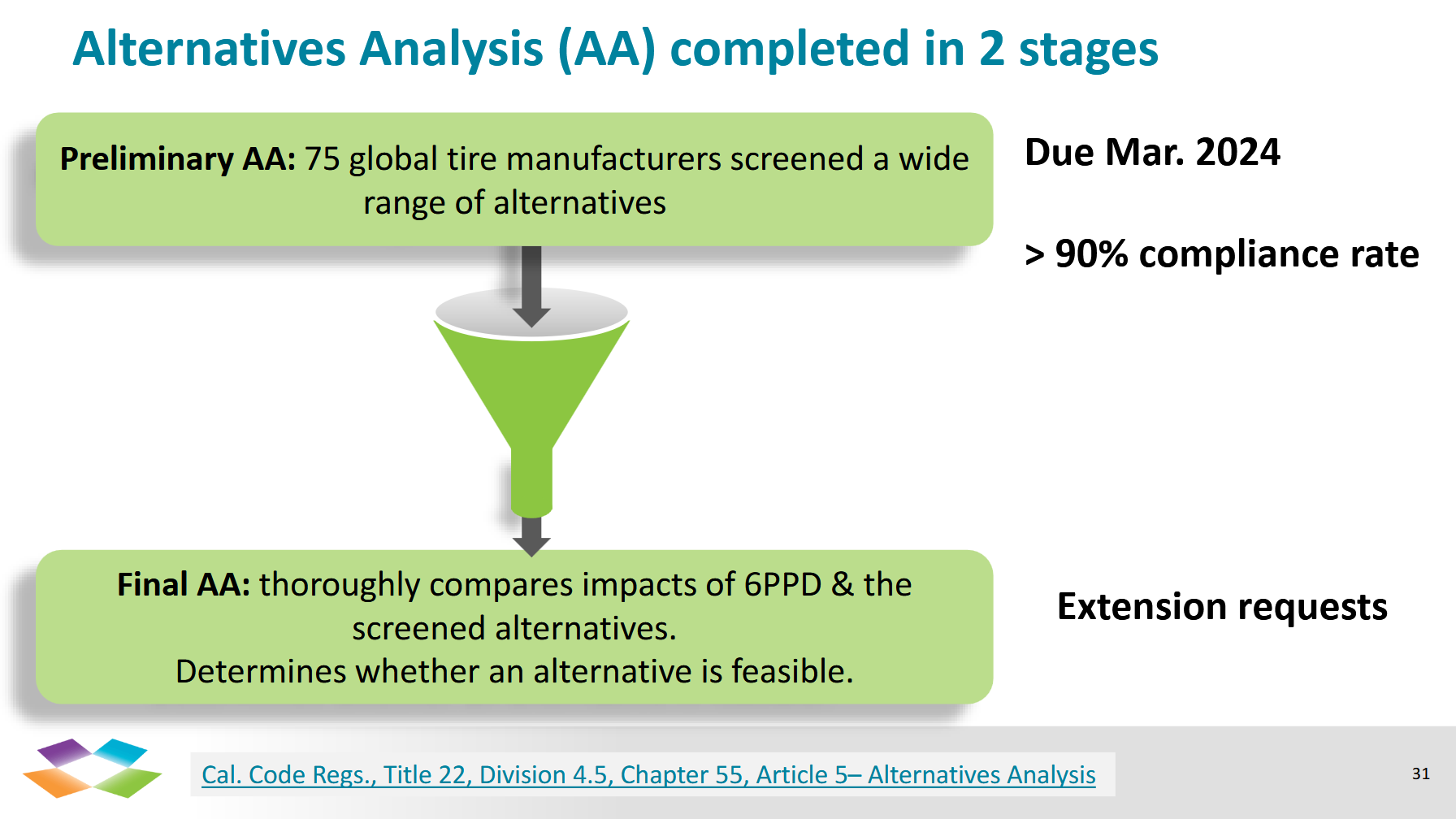 Alternatives analysis occurs in two stages. In the preliminary stage, 75 tire manufacturers screened potential alternatives and selected promising candidates for final analysis. In the final stage, manufacturers must compare the impacts of 6PPD and selected alternatives and determine whether an alternative is feasible, including whether it performs effectively as an antidegradant and supports overall tire performance.
“For tires, a key part of that assessment is that they are safe to drive,” said Dr. Kelly Grant. “Beyond that, tire manufacturers must provide a schedule and a plan for adopting and implementing their selected alternatives.”
Preliminary alternatives analyses were due in March 2024, and more than 90% of the tire market is in compliance with the regulations. The preliminary analyses identified potential alternatives, but further screening is needed to determine performance and whether the alternatives are safer.
Many companies selected other PPDs because their similar chemical structure may make them more likely drop-in replacements for 6PPD. Since the initial alternatives list was submitted, a consortium organized by the U.S. Tire Manufacturers Association has said it is screening an additional 24 chemicals. DTSC has received extension requests for the final alternatives analysis deadline and has decided to extend it.
The Safer Consumer Products Program is adding the class of PPDs, formerly called PPD derivatives, to the list of chemicals it can regulate because of concerns about aquatic toxicity and skin sensitization.
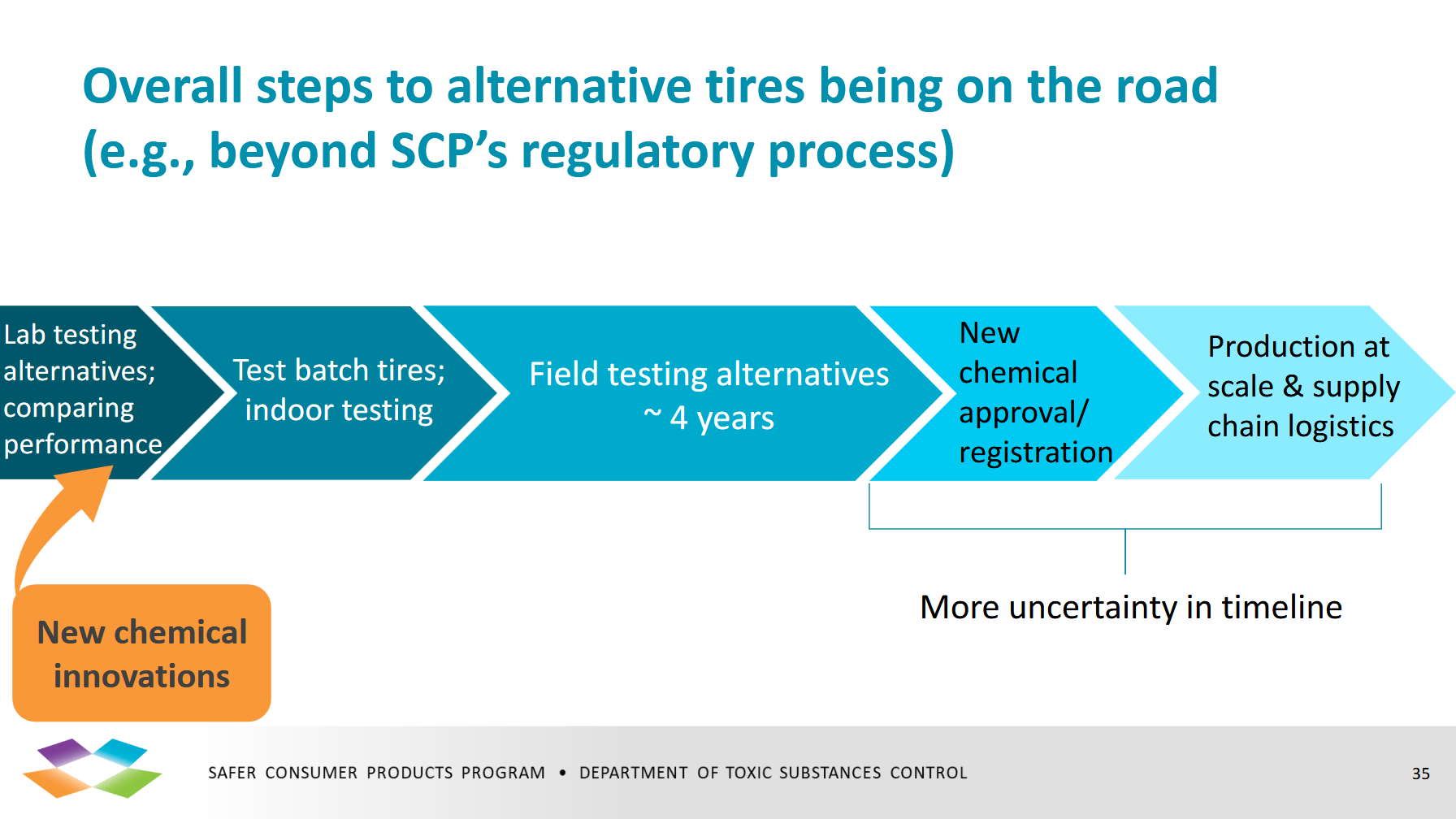 Dr. Grant said removing 6PPD from tires is still years away. Tire reformulation begins with laboratory testing to evaluate how an alternative protects against ozone and affects rubber properties such as stretch and strength. Promising candidates may then move to indoor tire testing, track testing, and fleet testing. Estimates suggest this process could take about four years. If an alternative is a new chemical, it may also require review through EPA’s new chemicals program and registration with the European Chemicals Agency. Another uncertainty is how quickly chemical suppliers can scale production to meet tire industry demand. In some cases, that could require new chemical manufacturing capacity, making it difficult to predict when reformulated tires will reach the market.
“So, although I can’t offer any certainty about when reformulated tires will be on the road, DTSC regulation, along with dedicated scientists and concern from interested parties, has really sparked a major global effort to find safer alternatives and to reduce the harm caused by 6PPD in tires,” said Dr. Grant.

