
State agencies highlight nature-based solutions for the Delta
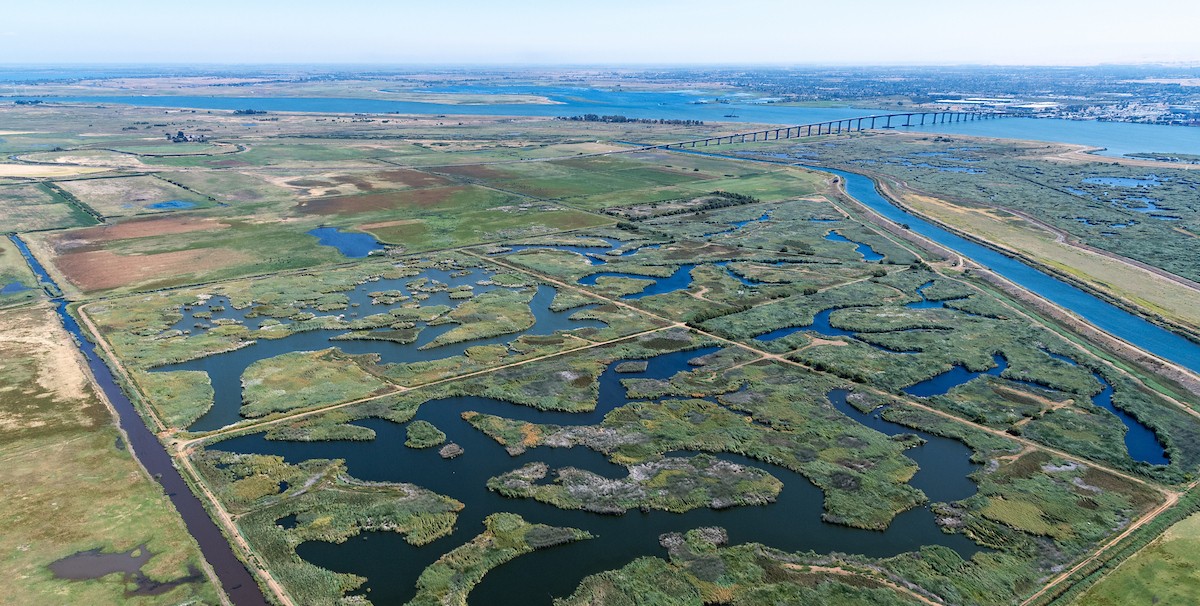
Nature-based solutions use natural systems and working landscapes to reduce greenhouse gas emissions, store carbon and build resilience to climate impacts. California has made those approaches a key part of its climate strategy, with agricultural lands and Delta wetland restoration playing important roles because both can increase carbon sequestration while also supporting water, habitat and land-management goals.
At its May meeting, the Delta Independent Science Board began a panel series on nature-based solutions as it considers whether to undertake a formal review of the topic. Under the Delta Reform Act, the board is charged with conducting periodic reviews of scientific research, monitoring and assessment programs that support adaptive management in the Delta.
The first session opened with remarks from California Natural Resources Secretary Wade Crowfoot on the growing role of nature-based solutions in state climate and conservation policy, including their relevance to the Delta. Then, a panel of state agency representatives then discussed current programs, implementation challenges, funding needs, monitoring gaps and science questions that could inform the board’s next steps.
Secretary Crowfoot: Nature-Based Solutions in State Climate Policy
Secretary Wade Crowfoot opened the panel with a broad overview of nature-based solutions in California, their role in major state policies and priorities, and their potential to expand in the Delta.
He noted that California’s environmental conservation work was long treated separately from climate policy. In 2007, the Legislature passed AB 32, creating a legal requirement to reduce carbon pollution and setting the state on an effective path forward. The scoping plan developed by the California Air Resources Board outlined actions to cut carbon pollution from transportation and fixed sources such as refineries and manufacturing plants.
“But it didn’t say anything about nature,” said Secretary Crowfoot. “We know that nature, when it’s healthy, is a sink for carbon, but that early climate action really didn’t consider the role of California’s landscapes and waterways in either absorbing carbon or releasing carbon. It wasn’t until 2022, 15 years later, that the scoping plan integrated nature and our lands in a quantitative way.”
California is legally required to achieve carbon neutrality by 2045—a major challenge for the world’s fourth-largest economy. The 2022 scoping plan estimated how much pollution California could reduce through regulations and investments in sectors such as buildings, energy, and transportation. It also concluded that meeting the state’s climate goals would require carbon sequestration—the capture and removal of carbon—through both nature-based and engineered approaches. In addition, the plan found that California’s 104 million acres of land currently function as a net source of emissions rather than a carbon sink, with catastrophic wildfires over the past decade contributing significantly to those emissions.
Building on the 2022 scoping plan, the Legislature passed a law requiring the Natural Resources Agency to set science-based targets for land-use practices and changes that reduce emissions from the state’s lands. That process produced 81 land-based targets, including goals for vegetation management, prescribed fire to reduce catastrophic wildfire risk, and practices that increase soil organic matter to boost carbon capture. Secretary Crowfoot said he is working to integrate nature-based solutions across state government and into all of the infrastructure and work the state undertakes.
“When I talk about nature-based solution targets to non-scientists, I talk about schoolyard greening, getting more trees onto our streets, getting more compost in our soils, not only to retain carbon but to retain water and help it be more productive, restoring seasonal floodplains that protect downriver communities from flood risk and restore habitat for fish and wildlife, which also store carbon.”
“I talk about restoring wetlands,” he continued. “Wetlands are remarkably productive carbon sinks, and the Delta is the most productive of all, but we know that the oxidation of peatlands in the Delta is generating significant emissions, and if there’s any region in the state that can really benefit from nature-based solutions, it’s the Delta.”
A key challenge, he said, is that much remains unknown about how productive these different solutions can be. The state needs better ways to quantify carbon sequestration across landscapes and over time, including in wetlands. But measuring sequestration in natural systems is far less precise than measuring emissions from a smokestack, and California’s carbon-market framework is better suited to direct pollution sources than to sequestration.
In 2020, Governor Newsom established California’s 30×30 initiative through Executive Order N-82-20, setting a goal of conserving 30% of the state’s lands and coastal waters by 2030. California has protected about 22% of its lands so far, meaning it would need to conserve more than 8 million additional acres this decade to meet that goal. About 16.2% of California’s coastal waters are currently conserved under the state’s 30×30 initiative, so reaching the goal will require further progress in coastal waters as well. Nature-based solutions are an integral part of the 30×30 initiative.
Secretary Crowfoot said all of this has created strong momentum for advancing nature-based solutions. He said the Delta could become a global model because of the carbon stored in its peatlands. The state is also creating a durable pathway for engineered sequestration under certain conditions. Companies pursuing that work are focused mainly on the southern San Joaquin Valley, where oil and gas extraction has left geologic formations considered suitable for permanent carbon storage, though some subsurface conditions in the Delta may also be usable.
Funding remains a major challenge. Secretary Crowfoot said that, much like regulatory silos, governments also operate in funding silos: separate programs support carbon reduction and sequestration, fish recovery, and land repurposing, which can make it difficult for multi-benefit projects to draw from multiple funding sources. He noted that climate bond funding includes statutory language allowing programs to combine funds for multi-benefit projects.
“It’s a work in progress,” he said. “There’s not enough money for all of what we need to do, so we need to optimize our investments, and these we need projects that are multiple benefit, and the beauty of these nature-based solutions is they’re multiple benefit, and so we just have to be able to capture those benefits and make the case to integrate funding streams.”
Panel discussion
The panel that followed brought together state agency representatives to discuss how their organizations are advancing nature-based solutions, the programs and projects now underway, and the funding, regulatory, monitoring and science questions that continue to shape implementation.
The panelists were:
- Dr. Tawny Mata, director of the Office of Agricultural Resiliency and Sustainability with the California Department of Food and Agriculture.
- Nick Martorano, assistant deputy director within the Division of Water Quality for the State Water Resources Control Board.
- Steve Rothert, manager of DWR’s Division of Multi-Benefit Initiatives.
- Campbell Ingram, executive officer of the Sacramento-San Joaquin Delta Conservancy.
Department of Food and Agriculture: Nature-Based Solutions on Working Lands
 Agricultural lands cover a significant share of California, making them an important part of the state’s climate strategy. Dr. Tawny Mata, director of CDFA’s Office of Agricultural Resiliency and Sustainability, said the department’s work focuses largely on croplands and grasslands, which together cover about 18% of the state—roughly 9.5 million acres of cropland and 9.7 million acres of grasslands.
Because those lands can store carbon in soils, reduce greenhouse gas emissions and improve resilience to drought, heat and other climate pressures, CDFA has developed several programs and planning efforts to help producers adopt nature-based practices on working lands.
AG VISION
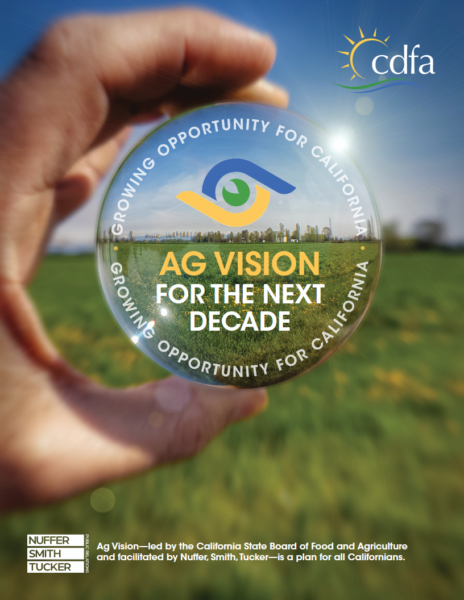 The California State Board of Food and Agriculture, which includes a range of stakeholders, developed Ag Vision as a 10-year strategy for agriculture in California. The plan identifies one strategic priority: fostering climate-smart, resilient systems within the regenerative food system.
The plan outlines three approaches. The first is to expand climate-smart practices on agricultural land, including cover cropping, hedgerows, compost application, and efforts to reduce manure and enteric methane emissions from dairies and livestock. The second is to develop environmental markets that could provide additional funding for these projects, as demand continues to exceed available state funding.
The third approach is to promote a circular economy by reducing waste and increasing reuse. Agricultural waste is already recycled into livestock systems, and the plan points to additional opportunities, such as incorporating some municipal waste into agricultural systems.
CLIMATE RESILIENCE STRATEGY FOR CA AG
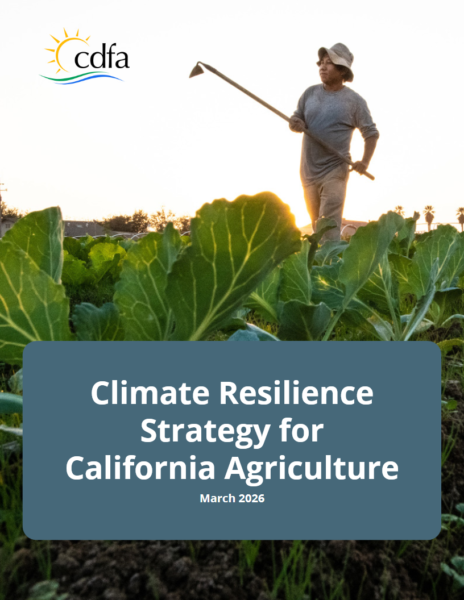 The Climate Resilience Strategy for California Agriculture describes how the state’s agricultural sector can adapt to climate change while reducing greenhouse gas emissions. Developed by CDFA, the strategy emphasizes long-term sustainability through practices intended to protect soil health, conserve water, and help growers manage risks such as drought, extreme heat, and shifting growing conditions.
The strategy also includes an accounting of agricultural programs across state agencies.
It is organized around three pillars: supporting a thriving and resilient food sector, protecting natural systems that are critical to agriculture, and encouraging resilient practices.
The strategy identifies four main goals: improving the economic position of farmers, reducing greenhouse gas emissions, supporting broader economic development, and providing environmental and health benefits through agriculture. It frames financial viability for producers as a necessary condition for climate sustainability efforts to succeed. Equity principles are also intended to guide the strategy, including consideration of farms of different sizes and the communities surrounding agricultural operations.
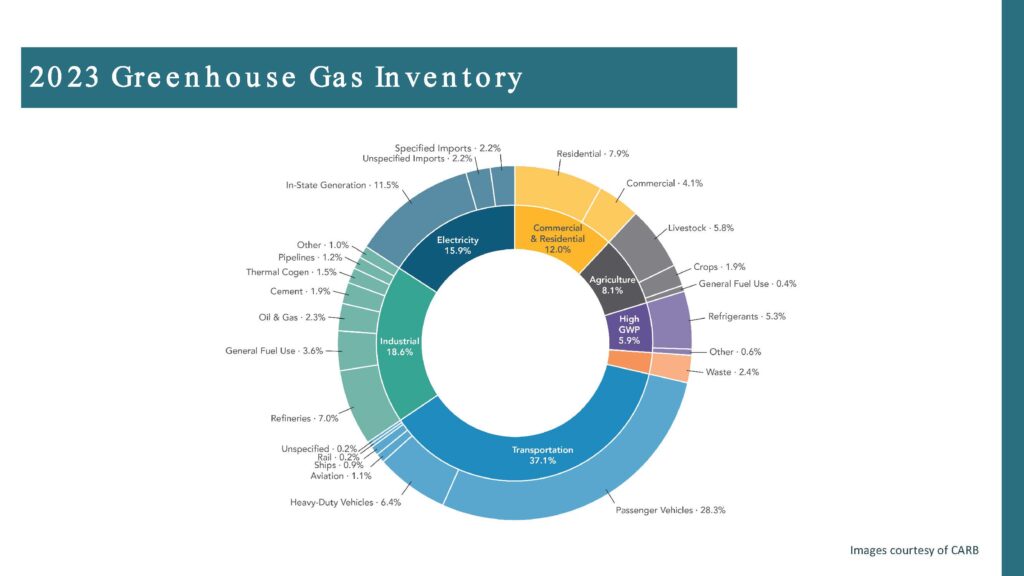
The slide below presents data from California’s 2023 greenhouse gas inventory, prepared by the California Air Resources Board. Agriculture accounts for 8.1% of the state’s greenhouse gas emissions. More than two-thirds of those emissions come from livestock methane, split between enteric and manure methane, while most of the remaining emissions come from croplands.
The slide below shows carbon storage across California landscapes. It distinguishes between carbon stored in soil and carbon stored in biomass, indicating that soil represents a significant carbon-storage opportunity in agricultural lands.
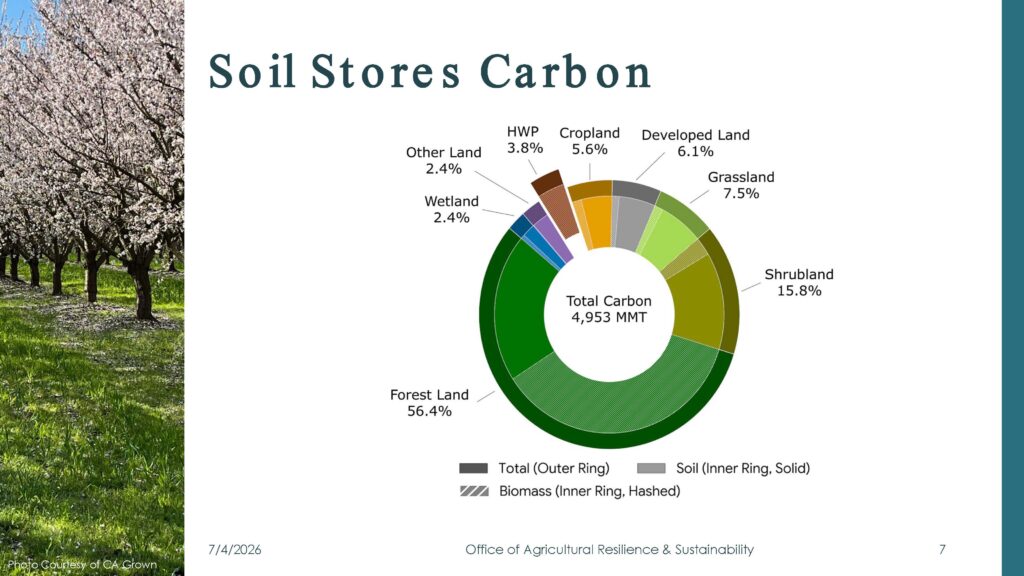
“So for both the grasslands and croplands, you can see that soil holds enormous potential for carbon storage, more so than the biomass itself, and so that’s really where we have been focusing our programs, on enhancing that carbon storage in soil,” said Dr. Mata.
The slide below summarizes AB 1757, enacted in 2022, which established targets for nature-based solutions across different landscapes. For healthy soils practices, the targets call for 140,000 new acres by 2030, followed by additional increments of 190,000 acres by 2038 and 2045. Dr. Mata described those targets as ambitious, particularly in relation to available program funding.
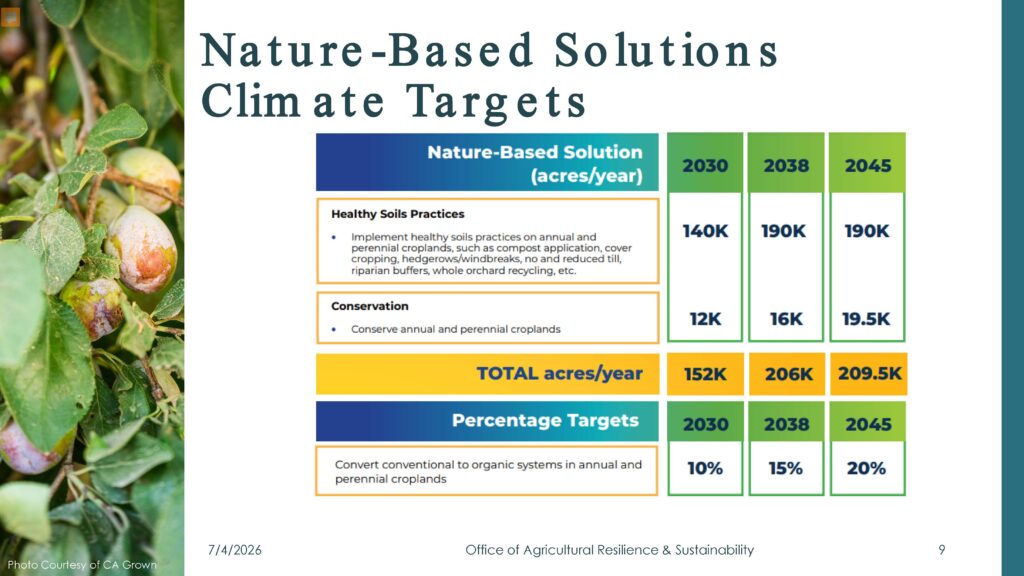
The state also set targets for land conservation, a program housed within the Department of Conservation, to help prevent the loss of farmland and its carbon-storage potential. Additional targets call for converting conventional systems to organic production, with goals of 10% by 2030, an additional 15% by 2038, and an additional 20% by 2045.
HEALTHY SOILS PROGRAM
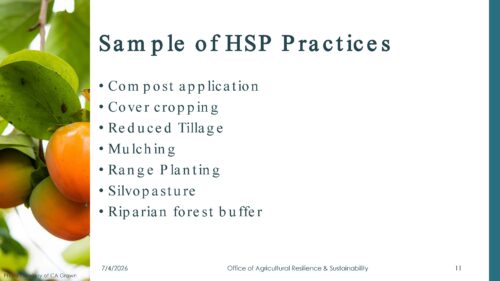 CDFA’s Healthy Soils Program provides financial incentives to farmers and ranchers who adopt practices intended to improve soil health and increase carbon storage. The program currently supports 28 practices, including compost application, cover cropping, reduced tillage, mulching and range planting. CDFA developed greenhouse gas quantification methods for the practices in collaboration with the California Air Resources Board.
Dr. Mata said soil health is generally organized around four principles: minimizing disturbance, maximizing biodiversity, maintaining soil cover and keeping living roots in the soil. In addition to carbon storage, she said healthy soils can improve nutrient cycling, reduce input needs, increase water retention and support groundwater infiltration and recharge.
The Healthy Soils Program is structured as a block grant program. The format allows regional organizations and communities to identify local goals while meeting a baseline requirement that projects sequester carbon. Block grantees then provide sub-awards to farmers to support practices that increase carbon storage.
“It de-risks it for them,” said Dr. Mata. “It gives them a chance to try new things without taking a huge financial risk themselves. We can’t and don’t fund these projects indefinitely. So this is really an opportunity for them to see if this can make sense on their landscape and be financially feasible for them to continue going forward.”
The program also provides technical assistance to support project implementation and continuation. According to CDFA, the program has awarded $205 million for about 2,400 on-farm projects, which are expected to sequester 1.6 million metric tons of carbon. Dr. Mata said the program has a 71% practice-persistence rate and a 36% commitment rate for expanding practices beyond the grant period.
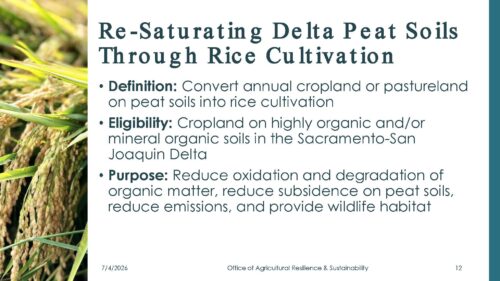 A new practice being funded for the first time this year focuses on re-saturating Delta peat soils through rice cultivation. The practice converts annual cropland or pastureland to rice cultivation and applies to croplands in the Delta with highly organic or highly mineral-organic soils. Dr. Mata said the practice was first proposed in 2020, followed by work with CARB to develop a practice standard and quantification methodology. After a period in the demonstration grant program, the practice is now being funded as a full incentive practice, with a one-year investment of $800 per acre to help producers transition to rice production.
State Water Board: Nature-Based Solutions and Water Quality
 The State Water Resources Control Board uses nature-based solutions primarily through its regulatory, permitting and funding roles. Rather than implementing most projects directly, the water boards can require or encourage mitigation, restoration, wetland protection, groundwater recharge, stormwater capture and other practices that use natural systems to protect water quality, improve ecosystem conditions and support climate resilience.
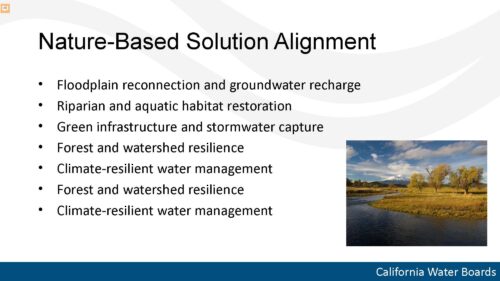 Nick Martorano, assistant deputy director in the board’s Division of Water Quality, said the board’s work is guided by state and federal laws, including the Porter-Cologne Water Quality Control Act and the federal Clean Water Act, which give the board authority to regulate activities that can affect waterways, including forest harvesting, dredge-and-fill activities and nutrient discharges.
“We work at the intersection of water quality, water supply, ecosystem health, and climate resilience, which makes nature-based solutions directly relevant to our everyday work,” said Mr. Martorano. “Nature-based solutions align with a lot of our program areas. This alignment reflects the fact that protecting water quality and managing water sustainably often requires working with natural systems rather than against them.”
The State Water Resources Control Board is based in Sacramento, while nine semi-autonomous regional water boards oversee hydrologic regions throughout the state. The regional boards work directly with local watersheds, communities and landowners, and have permitting authority within their basins, including the Delta. Together, the water boards set standards, review projects, provide funding, and support monitoring and adaptive management for restoration and resilience projects that advance climate adaptation and ecosystem recovery.
The board also provides streamlined permitting pathways for restoration and multi-benefit infrastructure projects. Martorano said those pathways are important because regulatory review can be time-consuming, complex and costly for project proponents seeking to implement nature-based solutions.
WETLANDS PROTECTION
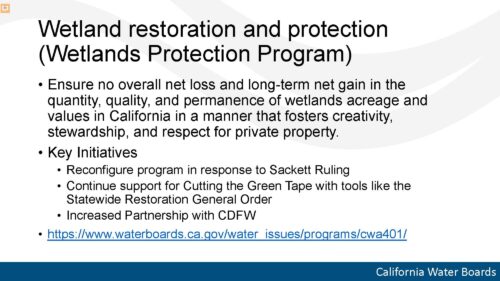 Wetlands protection is a central focus for the water boards, which aim for no overall net loss and a long-term net gain in the quantity, quality and permanence of California wetlands. Mr. Martorano noted that the state has lost about 95% of its wetlands, making protection of remaining areas and restoration of additional acreage a major part of the board’s work.
The board also supports the state’s Cutting Green Tape initiative through tools such as the statewide restoration general order and the small habitat restoration permit. Those permitting pathways are intended to reduce time and costs for projects with net environmental benefits and, in some cases, provide CEQA exemptions or other expedited review options.
Mr. Martorano said the board is also working more closely with the California Department of Fish and Wildlife to better align watershed protection and restoration efforts.
SGMA
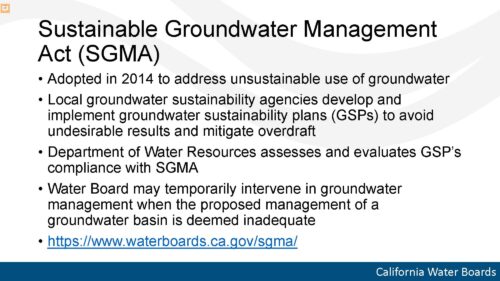 The Sustainable Groundwater Management Act, adopted in 2014, requires local agencies to develop groundwater sustainability plans that bring basins into long-term balance and avoid problems such as overdraft and land subsidence.
“From a nature-based solutions perspective, SGMA is relevant because groundwater recharge through natural and nature-compatible landscapes, such as floodplains, recharge basins, and managed wetlands, is increasingly recognized as an important tool for achieving sustainable groundwater management goals,” said Mr. Martorano.
IRRIGATED AG
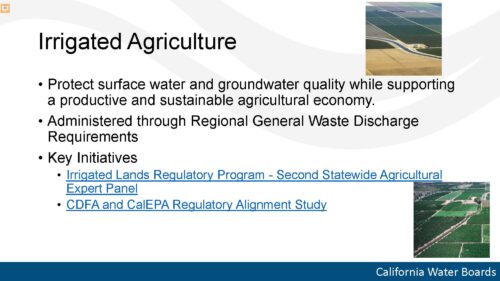 The Irrigated Lands Regulatory Program is intended to protect surface water and groundwater quality while supporting a productive agricultural economy. The program is implemented through regional general waste discharge requirements and addresses agricultural activities that can affect water quality.
Mr. Martorano said the program recently convened its second statewide agricultural expert panel, which is developing updated recommendations for managing agricultural water quality. The board is also participating in a regulatory alignment study with the Department of Food and Agriculture and CalEPA to improve coordination across agencies.
In the Delta, irrigated agriculture is closely connected to nature-based solutions through nutrient management, drainage treatment, wetlands, and on-farm practices that can reduce pollutant loading to waterways.
BAY DELTA PLAN
 The Bay-Delta Water Quality Control Plan is one of the State Water Resources Control Board’s primary planning and regulatory tools for the Delta. The plan establishes water quality measures and flow requirements intended to provide reasonable protection for beneficial uses in the Sacramento and San Joaquin watersheds.
Martorano said nature-based solutions in the Delta must be consistent with the plan’s objectives and policies.
“They cannot be simply designed for habitat or resilience in isolation; they must align with our water quality objectives and have beneficial use protections established in the plan,” said Mr. Martorano.
The board is currently working on revisions to the Bay-Delta Plan, which Martorano said officials hope to bring before the board later this year. The board is also engaged in voluntary agreements, a collaborative approach to addressing flow and habitat needs in the Delta that could create opportunities for nature-based solutions at scale.
NON POINT SOURCE GRANT FUNDING
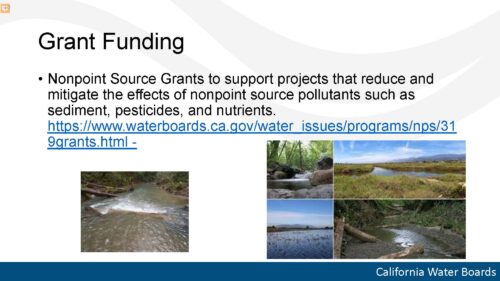 Funding remains a significant barrier for many nature-based solutions projects. The water boards administer several grant programs, including the Nonpoint Source Grant Program, which supports projects that reduce or mitigate nonpoint source pollution. Eligible projects can include nature-based approaches, such as stream restoration, to address erosion and sedimentation.
FOREST MANAGEMENT
 The forest management program is a relatively new effort focused on preventing and managing nonpoint source pollution from forest-related activities. Key concerns include sediment and stream warming associated with timber harvest, fuels treatment, road maintenance, grazing and post-fire operations.
Those activities can affect fish habitat, drinking water supplies, riparian areas and overall watershed health. Martorano said that, when well designed and paired with restoration, they can also improve conditions by addressing legacy roads, reducing wildfire risk and restoring fish passage.
He pointed to the North Coast region and the Klamath watershed, where four major dams have been removed and restoration work is underway, including beaver dam analogs. Forest health and watershed resilience are connected to Delta water quality through upstream hydrology, sediment delivery, water temperature and the risk of post-fire runoff events that can increase pollutant loading.
STORMWATER
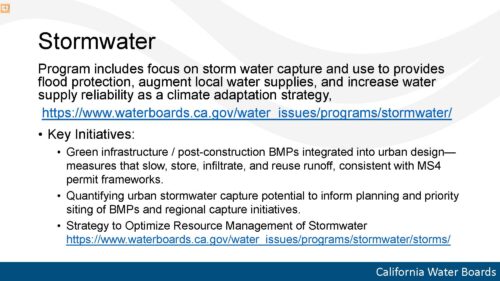 The State Water Resources Control Board also administers a stormwater permitting program that focuses largely on urban areas. The program includes stormwater capture and use as a climate adaptation strategy, with potential benefits for flood protection, local water supply augmentation, and water supply reliability. Key initiatives include green infrastructure and post-construction best management practices integrated into urban design, including measures that slow, store, infiltrate, and reuse runoff under municipal storm sewer permit frameworks. The board is also working to quantify urban stormwater capture potential to inform planning, prioritize best management practices, and support regional capture efforts, including the Strategy to Optimize Resource Management of Stormwater.
Department of Water Resources: Multi-Benefit Projects and Science Questions
 The California Department of Water Resources’ Division of Multi-Benefit Initiatives works on projects that reduce flood risk while also improving habitat, water management and ecosystem resilience. Steve Rothert, manager of the division, said DWR is implementing nature-based solutions through programs that integrate flood management, restoration, agricultural lands and carbon sequestration, while also raising science questions about how those projects perform over time and how they should be adapted as conditions change.
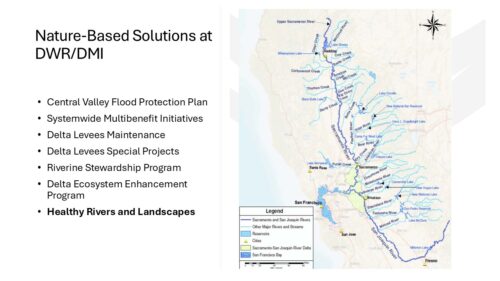 Mr. Rothert said nature-based solutions and multi-benefit projects often overlap because landscapes can no longer be planned for a single purpose. Agricultural lands, flood systems and restored habitat increasingly are expected to provide multiple benefits, including food production, fish and wildlife habitat, flood protection and carbon storage.
“That’s the fundamental planning principle that we incorporate at the Division of Multi Benefit Initiatives,” said Mr. Rothert. “We are the lead part of the department implementing multi benefit initiatives in collaboration with other parts of the department.”
DWR applies that approach through several programs, including the Central Valley Flood Protection Plan, Systemwide Multi-Benefit Initiatives, Delta levee programs, the Riverine Stewardship Program and the Delta Ecosystem Enhancement Program. The division also works with other DWR programs and outside partners, including the Delta Conservancy, the Delta Stewardship Council, the Central Valley Flood Protection Board, reclamation districts, nonprofit organizations and universities.
HEALTHY RIVERS AND LANDSCAPES PROGRAM
The Healthy Rivers and Landscapes program is being considered as an alternative to the State Water Board’s traditional approach to managing water resources through regulation of diverters and water rights holders. The program relies on nature-based solutions. It pairs increased flows with habitat restoration, based on the premise that the combined approach can better support water quality objectives and native fish recovery than flow regulation alone. The program’s goals include doubling salmon populations and creating conditions that support viable native fish populations. If adopted, the board would review the program annually during its eight-year term and could continue, modify or end the approach based on its progress.
Mr. Rothert said the alternative would be a lengthy, potentially statewide adjudication of water rights. “In my view, my professional experience, that could take decades and could result in essentially decades of inaction on our water resources, improving habitats and flows and water quality, and conditions for native fish and wildlife, which is a frightening prospect, and so it’s essential that, in my view, that the HRL program succeeds.”
For the Healthy Rivers and Landscapes Program, Rothert said a science framework will be important for monitoring, measuring and communicating the program’s effectiveness and progress toward established targets. He said the Independent Science Board could support that work by helping develop methodologies, frameworks, research questions and communication approaches for the program.
RESTORATION QUESTIONS
My division works with bond funds and general funds to develop and implement multi benefit nature based projects throughout the Central Valley. I wanted to touch on a few of them and identify a question or two that, and a challenge or two that we’ve had with implementing those projects.
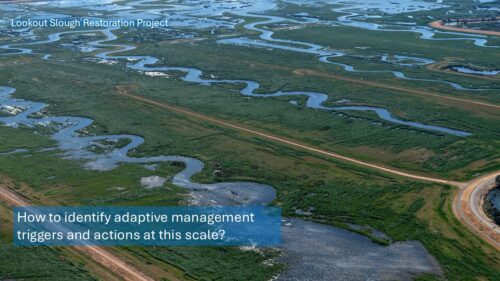 LOOKOUT SLOUGH: The Lookout Slough restoration project, completed in 2023, is the largest wetland restoration project completed in the Delta. The project restored more than 3,400 acres of tidal and floodplain habitat and has now had several years to develop vegetation and ecological function. Mr. Rothert said one emerging question is how to apply adaptive management at the scale of a large restoration project. Different areas of the site are developing at different rates and with different vegetation communities, raising questions about when and how managers should intervene to support desired outcomes or limit unwanted trends. He also identified non-native vegetation control as a challenge, particularly when treatments must be applied across a broad landscape while minimizing impacts from drift or transport through water.
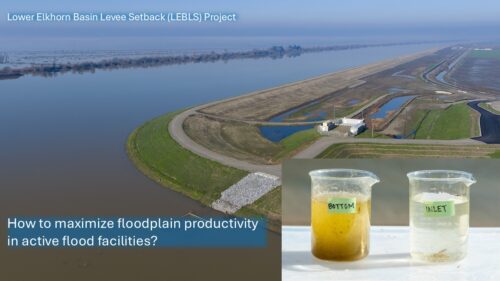 LOWER ELKHORN BASIN LEVEES SETBACK PROJECT: The Lower Elkhorn Basin Levee Setback Project, or LEBLS, is a multi-benefit project that set back a seven-mile levee by about 1,000 to 1,500 feet to improve flood risk management and create additional floodplain habitat. The slide below illustrates the project’s productivity, comparing water samples taken at the inlet of the floodplain and at the end of the seven-mile reach. Carson Jeffries, a fisheries biologist at UC Davis, said the samples reflected unusually high productivity in the floodplain. Mr. Rothert said the project has raised questions about how to maximize floodplain productivity within an active flood facility and how to incorporate those benefits earlier in project design. DWR has made post-construction modifications to improve habitat value and productivity, but Rothert said the experience suggests those considerations should be built into projects from the outset.
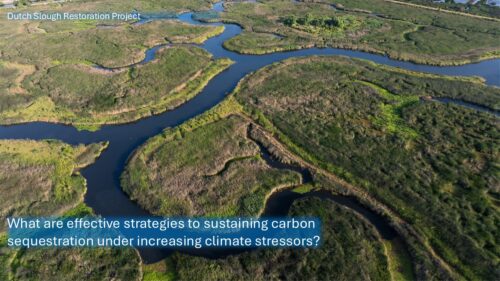 DUTCH SLOUGH RESTORATION PROJECT: The Dutch Slough Restoration Project, on the western edge of the Delta near Brentwood and Oakley, has taken about two decades to reach implementation. The slide below shows the first of two project phases; the second phase is expected to begin construction next summer. Rothert said the phased approach provides an opportunity to evaluate design decisions, including channel configuration and the strategy of planting native wetland vegetation and irrigating it for two years before opening the site to tidal influence. Mr. Rothert also pointed to restoration work on Twitchell and Sherman islands, north of Dutch Slough, where managed wetlands have shown strong potential for carbon sequestration. He said the sites have some of the most developed monitoring and verification systems for carbon sequestration in the Delta. The remaining challenge, he said, is securing the legal and administrative support needed to sell carbon credits in voluntary—and potentially regulatory—markets. Revenue from those credits could be reinvested in project management, habitat maintenance and long-term restoration functions.
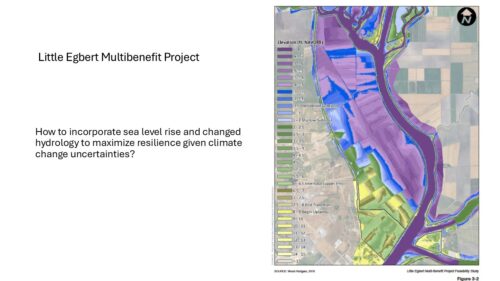 LITTLE EGGBERT TRACT: The Little Egbert Tract project is a proposed multi-benefit restoration project near the lower end of the Yolo Bypass, where it reconnects with the Sacramento River near Rio Vista. DWR’s Division of Multi-Benefit Initiatives is developing plans to convert about 3,200 acres of marginal agricultural land into a mix of habitats, ranging from subtidal areas to riparian zones. Mr. Rothert said a key design challenge is how to account for sea-level rise and changes in storm-driven flows from the Sierra Nevada, including whether the project should be designed for expected conditions in 2050, 2075, 2100 or another planning horizon.
Delta Conservancy: Restoring Wetlands and Reducing Emissions
Campbell Ingram, executive officer of the Sacramento-San Joaquin Delta Conservancy, discussed the agency’s work on subsidence and carbon emissions in the Delta. The Conservancy is a state agency that develops and funds locally supported projects in the Delta and Suisun Marsh. Its nature-based solutions work includes investments in restored wetlands, rice agriculture and conservation land management to address subsidence, greenhouse gas emissions, habitat loss, water quality and climate resilience. Since its creation in 2010, the Conservancy has invested about $100 million in roughly 140 projects, including recreation, restoration, conservation, climate resilience, agricultural sustainability, drought response, invasive species control and community development projects.
The Delta accounts for about 6% of California’s agricultural emissions, but only about .5% of agricultural land area. The Delta is losing about an inch a year through oxidation processes; the peat soil oxidizing, volatilizing as carbon dioxide directly into the atmosphere. About 150,000 acres of the Delta is subsided, 25 feet or more below sea level. That continued oxidation is putting 1.2 million metric tons of CO2 directly into the atmosphere, it’s equivalent about 325,000 vehicles.
“I think of the Delta as this little chimney in the middle of the state that’s really pumping carbon into the atmosphere about as hard as a pump can work,” said Campbell Ingram.
NATURE-BASED SOLUTIONS
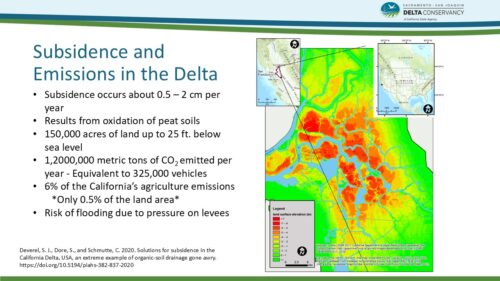 The Delta Conservancy has focused much of its nature-based solutions work in the Delta’s subsided areas, shown in orange and yellow on the slide. The work includes re-wetting subsided peat soils to slow subsidence and reduce carbon emissions, supporting managed and tidal wetland restoration to create habitat and improve ecological resilience, and encouraging conversion to rice cultivation, which can reduce subsidence and greenhouse gas emissions while supporting migratory bird habitat and agricultural production.
AB 1757 established statewide nature-based solutions targets for California, including a goal of re-wetting 50,000 acres in the Delta by 2045. The Conservancy received a one-time $36 million General Fund allocation for four projects that are expected to re-wet about 10,000 acres. Those projects include Webb Tract, a 5,000-acre project planned as a mosaic of managed wetland and rice cultivation, with construction expected to begin in the coming year. On Staten Island, wetlands are being added to an existing wildlife-friendly farming mosaic.
Ingram identified several additional opportunities for nature-based solutions in the Delta. They include managed wetland and rice cultivation mosaics that return water to the landscape, “walking wetlands” that rotate wetland areas through agricultural lands over time, and floating peat, a technique that can allow tule and other wetland plants to colonize and help restore elevations more quickly.
MAKING DELTA ISLANDS ECONOMICALLY VIABLE
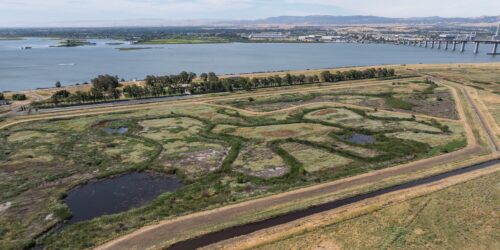
Making Delta islands economically viable is central to efforts to address subsidence and emissions while maintaining agricultural and habitat functions. Farming on subsided islands is costly because levees must be maintained and water levels carefully managed. On islands below sea level, water must be pumped continuously to keep the water table low enough for crop production; without pumping, Ingram said, the islands would fill and become inland lakes. The Nature Conservancy, which manages Staten Island, pays about $750,000 a year in PG&E costs to manage water on the island.
“So really, what we’re trying to do here is stop the subsidence, stop the emissions, increase biodiversity, but make these islands economically viable into the future,” said Mr. Ingram.
One potential revenue source is carbon credits. On Sherman and Twitchell islands, the Department of Water Resources has nearly 3,000 acres of managed wetland restoration, creating a substantial body of work on how restored wetlands can slow subsidence and sequester carbon.
A California deltaic carbon protocol, developed by Steve Deverel, provides a framework for validating projects and verifying credits. DWR has gone through that process for its project, and The Nature Conservancy has done so for Staten Island. Mr. Ingram said DWR is close to selling those carbon credits.
“So, with carbon revenue and rice revenue, there could be enough revenue to be able to maintain the levees, manage the water, and keep these islands sustainable into the future,” said Mr. Ingram.
MORE FUNDING NEEDED
Mr. Ingram said Delta subsidence poses a significant risk to California’s economy because it increases pressure on levees and can make them more vulnerable to failure. If levees fail in the western Delta because of an earthquake or more intense storm activity, salt water from San Francisco Bay could move farther into the Delta and disrupt water exports.
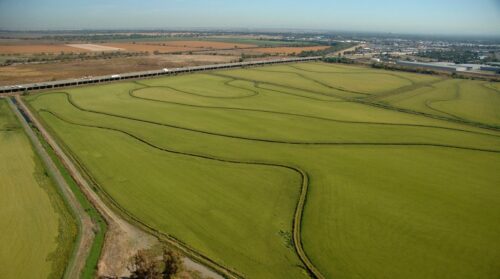
“That would have catastrophic effects on California’s economy, not to mention the agriculture, which is incredibly rich in the Delta, and the communities that are in the Delta themselves,” said Mr. Ingram. “It really is a terribly important issue.”
The Conservancy received $29 million through Proposition 4, with solicitations expected to open later this summer for additional projects.
Funding remains a challenge. Of the $10 billion climate bond, the Conservancy is expected to receive $9 million for Delta subsidence work. Mr. Ingram said that allocation reflects a disconnect between the scale of the Delta’s needs and its importance to California’s water supply and Delta communities.
“I think there’s a lot of work that we can all do to align the science and the messaging, and even working with the Legislature to try to restore that understanding of what the Delta needs and try to get more funding for investments,” he said.
Campbell Ingram cautioned about how future science needs should be characterized. “My role at this point is to try to generate enough interest in funding implementation and get people focused on the need and that we are ready to go,” he said. “We need to be cognizant of how we characterize science needs, so that a funder doesn’t look at something and say, hey, why would we fund a lot of this when we know there are these outstanding scientific questions that need to be answered?”
Challenge: Measuring Project Outcomes
Panelists identified effectiveness monitoring as a recurring challenge for nature-based solutions projects. While agencies and project partners often have funding to construct projects and report whether required work was completed, they said long-term monitoring is less consistently funded, making it harder to assess ecological outcomes and understand which approaches are working.
Mr. Martorano said one major data gap is the ability to verify whether restoration and mitigation activities are producing the intended ecological functions. He said available funding is often directed toward implementation and basic reporting rather than follow-up monitoring.
At a Cutting Green Tape summit, Mr. Martorano said he heard project proponents describe risk as a barrier to getting more projects on the ground. “I kept on asking, do we have success stories? And I got a lot of blank looks because they don’t have the funding to then go back and confirm there was actually an ecological improvement that was intended from the project. So I said, if you can’t tell things are successful, then why are we afraid of failure?”
Dr. Mata said CDFA faces similar constraints. She noted that the department’s greenhouse gas quantification methodologies are based on research, and that CDFA is working with UC Agriculture and Natural Resources to develop improved protocols for collecting soil data that could support effectiveness monitoring. Whether that monitoring can be funded, she said, depends on the terms of individual funding sources and whether they allow money to be used for that purpose.
Mr. Rothert said DWR conducted effectiveness monitoring at the Dutch Slough Restoration Project, where one phase included pre-planting native vegetation and irrigating it for two years before opening the site to tidal influence. DWR monitored vegetation, water quality and species use, then compared results with nearby restoration projects that did not include the same pre-planting and irrigation approach. Mr. Rothert said the projects have developed differently, including differences in which species appeared and when they appeared.
Mr. Rothert said the Healthy Rivers and Landscapes program would require effectiveness monitoring. Each project would have a science plan with hypotheses, sub-hypotheses, monitoring protocols and evaluation methods. The monitoring would assess not only whether a project was built according to criteria, but also whether it is attracting target species, including through tools such as environmental DNA.
“Those project-level science plans are meant to be connected to system-level plans, such as the Delta or for the Sacramento River or Feather River,” he said. “All of that will then support the assessment of the effectiveness of the habitat and flow actions that the HRL program will be implementing and then presenting to the board.”
Dylan Chapple, environmental program manager, said effectiveness monitoring is conducted across Fish Restoration Program sites, which include more than 8,000 acres of tidal wetland restoration. He said the program is led by the California Department of Fish and Wildlife in collaboration with DWR and builds on conceptual model work that began during the CALFED era.
“The science plan for the Healthy Rivers and Landscapes program is working directly with the science and approaches and monitoring, which is actually adaptive monitoring,” said Mr. Chapple. “There’s limited funding for this monitoring, but a real need to cover this 8,000 acres adequately, so those methods are constantly being refined, and it’s just been really encouraging to see that all of that work that’s gone into that hasn’t just stopped at these Fish Restoration Program sites, but it’s now working directly with the Healthy Rivers and Landscape the team working on that.”
Challenge: Capturing the Multiple Benefits of Nature-Based Solutions
Panelists also discussed the need to better account for co-benefits from nature-based solutions, including water quality, groundwater recharge, biodiversity, flood-risk reduction and long-term land viability. They said more complete accounting could help agencies explain the value of projects, coordinate funding and identify practices that advance multiple state goals.
Dr. Mata said CDFA uses greenhouse gas quantification methods to guide funding decisions, but that approach does not capture all of the benefits associated with healthy soils practices. She described a conversation with a rancher who said a stream that had previously dried up each year had become perennial after soil-health improvements increased water retention. “If we could have a more holistic co-benefit calculation for some of these practices, I think we could really optimize our sustainability goals as a state and find goals that resonate with everybody,” she said.
Dr. Mata said the regulatory environment could help identify the most important co-benefits, such as water quality, pesticide reduction and groundwater recharge. “If I can both sequester carbon and address one of those things, then that’s a real win,” she said. She added that a transparent co-benefits framework could support more collaboration across agencies, including between CDFA and the water boards on practices that store carbon in soils while helping farmers meet water-quality requirements.
Mr. Ingram said a co-benefit methodology would also help describe what the state receives from Delta restoration investments and why those projects are important. In deeply subsided areas of the Delta, he said, benefits include slowing or stopping subsidence, reducing carbon emissions, increasing biodiversity and potentially restoring the base of the food chain. “If we can quantify the risk reduction of not continuing to subside, and/or even restoring elevations by small amounts through time, that could be really critical,” he said.
Mr. Ingram pointed to rice cultivation in the Healthy Soils Program as one example of programs coming together to support multiple benefits. He also noted that Proposition 4 includes language intended to make it easier to move funding between programs, which could reduce the need for multiple grant agreements and encourage greater coordination.
Mr. Rothert cited a recent cultural burn in the Delta as another example of multiple benefits. He said the site showed a strong response, including rapid vegetation growth and the return of a variety of waterfowl and mammals within a day of the burn.
Other science questions
Panelists identified several additional science needs that could inform the Delta Independent Science Board’s consideration of nature-based solutions. For the State Water Board, Mr. Martorano said improved remote sensing and monitoring tools are needed to better identify where wetlands are located, assess their condition and track where they may be affected by projects. He said those tools are important for evaluating the state’s no-net-loss wetlands goals.
Mr. Martorano said the second statewide agricultural expert panel also identified research needs relevant to the Delta, including the effects of pesticides, chemical and toxicity sampling in ambient waters, and studies of how combinations of pollutants interact. He said that information could help improve best management practices on agricultural lands.
Other State Water Board science needs include better information on the effectiveness of structural and nonstructural best management practices, research on invasive species and their effects on nutrient cycles, and improved understanding of harmful algal blooms, including their causes and which nature-based approaches could help reduce or prevent them across different waterbody types and contributing factors.
Mr. Rothert said the board also could help synthesize emerging information on climate-durable planning. While some guidance is written for planners and managers, other material is highly technical and difficult to apply. He said the Independent Science Board could help translate recommendations, guidelines and findings into information that project designers, managers and adaptive-management decision-makers can use.
Mr. Ingram said social science is also important because Delta restoration and subsidence projects depend on landowner participation. He said the work involves helping landowners see nature-based solutions as a path toward long-term viability. “Helping people understand what their opportunities are, how they can engage, and really incorporating them into some of the discussion about how we move forward is really critically important,” he said.

