

As the Sustainable Groundwater Management Act, or SGMA, continues to reshape how much groundwater can be pumped in many basins, some landowners are exploring new uses for irrigated acreage. In a recent webinar, the California Chapter of the American Society of Farm Managers and Rural Appraisers examined four alternative income opportunities for agricultural properties: hunting, conservation easements, solar and carbon storage.
HUNTING
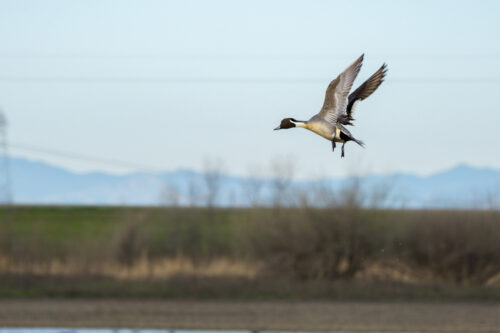
Andrew Foraker manages irrigated lands in the western U.S. and brings personal experience from his family’s Sacramento Valley rice farm, which operated a duck club for more than 35 years.
California’s large population and limited public access create demand for private hunting opportunities. On agricultural land, revenue depends mainly on location, habitat, and a property’s hunting history. Ducks and geese generally offer the strongest income potential, especially near refuges and on suitable rice ground. Doves can add limited seasonal revenue, while deer, hogs, and turkeys are more property-specific and usually less important on core farm ground.
Lease value is highly subjective, but a practical rule of thumb is that landowners may capture about one-third of a guide’s gross hunting revenue. Historical success, season length, and infrastructure such as blinds are major value drivers. Cost-share and habitat programs can help offset infrastructure or habitat work, though they are typically designed for conservation outcomes rather than hunting income. Groups such as the California Waterfowl Association often publicize these opportunities.
Liability is a major consideration. If hunting is allowed on the property, owners should use waivers and maintain strong umbrella coverage because firearms-related accidents can create significant risk. Landowners should confirm with their insurer that hunting activity is disclosed and covered.
Mr. Foraker said hunting value follows the same rule as real estate: it starts with location. “If you don’t have the ducks there, if you don’t have the deer there, if you don’t have the doves there, doesn’t really matter; you’re not going to be able to generate any hunting revenue on there,” he said. “Most folks in the hunting communities know where these places are, generally. You just have to match up the animal with the property.”
CONSERVATION EASEMENTS
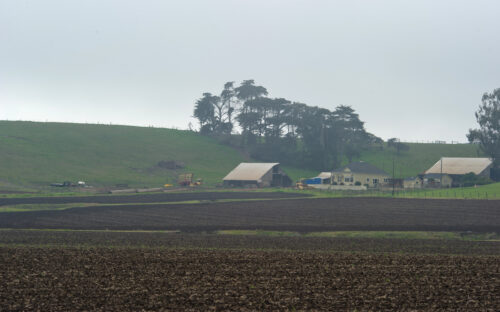
Nita Vail, a fourth-generation rancher and former CEO of the California Rangeland Trust, said conservation easements can provide alternative income while allowing landowners to retain ownership and continue agricultural use.
A conservation easement is a permanent deed restriction that stays with the land. It is designed to protect agricultural or conservation values, while the landowner generally keeps title and control of day-to-day operations, subject to monitoring by the easement holder. Farmland easements usually allow more flexibility in crop rotation and farming practices than rangeland easements. Because these agreements are complex and permanent, they often take two to five years to complete and should be structured with future land-use plans in mind.
Funded easements are often used for succession planning or debt reduction and are typically valued on a before-and-after basis; some proceeds may qualify for 1031 exchanges. Mitigation easements can be more lucrative but usually take longer and involve stricter requirements. Donated easements may offer significant charitable deductions, especially for qualified farmers and ranchers.
Value is often driven by water reliability, parcel status, habitat quality, and the specific restrictions in the easement. Easements may still be compatible with hunting, but large commercial solar development can be limited, so landowners should address those possibilities before signing.
“The challenges for landowners are to keep as much flexibility as you can in the conservation easement, advised Ms. Vail. “When you have a land trust involved, you want to make sure that that land trust is really advocating for agriculture, because I have seen conservation easements that are intrusive on the landowners unnecessarily. Fencing can be an issue. Sometimes water can be an issue. So look at who the land trust is, make sure you have good representation. It’s big decision. It’s a decision for life.”
SOLAR
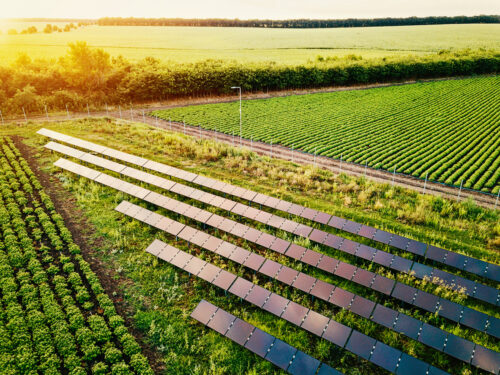
David Vincent, president of ACIP Energy, said the firm advises landowners on whether renewable energy is a good fit for their property. Solar options include offsetting on-site farm or ranch power use, utility-scale development, land leases, system maintenance, and renewable energy credits.
The most common systems in the Central Valley are small on-site installations that offset electricity use and are generally treated as farm equipment, so they typically do not conflict with Williamson Act or easement terms. They are usually placed near major electrical loads and tied to an existing or newly installed meter through net energy metering, which lets owners bank excess daytime power against later usage.
Utility-scale solar is less common and usually requires 50 to 1,000 acres plus access to high-capacity transmission. Most developers prefer leasing land rather than buying it, but lease rates vary widely based on proximity to substations and upload points. Flat ground, road access, and available grid capacity are key site-selection factors.
Mr. Vincent closed with a recommendation for those with existing systems to make sure their systems are routinely maintained. “It is amazing how many systems are out there and how much revenue is being lost without proper maintenance,” he said. “You want to make sure you have somebody actively looking at these systems to ensure you’re getting maximum production out of them. Tens of thousands of dollars are lost on systems that are just not being paid attention to.”
CARBON SEQUESTRATION
Aaron Powell, a business attorney at Holland & Knight, advises clients on large-scale carbon capture and sequestration projects and the agreements that support them.
These projects begin with capturing CO₂ either from major industrial emitters or directly from the air, then compressing and transporting it for permanent storage deep underground in suitable geologic formations such as depleted oil and gas formations or deep saline formations.
Developers are typically paid through federal tax credits tied to how CO₂ is captured and stored, so because a leak could jeopardize those credits, they have a strong financial incentive to keep it permanently underground.
For landowners, the core agreement is usually a pore-space lease or carbon sequestration easement that allows CO₂ injection, long-term storage, and related infrastructure in exchange for payment. Ownership of pore space is not always settled, however, and in many states it depends on state law, even though the surface owner is often presumed to control it.
These agreements are long-term arrangements that can run for decades and usually include both operating rights and monitoring obligations. The timeline can be lengthy: an initial study and permitting phase may last years before injection begins, followed by decades of storage operations and long-term monitoring after the site is filled.
That means landowners may receive an upfront or annual payment during development, but significant royalty income may not arrive until commercial injection is underway.
When contemplating such an agreement, landowners need to focus on water rights, remediation obligations, and the long-term durability of the financial model—concerns that led Powell to close with a note of caution:
“There’s some level of political risk here, simply because it’s nothing more than an act of Congress propping these projects up,” said Mr. Powell. “It’s interesting that the second Trump administration, when they took office, rolled back a lot of the Biden administration’s climate initiatives, but this was not one of those areas. In fact, they actually increased the credit amount. But at the end of the day, it is all just a tax credit. You’re not selling some valuable natural resource.”

