A growing release program is putting hatchery-raised fish back into the Delta while scientists work to improve their odds of survival
By Robin Meadows
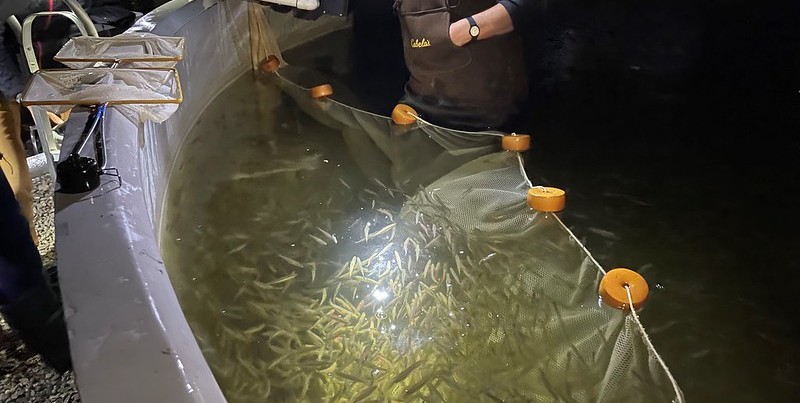
Five years ago, a multi-agency team launched an effort to restore Delta smelt, a finger-sized iridescent fish unique to California’s Sacramento-San Joaquin Delta. Delta smelt were once among the most common fish in the region but are now critically endangered due to a suite of threats including loss of suitable habitat and food.
As Delta smelt dwindled, a refuge population was established a quarter century ago as a hedge against extinction at the University of California, Davis Fish Conservation and Culture Laboratory near Byron. Releases of hatchery Delta smelt into the wild began in 2021. Additional partners in this effort include the U.S. Fish and Wildlife Service, the California Department of Fish and Wildlife, the California Department of Water Resources, the U.S. Bureau of Reclamation and the U.S. Geological Survey.
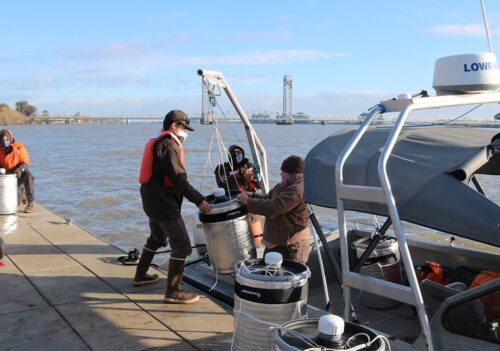
Delta smelt are famously sensitive to their environment―including temperature, water quality, and physical disturbance―and must be handled with care. Initial experimental releases involved transporting the fish from the UC Davis hatchery to the Delta in 20-gallon carboys. While this method was intended to be easy on the smelt, it took a crew all day to release just 6,400 of them.
Models suggest that saving Delta smelt in the wild will require releasing several hundred thousand hatchery fish each year. But carboy releases maxed out at about 50,000 per year. So in 2023, the team switched to tanker trucks that can hold tens of thousands of smelt.
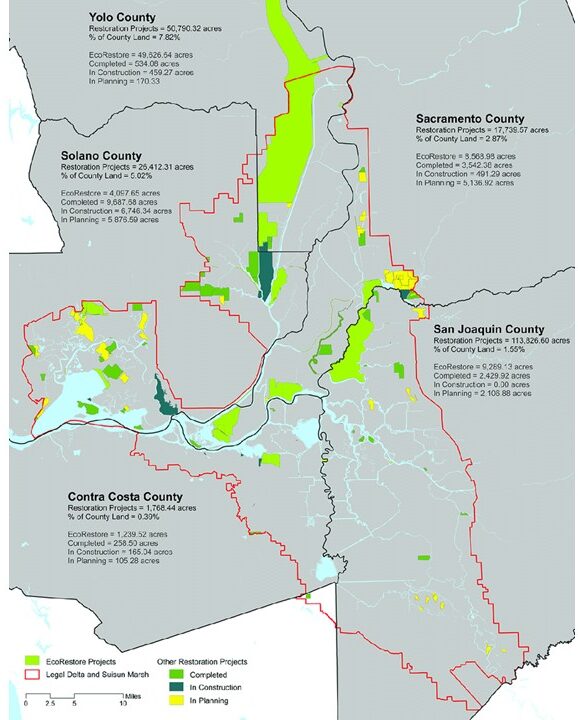
Hatchery releases alone won’t be enough to save Delta smelt in the wild, though. The program’s success also depends on making the Delta more hospitable for the fish. Companion efforts aimed at restoring Delta smelt include reestablishing tidal wetlands, which both shelter young smelt from predatory non-native fish and produce the zooplankton―tiny aquatic creatures―that they eat.
To learn more, Robin Meadows spoke with Heather Swinney, Acting Project Leader in the USFWS San Francisco Bay-Delta Fish and Wildlife, about the challenges of supplementing Delta smelt in the wild, the latest in large-scale releases, and a promising way to ramp up production of these imperiled fish. This conversation has been edited for conciseness and clarity.
What are the benefits of truck releases?
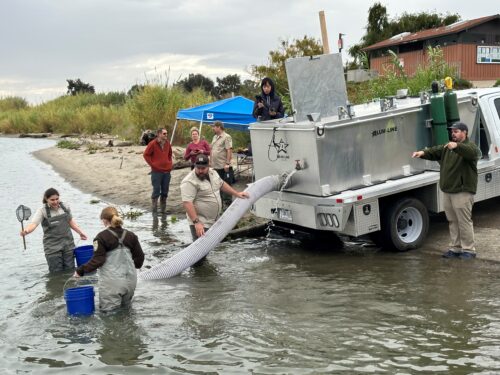
Trucks are an efficient way to move large numbers of fish―we can release up to 35,000 Delta smelt at a time with smaller crews than in carboy releases.
Truck releases may also be less stressful for Delta smelt. Handling can stress the smelt because they’re small and delicate, and truck releases generally take less time and require less handling than carboy releases.
Carboys were loaded into trucks for transport from the hatchery to the Delta, loaded into boats for transport to the release site, and then emptied into the water. In truck releases, fish are loaded directly into the tank for transport and released directly from the tank via a chute that discharges them under water.
How are the truck releases going?
Delta smelt appear to tolerate truck releases well. There are very few losses in the truck tanks and few signs of stress after the fish are released into the Delta.
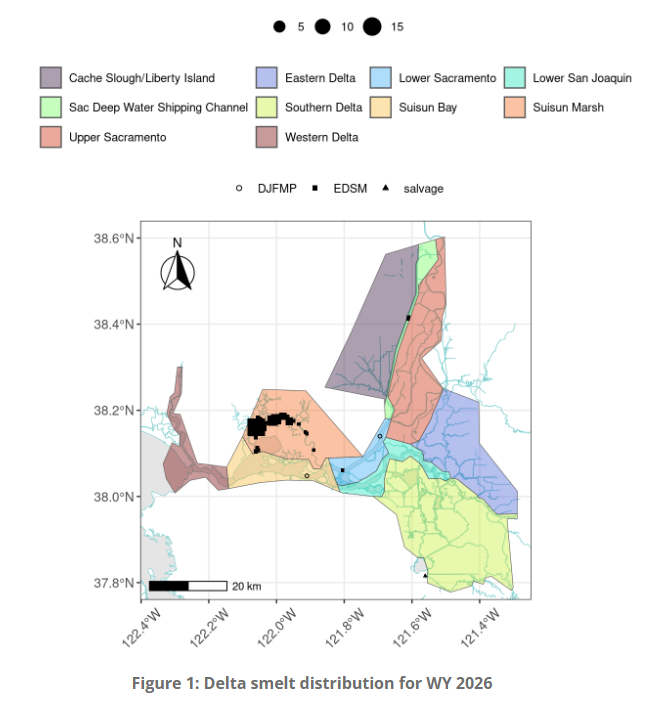
In the past year, we’ve released more than 163,000 Delta smelt across five release days. We monitor them by sampling throughout the Delta every week of the year. This year we’ve found 71 Delta smelt, mostly in Suisun Marsh where most of the fish were released. We’d like to detect more but also the Delta is a large body of water and the fish are very small, so just finding them is a feat in itself.
What are possibilities for optimizing truck releases?
The Bureau of Reclamation (BOR) recently funded two new vehicles for us. Until now we’ve been sharing trucks with other programs but it’s important to have our own so we can react faster when the timing is good for the fish.
When possible, we time releases to coincide with rain, which increases turbidity. Delta smelt are small and translucent, and murkier water can make them less visible to predators. Higher turbidity may also make it easier for them to find their prey, which is very small and difficult to see in clearer water.
Are you trying anything new this year?
Most of the releases have been farther west, in Suisun Marsh, where the water is cooler and turbid rather than clear.
Also, for the first time, we’re piloting releases of younger life stages. Up to now we’ve been releasing smelt that are 200 or more days post-hatch, based on the assumption that larger fish would be hardier and smaller fish would be too difficult to transport. But releasing a range of life stages is common in other fish supplementation programs, and may improve overall survival by spreading risk across different sizes and developmental stages.
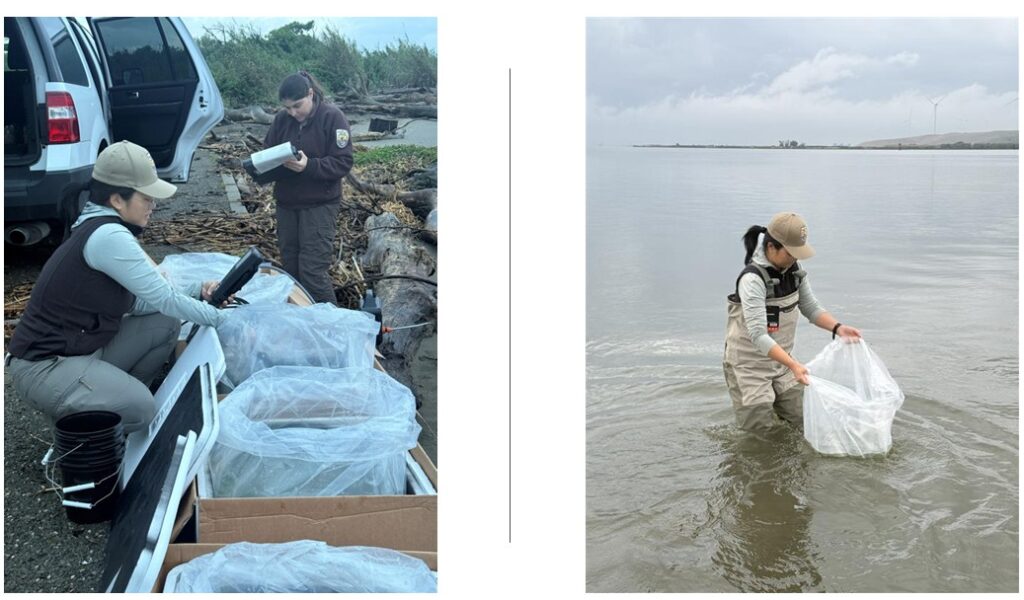
In April, we released about 40,000 Delta smelt that were 40 days post-hatch over the course of a week on Sherman Island. This entailed pouring fish into styrofoam containers lined with 10-gallon plastic bags at the hatchery, and wading into the water to release the fish from the bags. This is a standard method used across U.S. Fish and Wildlife Service programs for releasing larval and early life-stage hatchery-reared fish into the wild. We also plan to do a similar release with Delta smelt that are 120 days post-hatch.
What are possibilities for producing more Delta smelt?
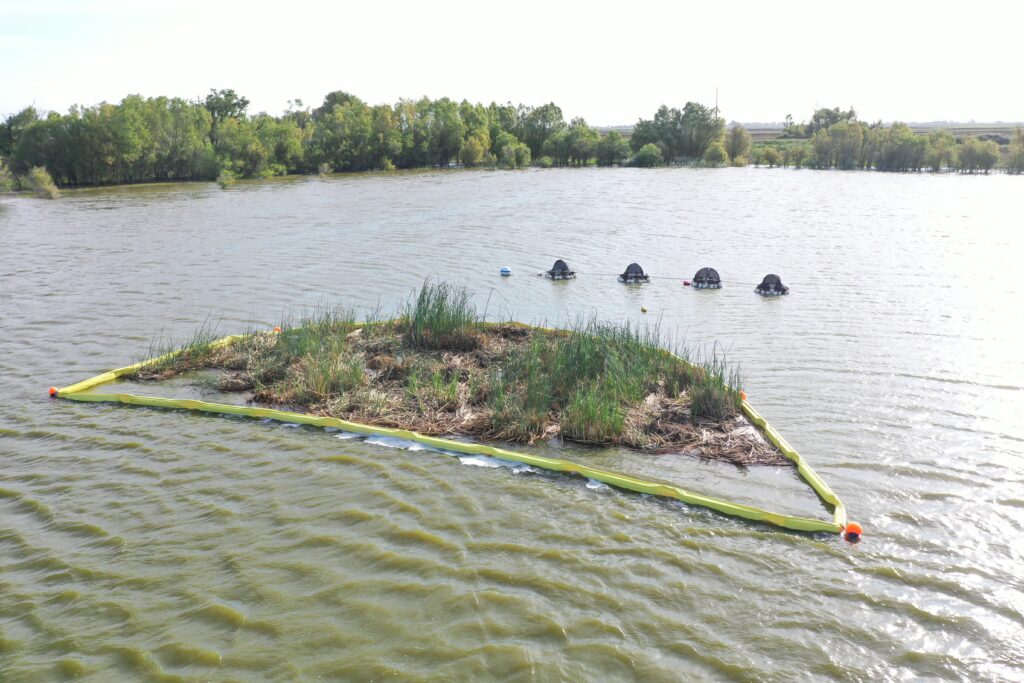
We want to increase releases every year and our need for fish exceeds the rearing capacity of existing facilities. This summer we’re collaborating with BOR and the Metropolitan Water District of Southern California to explore outdoor aquaculture of Delta smelt in ponds on Delta islands.
Pilot studies show that Delta smelt do well in ponds with floating wetlands and that this could be a cost-effective way of producing hundreds of thousands of fish. We’re excited about this―it’s very meaningful work for the species.