
By Robin Meadows
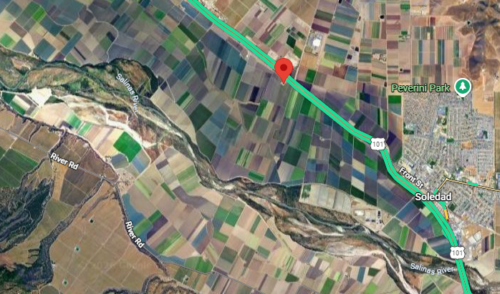
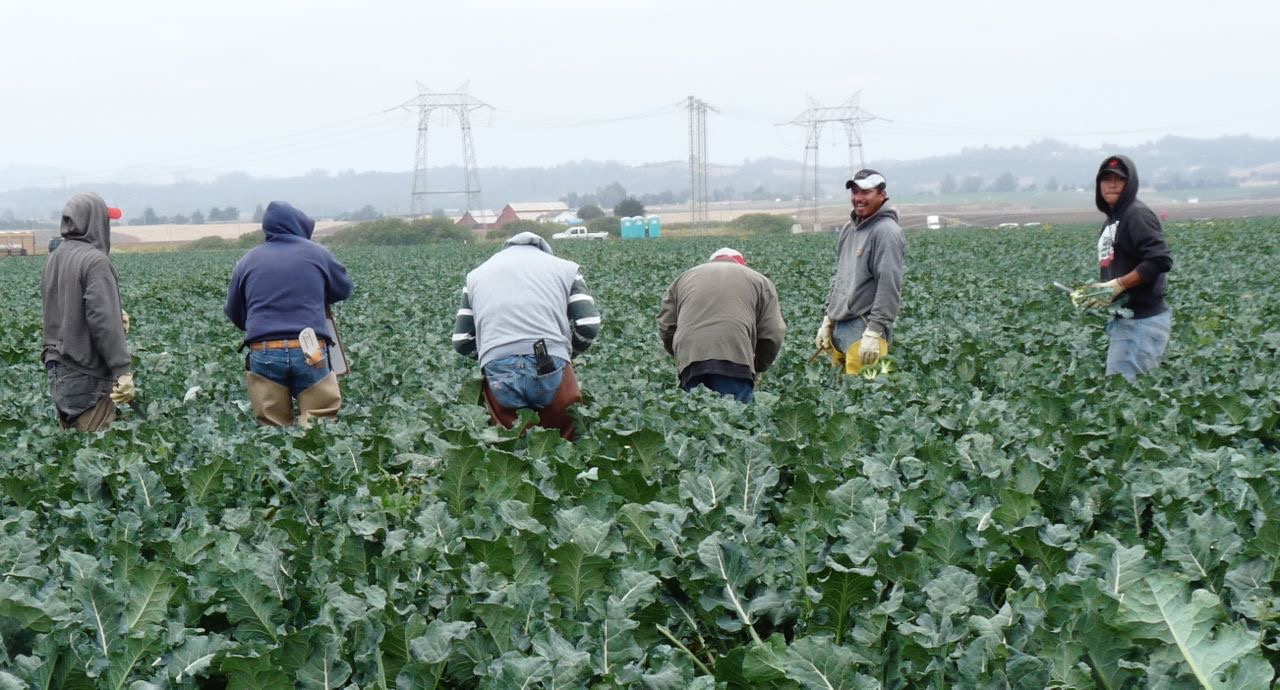
About 15 seasonal workers and their families live in a trailer park on Huntington Farms, a 6,000-acre land-holding in the Salinas Valley that grows crops including broccoli, lettuce and strawberries. It’s a good deal for both parties. The workers get affordable spaces for their mobile homes and the company gets a reliable local crew.
But this arrangement also has a downside. The well that supplies the trailer park’s water is contaminated. Nitrate is five times higher than the state standard, and salinity is twice the state recommended limit. Excessive nitrate can diminish the oxygen-carrying capacity of red blood cells, causing “blue baby syndrome” in infants. This is rare but can be fatal.
“Every shallow well in the Salinas Valley has the same problem,” says Mitch Moss, the equipment manager at Huntington Farms. “Nitrate is high from overfertilizing.”
People living in the Huntington Farms trailer park haven’t had to worry about unsafe drinking water since 2022, when University of California, Los Angeles researchers installed a new kind of reverse osmosis system on their well. Reverse osmosis uses membranes to filter out impurities. While conventional reverse osmosis systems are large-scale and costly, the new one is small-scale and affordable.
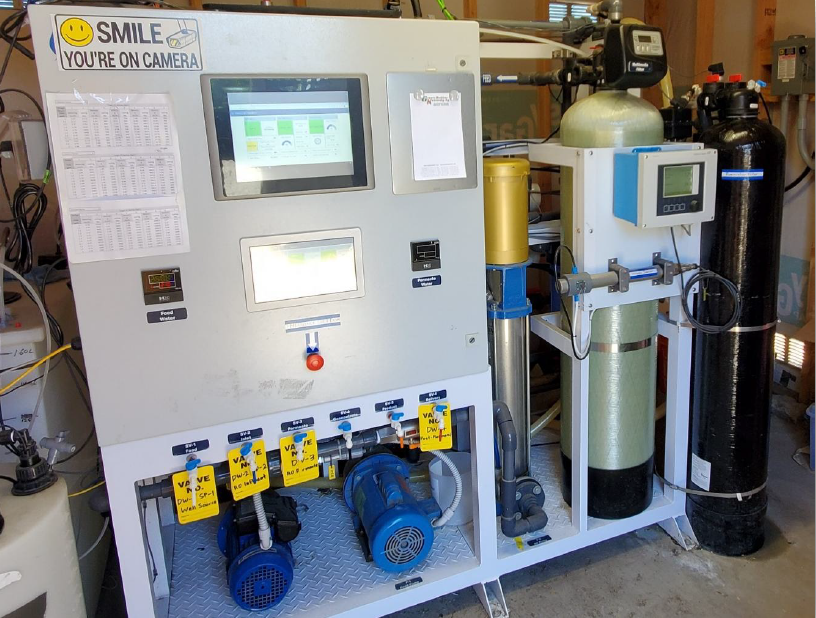
“They did a helluva job putting this together,” Moss says. “It worked right out of the box―it’s plug and play.”
But there’s a hitch. The grant that funds this water-purification system is about to run out. And even if grant funding was renewed, it would still be a temporary solution. “That will just kick the can down the road,” Moss says. “We need a permanent solution.”
RIGHT TO CLEAN WATER
In 2012, California became the first state to recognize the human right to water. This right is comprehensive: Assembly Bill 685 stipulates that “every human being has the right to safe, clean, affordable, and accessible
water adequate for human consumption, cooking, and sanitary purposes.”
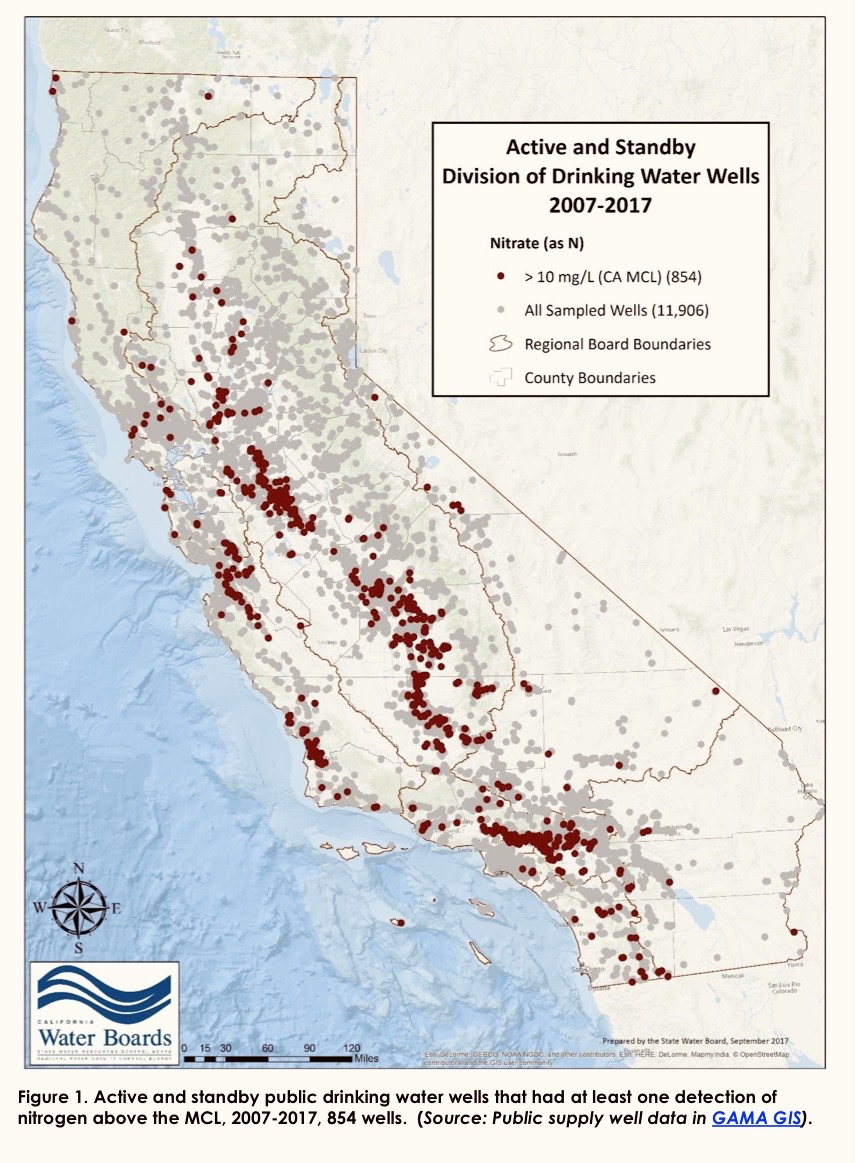
Most Californians enjoy the clean water that flows from their taps without even thinking about it. But about 600,000 people in the state, most of whom are Latino and low-income, have water that is not safe to drink. Contaminants besides nitrate and salinity include arsenic, soil fumigants such as 1,2,3-TCP, uranium, and chromium 6, and their health impacts include birth defects, organ damage, and cancer.
Contaminated well water is a national problem. More than 43 million people in the U.S.―about 15 percent of the population―get their drinking water from wells. Water from one in five of these wells is not safe to drink, according to a 2026 U.S. Geological Survey study.
VIRTUAL WATER DISTRICTS
The team behind the well water treatment at Huntington Farms was led by Yoram Cohen, a chemical engineer who directs the Water Technology Research Center at UCLA, where today’s reverse osmosis membranes were invented. When he learned about the many small, disadvantaged communities in California that lack clean water, he asked himself what could be done.
“I traveled the San Joaquin and Salinas valleys and I was shocked,” says Cohen, whose interest in water issues was sparked as a fifth grader in Israel, when he compared the California Aqueduct to one that delivers water from Israel’s Sea of Galilee. “People tell me about water contamination in developing countries―but we have that right here and we should fix it at home.”
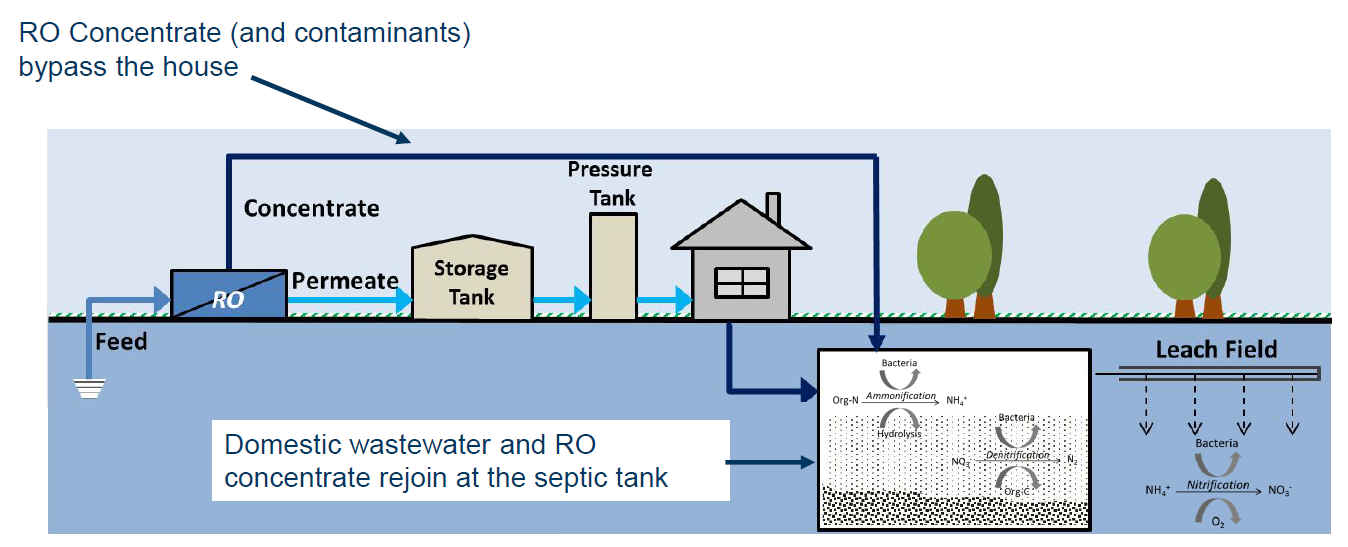
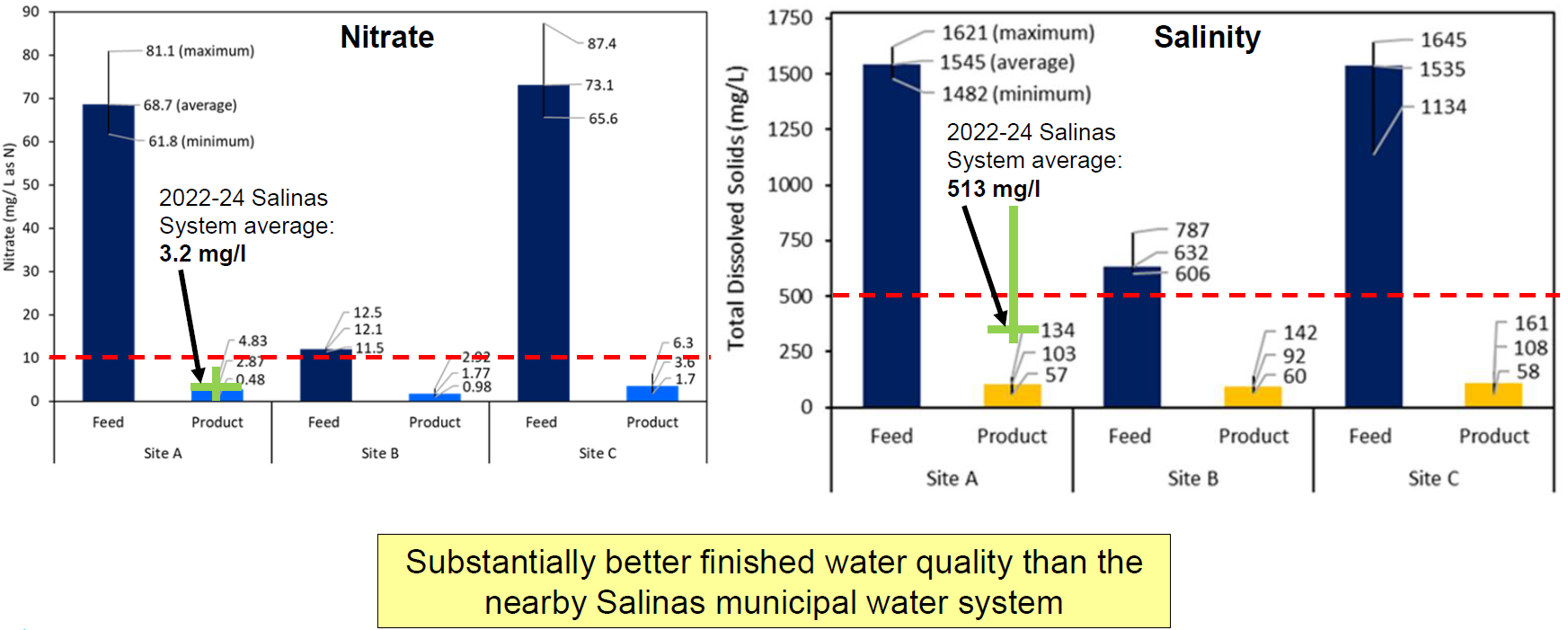
The treatment system developed by Cohen and his team delivers clean water to people’s homes and sends the removed nitrate to the septic tanks where anaerobic bacteria metabolize it into nitrogen and oxygen gases. The team installed treatment units in three communities with contaminated well water in the Salinas Valley and tested the water quality over several years. A 2025 study of this pilot project showed that water from this system is cleaner than that from nearby municipal systems.
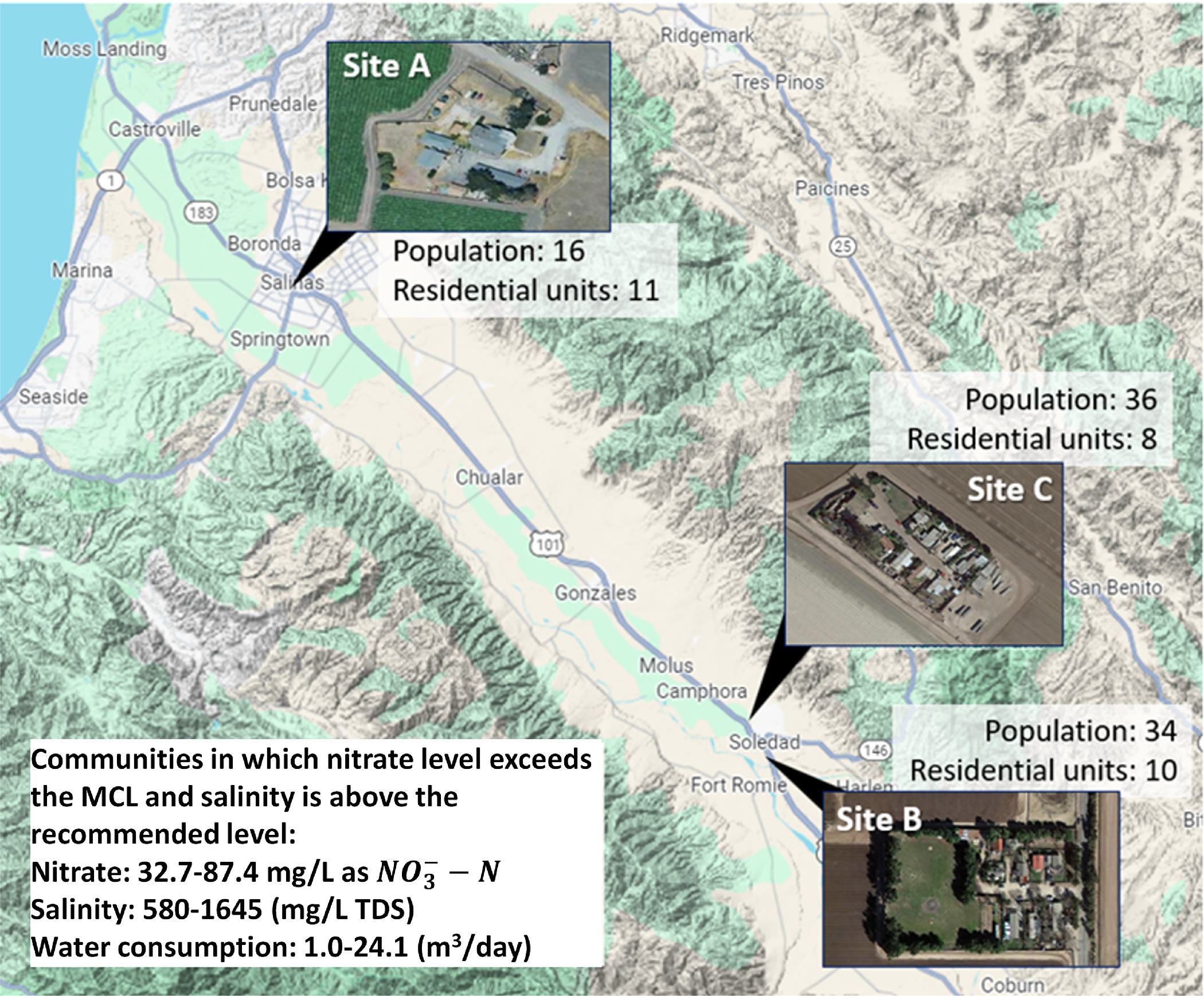
This new approach is called a distributed water system. While treatment units are not physically linked to each other or a central treatment plant, they are monitored and maintained collectively. This makes them effectively a virtual water district that offers economies of scale.
The system has inline sensors that monitor water quality including nitrate, salinity and pH as well as processes such as temperature, flow rate, and the water level in the storage tank. Monitoring is remote and continuous, ensuring that any process adjustments can be made remotely and that maintenance decisions can be made quickly. “It flags problems right away,” Huntington Farms’ Moss says, adding that maintenance needs are so infrequent that one part-time operator easily keeps all three test systems running smoothly.
Besides being effective and reliable, the Salinas Valley virtual water district is much more affordable than other options for providing clean water to people with contaminated wells. Running pipes to municipal water systems can be prohibitively expensive at about $1 million per mile. Delivering bottled water is likewise very expensive at upwards of $258 per cubic meter (264 gallons).
“The state spends millions and millions of dollars to deliver bottled water to communities,” says Peter Fiske, an Earth and environmental scientist at Lawrence Berkeley National Laboratory who is the founder of the National Alliance for Water Innovation (NAWI), which helped fund the Salinas Valley virtual water district. NAWI is funded by the U.S. Department of Energy and aims to lower the cost and energy use of desalination and water reuse.
Installation costs for the team’s distributed desalination water systems are about $130,000 per unit, and the treated water is $2 to $2.9 per cubic meter. This compares quite favorably with the $2 to $6 per cubic meter for tap water statewide.
NEXT STEPS
“It’s a great result but where do we go from here?” Fiske asks.
In the immediate future, the team is scrambling to find a way to continue the pilot virtual water district before its funding runs out at the end of June. The state Water Board just denied their application for 18 months of support from its Urgent Drinking Water Needs fund and the team hopes to appeal that decision.
“It was hard to tell the Salinas Valley communities that their clean water could end,” Cohen says.
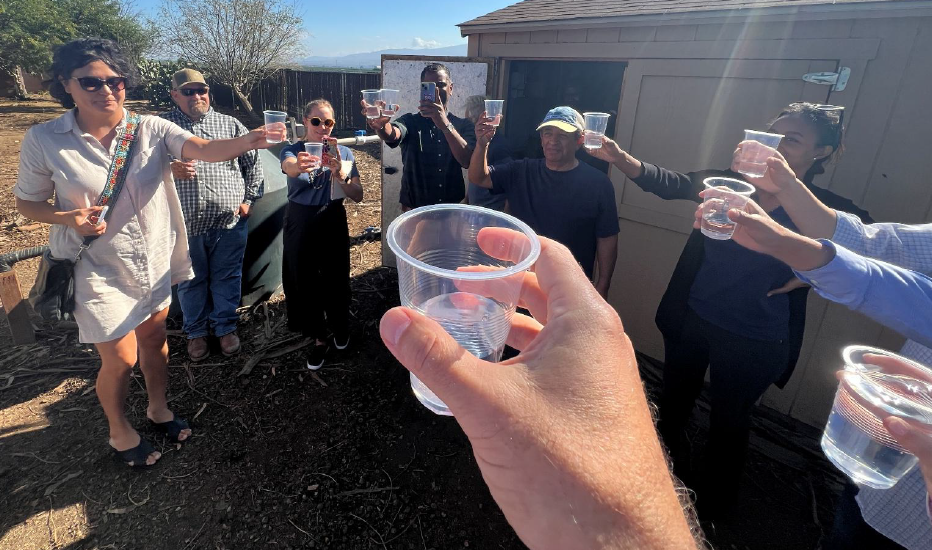
Moss says that without continued funding, the cash-strapped county would likely shut down the trailer park where Huntington Farms workers live. “Many of them have been here for 20 years,” he says. “It would be terrible to see them uprooted and having to move their families.”
The team also hopes to launch an expanded virtual water district that cleans contaminated well water for 20 to 30 small, disadvantaged communities. “We want to work out the kinks of governance and offer a hardware/software package to the state,” Fiske says. Issues to be resolved include who will own and operate the systems, and how to pay for them.
Moss says a solution can’t come soon enough. “There are probably 200 contaminated wells up and down the Salinas Valley alone,” he says. “We need more water treatment projects like this.”

