
Delaying the inevitable increases costs for Indian Wells Valley residents
Press release from the Indian Wells Valley Groundwater Authority
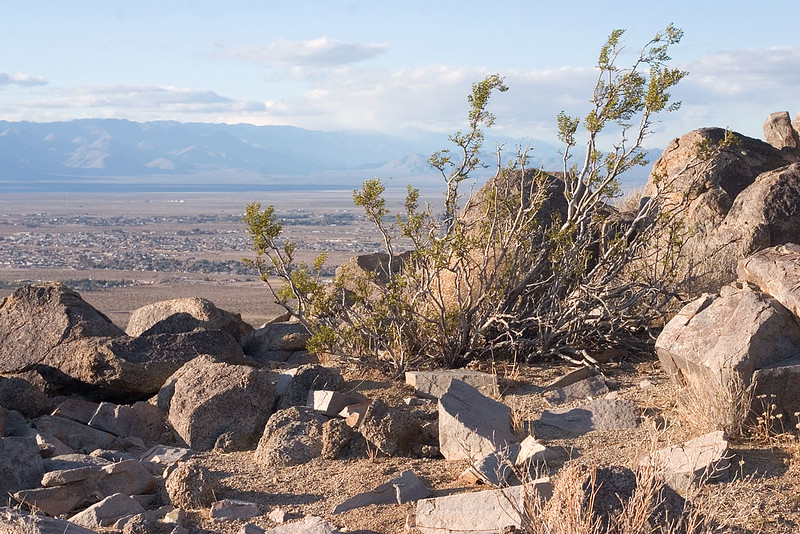
 California’s desert communities share a common challenge: they exist in arid regions with minimal natural water sources. And the common solution has been to import water through pipelines to sustain their communities.
From Lancaster to Palm Springs, from Yucca Valley to Imperial County, every major desert water district in California has made the same determination the Indian Wells Valley Groundwater Authority has reached: that importing water is essential to long-term sustainability.
“The reality about pipelines is straightforward,” said Scott Hayman, chair of the Indian Wells Valley Groundwater Authority. “We live in a desert. The Indian Wells Valley Basin is an isolated groundwater basin with no natural runoff for replenishment. After decades of overdraft, importing water isn’t one option among many, it’s the only proven path to sustainability.”
Desert Communities Depend on Imported Water
The Indian Wells Valley is not unique in facing water sustainability challenges. What makes it notable is that the Indian Wells Valley Water District remains one of the only desert water agencies in California that has not yet taken steps to ensure a water source for future generations.
Of nine desert water districts with water scarcity conditions similar to the Indian Wells Valley basin, all import water through the State Water Project or Colorado River Aqueduct, and many have been doing so for 30-50 or more years.
Antelope Valley-East Kern Water Agency has imported water since 1972. Before they secured an imported water solution, the region experienced more than 200 feet of water level decline and 6 feet of land subsidence (or sinking), which is irreversible.
Coachella Valley Water District has imported water since 1973, bringing in more than 5.1 million acre-feet to replenish their isolated desert basin, which is nearly identical to Indian Wells Valley with limited natural groundwater replenishment sources.
Hi-Desert Water District and Mojave Water Agency teamed to build a 71-mile pipeline that began water delivery in 1995 from the California Aqueduct to the Morongo Basin specifically to address groundwater overdraft.
Mojave Water Agency has imported water since 1994, with multiple recharge sites across the region.
Understanding Water Costs in Context
The Indian Wells Valley groundwater basin has provided a reliable water source for decades but that reliability has come at the cost of a steadily declining aquifer. To protect that reliability, it requires a diversified water supply, which is why imported water through a State Water Project connection is essential.
Residents in the Indian Wells Valley groundwater basin area for some time have experienced what would seem to be competitive water rates among California’s desert communities. This comparison, however, doesn’t reflect an important reality. The rates by other water districts are inclusive of serious investments that ensure water reliability and sustainability, such as infrastructure supporting imported water, recycling and more.
Water agencies such as the Palmdale Water District, Hi-Desert Water District, and the Desert Water Agency have implemented a disciplined approach to incremental rate increases to fund infrastructure and maintenance. This has not happened in the Indian Wells Valley basin.
The fact is that as infrastructure ages and the region confronts the need for imported water, the cost of postponing investment becomes increasingly significant.
“For decades, water rates in the Indian Wells Valley basin held fast because the district relied exclusively on groundwater pumping rather than investing in diversified water portfolios and infrastructure,” said Hayman. “Other desert districts recognized long ago that maintaining infrastructure and securing sustainable water sources requires appropriate long-term planning and investment. Further delaying action only makes future solutions more expense not less expensive for all of us living in the Indian Wells Valley.”
The Mathematics of Desert Water Management
The Indian Wells Valley Basin serves approximately 38,000 residents in an isolated desert basin with no river flows, no measurable mountain runoff reaching the basin, minimal rainfall of 4 to 6 inches annually, and decades of overdraft that have depleted groundwater reserves.
In 2024, 20,840 acre-feet was pumped out of the Indian Wells Valley Groundwater Basin. Even if the basin could recycle 100 percent of its wastewater — which is technically impossible — that would only generate about 1,500 acre-feet per year that the water district would receive. That still is not nearly enough to cover the difference whether one references the 7,650 acre-feet per year of sustainable yield used by IWVGA or 14,300 acre-feet per year of safe yield used by the water district.
“You can debate the sustainable or safe yield numbers. You can propose conservation measures and recycling programs, which we support both and the region’s residents have certainly done their part,” said Hayman. “But the actual pumping data is clear – this basin is pumping more than what is sustainable and has been doing so for decades. Even under the most optimistic scenarios, that level of use cannot be sustained without imported water.”
A State Mandate with a Firm Deadline
The Sustainable Groundwater Management Act (SGMA), passed in 2014, mandates that critically overdrafted basins like Indian Wells Valley achieve sustainability by 2040, which is just 14 years away. The law is not optional, and the consequences of failure include potential state intervention. IWVGA, as the state-designated agency responsible for meeting this mandate, remains steadfast in its determination that connecting to the State Water Project through the proposed Indian Wells Valley Pipeline Project is the most feasible and cost-effective path to compliance.
“We recognize that many wish there was another way,” said Hayman. “But wishing doesn’t change the actual pumping data, and it doesn’t change state law. The simple truth is this – virtually every other desert community in California has already made the choice to import water. They did it because it works, and because there is no viable alternative for long-term sustainability in arid regions.
About the Indian Wells Valley Groundwater Authority: The Indian Wells Valley Groundwater Authority (IWVGA) is the groundwater sustainability agency for the critically overdrafted Indian Wells Valley groundwater basin. The basin spans portions of Kern, Inyo, and San Bernardino Counties. It is home to the City of Ridgecrest and the U.S. Naval Air Weapons Station China Lake, a critical low-flight, weapons development, and testing facility. The groundwater basin serves approximately 38,000 residents.
IWVGA is a joint powers authority that includes representatives from Kern County, the City of Ridgecrest, Inyo County, San Bernardino County, and the Indian Wells Valley Water District. Two federal agencies, the United States Navy and the Bureau of Land Management, are also represented as ex-officio members of the IWVGA Board.

