
Several news sources featured in the Daily Digest may limit the number of articles you can access without a subscription. However, gift articles and open-access links are provided when available. For more open access California water news articles, explore the main page at MavensNotebook.com.
On the calendar today …
- MEETING: Delta Stewardship Council beginning at 9am. The Council will consider, and may adopt, a decision on appeals of Certification of Consistency Number C20257 for the Delta Conveyance Project, submitted on October 17, 2025, to the Council by the Department of Water Resources. Click here for the meeting notice.
- WEBINAR: Charting the Course for Compliance: Exploring CII MUM to DIM from 10:30 to 12:00pm. This session relaunches the Charting the Course for Compliance Series for 2026 with a focus on one of the most significant implementation challenges under the Making Conservation a California Way of Life regulation: addressing large CII landscapes served by Mixed Use Meters (MUMs). The regulation requires suppliers to transition these connections to Dedicated Irrigation Meters (DIMs) or implement approved in-lieu technologies capable of identifying outdoor irrigation use separately from indoor demand. The webinar will review the regulatory expectations around the MUM-to-DIM transition, discuss practical implementation considerations, and introduce vendors developing technologies that may help agencies estimate or identify outdoor watering. Participants will hear how these tools work, where they may fit within compliance strategies, and what agencies should consider when evaluating alternative approaches for managing and measuring large landscape irrigation. Click here to register.
In California water news today …
Huffman: Federal Potter Valley intervention could be catastrophic for Northern California water
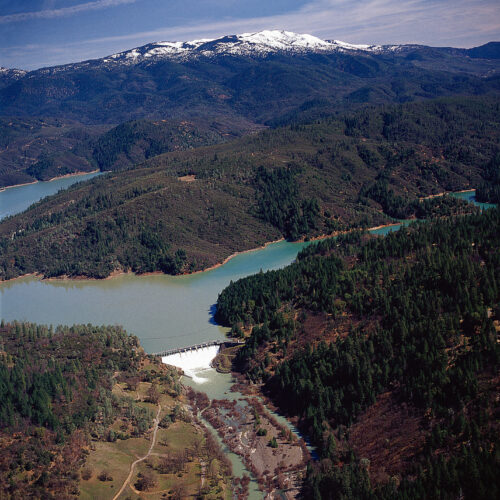
“This Tuesday, Agriculture Secretary Brooke Rollins announced that she had heard from a potential buyer for the Potter Valley Project, a now-defunct hydroelectric project composed of the Scott and Cape Horn dams and related facilities. Rollins said that the buyer, a water district in Southern California, could take over the project and return the dams to operating status, an assertion local stakeholders and many familiar with the project say is unlikely if not impossible. PG&E, who had operated the project and is in the process of surrendering and decommissioning the project with the Federal Energy Regulatory Commission (FERC), said that it has “had some previous communication with the Secretary’s staff” and met with the identified potential buyer earlier this year, but that no proposals have been made. Many stakeholders expressed confusion about the announcement, but U.S. Representative Jared Huffman (D-San Rafael) is spreading the alarm that this might be part of a broader effort to reshape water rights in the state and shift control from the North Coast to Central and Southern California water interests. … ” Read more from the Eureka Times-Standard.
Trump’s agriculture secretary touts Southern California water district as potential buyer for Potter Valley project
“Six hundred miles. That’s the distance that separates a pair of dams in Lake and Mendocino counties from a Southern California water district touted this week by a top Trump official as a potential suitor for the North Coast waterworks. The move has been hailed by those seeking to avert the Eel River dams’ proposed removal, including local farming interests and their political allies, who have raised concerns about what that would mean for their future water supply. Agriculture Secretary Brooke Rollins posted on X on Tuesday that talks are underway with a Riverside County water district to take over the Potter Valley hydroelectric project owned by Pacific Gas & Electric Co. … ” Read more from the Santa Rosa Press Democrat.
SEE ALSO:
- That SoCal Water Agency Says It’s Just in the Very Initial, Exploratory Phase of its Potential Bid to Take Over the Eel River Dams, from the Lost Coast Outpost
- PG&E reports receiving no new proposal to buy the Potter Valley Project, from the Ukiah Daily Journal
- Feds Float Late-Stage Idea to Keep Eel River Dams as Removal Plan Moves Forward, from the Redheaded Blackbelt
Don’t be fooled by this week’s Sierra snow. Here’s the water reality in Northern California
“The latest flurries that dusted parts of the Sierra Nevada this week are unlikely to do much to ease California’s snow drought. Since April 1 — when the state measured its second-lowest snowpack on record — the Sierra Nevada has seen a few rounds of storms. This week’s system triggered winter storm warnings in the range and brought up to two feet of snow at the peaks. The powdery scene may have made some feel like winter was back. It isn’t. And neither is the snowpack. “It’s when you look at the big picture of it all. It’s not going to do enough to get you back to a normal snowpack year,” said Chad Hecht, a meteorologist with the Center for Western Weather and Water Extremes at UC San Diego’s Scripps Institution of Oceanography. “Since we are in April and approaching May, it will not last too long up in the higher elevations. It’ll continue to melt off.” … ” Read more from the Sacramento Bee.
Will California have a cool summer or hotter-than-normal temps? See 2026 forecast
“Weather across California has been anything but predictable lately, swinging from sunny skies to stretches of heavy rain and mountain snow. With summer just a couple of months away, many might be wondering what comes next. Will these sudden weather shifts continue — or is a long stretch of hot days on the way? Here’s what the 2026 summer outlook shows … The National Oceanic and Atmospheric Administration’s Climate Prediction Center expects above-normal temperatures across the state from June through August. “Normal” is based on the average of all temperatures from 1991 to 2020. “The dominant weather pattern expected to shape California’s summer this year is the persistence of mid-level high pressure,” said Anthony Artusa, a meteorologist with the Climate Prediction Center. This will allow temperatures — especially inland — to climb. … ” Read more from the Sacramento Bee.
An intense marine heat wave has California in its crosshairs, with impacts set for land and sea
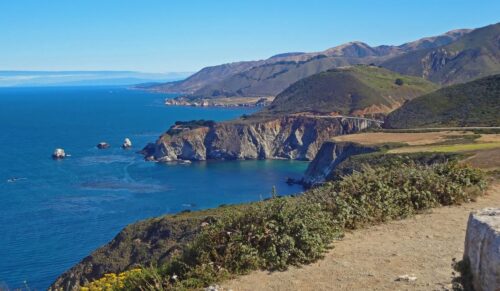 “Something unusual and with far-reaching consequences is lurking in the sea off the California coast, stretching all the way down the Baja Peninsula and more than 500 miles to the southwest. In this broad region, a large, long-lasting and record-setting marine heat wave has set in and is forecast to persist and intensify, altering the weather conditions on the West Coast and adversely affecting the marine food chain. This heat wave, which is the oceanic equivalent of a heat wave on land, could have broad ramifications for sea life, as warm water species like hammerhead sharks and bluefin tuna migrate into areas where they are normally not seen, and cold-water species move deeper and further north. … ” Read more from CNN.
State Board denies requests by Tulare County farmers to be exempted from up to $12 million in pumping fees
“The Water Resources Control Board voted to go forward with sanctions against some Tulare County farmers – including up to $12 million in pumping fees – after they failed to show they had made enough progress toward stemming subsidence, among other issues. More than 20 farmers from the Tule subbasin, which covers the southern half of Tulare County’s flatlands, appeared at the Water Board’s April 21 hearing on the issue. They made technical, tearful and even angry pleas that they be exempted from the sanctions, including the fees and a requirement that they report to the state how much they pump beginning May 1. But, after a nearly five-hour hearing, the Water Board voted unanimously to deny the exemption requests. … ” Read more from SJV Water.
SEE ALSO: State Water Board denies Groundwater Sustainability Agencies’ requests for exclusion from probationary reporting and fees, notice from the State Water Board
Partnership takes Delta science to new heights
Dr. Lisamarie Windham-Myers, Delta Lead Scientist, writes, “Inspired by the 1969 Santa Barbara oil spill and the resulting surge in environmental awareness, Earth Day has become synonymous with clean air, clean water, safe communities, and living in balance with the precious flora and fauna that share our planet. Many of the environmental protections we rely on today were created decades ago and were driven by science. To continue to protect what matters, we need more than good intentions – we need good information. That commitment to scientific advancement brought together four public entities in 2025, including the Delta Stewardship Council. The Wetlands Regional Monitoring Program (WRMP), co-managed by the San Francisco Estuary Institute (SFEI) and San Francisco Estuary Partnership, proposed a major upgrade to the Bay-Delta’s mapping system and partnered with the Council and the Department of Water Resources (DWR) to scope and fund this unique and jointly-recognized opportunity. Together, we commissioned a comprehensive Light Detection and Ranging (lidar) survey of the Bay-Delta estuary by pooling resources and expertise to give the region something it has never had before: a single consistent, high-quality elevation map of the entire system. This shared data will facilitate collective problem-solving. … ” Continue reading from the Delta Stewardship Council.
Restoring rivers faster with streamlined permits
“On the majestic Mendocino Coast, a comprehensive effort to boost endangered coho salmon is producing immediate results with the help of a Water Boards permitting tool that is getting restoration projects shovel-ready faster. Once abundant, Central California Coast coho salmon were nearly extinct when listed as threatened under the Endangered Species Act in 1996. This unique run of coho salmon grows in freshwater streams for up to two years before migrating as adults to the Pacific Ocean. To give juvenile coho a better chance of survival, The Nature Conservancy, with technical assistance from the Water Boards and other state and federal agencies, is improving access to refuge within floodplains and restoring instream habitat. This important restoration work underway on a five-acre stretch of the Ten Mile River north of Fort Bragg is being accelerated with the use of the State Water Board’s Statewide Restoration General Order, a tool designed to hasten permitting without sacrificing water quality protections. … ” Read more from the Water Boards’ Ebb and Flow.
California is home to 2 of the most endangered rivers in the nation. Which ones?
” … The nonprofit conservation organization [American Rivers] recently ranked the most endangered rivers in the United States in 2026 — and two California rivers made the top 10. … In 2026, the most endangered river in California was the San Joaquin River, according to the American Rivers report. … Another California river landed lower on American Rivers’ list of the most endangered rivers in the nation, taking the No. 9 spot. Known as the “Crown Jewel of the Mojave Desert,” the Amargosa River is the only free-flowing river in the Death Valley region of the Mojave, providing a rare and lush riparian area in the desert.” the National Wild and Scenic Rivers System said. … ” Read more from the Fresno Bee.
CDFW releases guidelines for recovery planning under CESA
“The California Department of Fish and Wildlife (CDFW) has published Guidelines for Recovery Planning pursuant to Fish and Game Code section 2079.1(f). This document guides the development of effective and actionable recovery plans for species listed under the California Endangered Species Act. The recovery guidelines underwent tribal and public review in 2025, and all comments received were considered during the development of the final document. CDFW is in the process of prioritizing recovery planning for species that are most likely to benefit from a recovery plan, particularly those threatened by land use changes, climate change, or aquatic habitat changes (Fish & G. Code, § 2079.1(b)). Additional information on recovery planning can be found on our Frequently Asked Questions page. Questions can be submitted to CESArecovery@wildlife.ca.gov with “Guidelines to Recovery Planning” in the subject line.” Source
California announces plans for three new state parks
“California is planning to open three new state parks and also enlarge several existing parks, officials announced Wednesday, calling the endeavor the biggest expansion of the state parks system in decades. One of the new parks will encompass nearly 2,000 acres along the Feather River in Yuba County, a spot equipped for rafting and swimming. Another park is set to commemorate California’s Dust Bowl history at a former labor camp outside Bakersfield. A third state park is slated to absorb a popular parkway for hikers, runners and bicyclists along the San Joaquin River near Fresno. State officials credit the string of planned openings and expansions to a new, concerted effort, dubbed State Parks Forward, that seeks to reverse years of stagnation in the state parks system. … ” Read more from the San Francisco Chronicle.
SEE ALSO:
- California marks biggest state park expansion in decades with 3 new parks, from the LA Times
- State Parks Forward: The biggest expansion of state parks in decades, Story Map from California State Parks
Activists call for vote on California Forever’s Suisun City expansion plan
“Solano Together, a group opposed to the California Forever plan to build a new city in eastern Solano County, held a rally outside of the Suisun City Council meeting on Tuesday to demand that the council let voters weigh in on a proposal for the city to annex land owned by California Forever. Solano Together asked for an “advisory vote” on the November 2026 ballot on the “Suisun Expansion Plan,” which would expand the city’s boundaries by absorbing over 22,000 acres of surrounding agricultural lands owned by California Forever. It would be a non-binding vote, but its supporters said it would give the council an idea of how the residents really feel about the involvement of California Forever and the idea to add more land to its jurisdiction. Nate Huntington of Solano Together said an advisory vote is important because there’s currently “two conflicting stories” about whether or not residents support this project. … ” Read more from the Vallejo Times-Herald.
20 year fight for water justice
“Today, on Earth Day, the unincorporated community of East Orosi in Tulare County hit a key milestone to achieve their Human Right to Water by breaking ground on their safe drinking water project. Many families in this area currently rely on drinking water contaminated with unhealthy levels of nitrates. This is water families need to drink, cook, shower and carry out other everyday tasks. Studies show exposure to nitrates can cause blue baby syndrome, low blood pressure and can lead to cancer, marking this water consolidation project a step towards a healthier community. “This is a wonderful experience and a big change going from AGUA Youth to advocating as a leader and mother since now my kids keep me motivated. I don’t want them stressing that they can’t drink the water and they should be comfortable where they live,” said Miriam Sanchez, East Orosi AGUA Member. “Communities need to keep speaking up and when one community wins, we are not fighting for just us, we are fighting for all Californians to have clean water.” … ” Read more from the Community Water Center.
State board now has rules to distribute Prop. 4 funds for cross-border pollution fixes
“The California State Water Resources Control Board now has rules for distributing nearly $50 million in state bonds for water quality projects that could help fix pollution in the Tijuana and New Rivers. Leaders in San Diego and Imperial counties had been making their case for why their regions should receive the full amount of funding that Proposition 4 earmarked to clean up rivers and coastal waters near the California-Mexico border. Proposition 4, which California voters approved in November 2024, however, did not specify who would get the funding and how much. … ” Read more from KPBS.
Wildfire-driven deforestation rates in California among highest in world
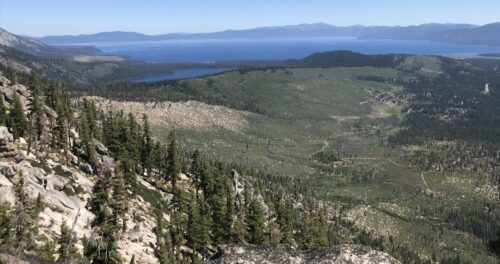
“California has one of the highest rates of wildfire-driven deforestation in the world, and the trend has accelerated over the past three decades, according to a study from the University of California, Davis. The study, published in the journal Frontiers in Forests and Global Change, assessed the state’s wildfire-driven deforestation rates and reforestation needs between 1991 and 2023. It found that deforestation in California’s conifer-dominated forests increased exponentially over the study period, taking place primarily on USDA Forest Service and private lands. Meanwhile, reforestation efforts are not keeping pace with the losses. Reforestation needs were minimal in the early 1990s, rose sharply in the early 2000s and surged after 2020. During that time, California lost between 6% and 11% of its conifer forests. Multiple big-fire years caused deforestation rates to rise to between 0.25% and 0.47% per year between 2001 and 2023. That is substantially higher than the global average of 0.15% per year. “Those rates are right up there with the world’s leaders in fire-driven forest loss, like Russia, Portugal, Greece, Bolivia and even Canada,” said senior author Hugh Safford, a forest and fire ecologist with the UC Davis Environmental Science and Policy department. “In the case of California, the rate is also accelerating rapidly. A couple more big-fire years like 2020 or 2021, and we could be looking at large-scale loss of conifer forests over wide swaths of the state.” … ” Read more from UC Davis.
The ramifications of record-shattering heat on the West’s ecosystems
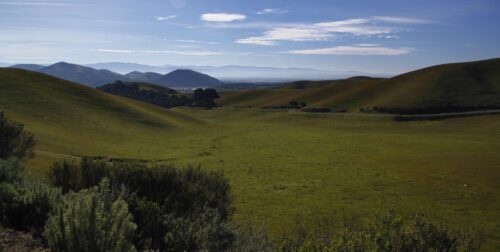 “In March, a month traditionally known for heavy mountain snows and dreary lower-elevation weather, a heat wave settled across the West, shattering temperature records from Tucson, Arizona, to Casper, Wyoming. The heat wave’s intensity and early arrival shocked many climate scientists. “It is exceptionally difficult for the Earth system to produce temperatures this warm so early in the season,” wrote Daniel Swain, a climatologist with the University of California Agriculture and Natural Resources who runs the Weather West blog. Yet not only did Western locations set new March highs; many exceeded temperature records for May. And those high temperatures kept hanging on, said Zachary Labe, a climate scientist at the nonprofit science center Climate Central, for nearly two weeks. While heat waves are a natural phenomenon, this was the earliest and most widespread one ever recorded in the Southwest. And it was caused by climate change, which is making intense heat waves much more likely. Researchers say this means understanding their fallout is even more important. … ” Read more from High Country News.
In commentary today …
Colorado River crisis: What Moab taught me about solving the impossible
, chair of the board of the Metropolitan Water District, writes, “Standing on the banks of the Colorado River near Moab, watching the last traces of 16 million tons of uranium tailings give way to open sky and cleared earth, I keep thinking about a Republican congressman from Utah and a Democratic congresswoman from Los Angeles — and what they understood about rivers that the seven states now locked in stalled post-2026 negotiations may learn from: The river doesn’t care who wins. As current chair of the Board of the Metropolitan Water District of Southern California, I’ve come here with former Congresswoman Grace Napolitano to mark the completion of the Moab uranium tailings cleanup — one of the most significant environmental remediation projects in the American West. Between 2000 and 2005, Grace and I worked to bring members of Congress to this site, to show them the pile of radioactive waste left by a former uranium-ore processing facility on the riverbank, threatening 30 million downstream water users and millions of acres of productive agriculture. Those visits built the coalitions that eventually secured the Department of Energy funding that made this cleanup possible. … ” Continue reading at the Moab Times-Independent.
The Abundance Alliance
Edward Ring, Director of Water and Energy Policy at the California Policy Center, writes, “Abundance, and its political twin, affordability, are now bipartisan mantras, but cannot be realized if the only permissible avenues are via urban infill, renewable energy, and water rationing. California is uniquely positioned to do much more. Breakthrough technologies and big projects, both pioneered here, could unite a powerful coalition of farmers, energy companies, high tech firms, and reasonable environmentalists. Such a coalition could transform California, permitting innovation and smart investments to restore ecosystems while lowering the cost of living. The world is watching. Achieving sustainable abundance, everywhere, is not far fetched. California can lead the way. With appropriate stewardship and innovation unhampered by over-regulation or corruption, there is abundant energy, abundant water, and abundant land available for everyone on planet earth, and there always will be. … ” Read more from Edward Ring.
In regional water news and commentary today …
NORTH COAST
Klamath Drainage District recommends patrons sign up for KPDRA
“Klamath Basin landowners are being asked to evaluate their farm plans to see if they can idle acres and sign up for programs offered by the Klamath Project Drought Response Agency (KPDRA). In a news release, Scott White, general manager of the Klamath Drainage District (KDD), said that with dismal snowpack in the Cascades Mountains and the Bureau of Reclamation allocating only 221,000 acre/feet (a/f) of water to the Klamath Irrigation Project, $19.1 million is available for funding the 2026 KPDRA program. During last week’s KDD board meeting, Klamath Water Users Association (KWUA) executive director Elizabeth Nielsen indicated KWUA estimates 40,000 to 50,000 acres will need to be idled in the Klamath Project. … ” Read more from the Herald & News.
SEE ALSO: Program could pay Klamath farmers to idle fields, from the Capital Press
This Earth month, remember one of the greatest environmental success stories ever
“When the last of the four dams blocking the flow of California’s Klamath River fell in the fall of 2024, members of the Yurok Tribe wept tears of joy. It was a moment that had been decades in the making. The dams, built between 1918 and 1962, had had a catastrophic effect on the salmon population, which the Yuroks and other tribes living along the 263-mile river historically have relied on for food for thousands of years. “Salmon is an inextricable part of the Yurok identity,” says Yurok Fisheries Department Director Barry McCovey. “Since time immemorial, the river and fish have been interwoven into our culture and ceremonies. That’s why so many of our people have dedicated their lives to bringing the river back into balance.” … ” Read more from The Story Exchange.
SIERRA NEVADA
Yuba County gets first state park in major California expansion
“Before it was part of a statewide announcement, it was a pristine place people knew and loved. The Feather River in Yuba County — home to majestic California sycamores and valley oaks, riverbank willows and a rich riparian forest habitat. Now, it sits at the center of one of California’s most significant park expansions in years. On Earth Day, Gov. Gavin Newsom and first partner Jennifer Siebel Newsom announced a plan to create three new state parks across the Central Valley as part of a new initiative called State Parks Forward, calling it the largest expansion of the state park system in decades. The plan will add three new parks, expand existing parks by 30,000 acres by the end of the decade and bring the statewide system to 283 parks — the most of any state. … ” Read more from PBS Abridged.
SEE ALSO: Feather River beach and floodplain to become Yuba County’s first state park, from the Sacramento Bee
Nevada Irrigation District Board President Chris Bierwagen: Reliable water isn’t optional, nor is it inexpensive
“If you rely on irrigation water, you already know this: nothing matters more than knowing the water will be there when you need it. My family has farmed this region for generations, and I understand what’s at stake when water isn’t reliable. Crops don’t wait. Neither do livestock, businesses, or families. Right now, we’re seeing one of the lowest snowpack years on record. And yet, as we head into irrigation season, water is flowing. Reservoirs are full, and NID is keeping deliveries on schedule. That doesn’t happen by accident, and it doesn’t happen without adequate infrastructure. For more than 100 years, the Nevada Irrigation District has invested in infrastructure needed to transport water from the Sierra peaks to foothill communities. … ” Read more from YubaNet.
SACRAMENTO VALLEY
New fish habitats in Sacramento River to boost count, water supply
“Sacramento River fish swimming through Redding will have more places to rest, eat and hide from predators starting this spring. Conservationists announced they’ll build rockwad homes — tree and rock structures — for juvenile salmon and trout to live until they migrate out of Shasta County. Rockwads imitate debris clusters that once collected in the river. That debris was “a refuge to nurture young fish at the start of the life cycle,” said engineer Josh Watkins, Manager of the City of Redding Water Utility. Replicating those habitats will “ensure salmon and trout populations have a place to grow and thrive.” … ” Read more from the Redding Record-Searchlight.
Lake Oroville remains clear of golden mussels
“Nearly a year after the California Department of Water Resources began its extensive boat inspection process at all of its designated waterways, Lake Oroville, as well as the Thermalito Forebay and Afterbay, remain free of golden mussels. The invasive species had been discovered at Folsom Lake, among other waterways, prompting DWR to begin the inspection process in May 2025, just before Labor Day. DWR spokesperson Raquel Borrayo confirmed that while there have been no detections of the golden mussel within Butte County water bodies, two different boats were confirmed to have been carrying them upon pre-inspection with the first being May 21, 2025 and the second on Sept. 4, 2025. … ” Read more from the Chico Enterprise-Record.
Butte County launches new website to show heavy burden Oroville Dam has placed on the county
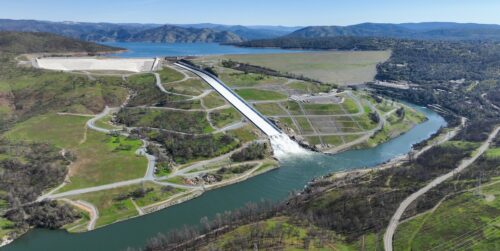
“Butte County is highlighting water as one of the planet’s most vital resources this Earth Day. The county has launched a new informational website to provide the public with a clear overview of the Oroville Dam, including the massive benefits it provides to California and the heavy burden it has placed on Butte County. The Oroville Dam is the cornerstone of California’s State Water Project, which captures water from the Feather River, stores it in Lake Oroville and sends it hundreds of miles south to provide water to 27 million Southern Californians and irrigate 750-thousand acres of farmland in the Central Valley. The dam also generates approximately 2.2 billion kilowatt-hours of hydroelectric power annually via the Edward Hyatt Powerplant, enough to power hundreds of thousands of homes. … ” Read more from Action News Now.
SEE ALSO: Butte County launches website detailing Oroville Dam impacts, water exports and losses, from KRCR
New water meters coming to Folsom
“The City of Folsom hired a contractor last week to help install thousands of water meters in new and old homes and businesses. The Folsom City Council approved a $282,000 contract April 14 with Phoenix Water Solutions for the city Water Meter and End Point Replacement Project. The City Utilities Department recently bought thousands of one-inch water meters for new Folsom homes and to replace older water meters that may be reaching the end of their serviceable life. Water meters have by law been installed on all new homes since 1992 with metered rate billing for all Folsom water customers beginning in 2013. … ” Read more from Gold Country Media.
NAPA/SONOMA
Groundskeeping at Sonoma Developmental Center begins after residents worry overgrown vegetation poses increased fire risk
“Work to cutback the overgrown grasses, weeds and other foliage at the Sonoma Developmental Center in Eldridge began this week following at least a month of unease and concern from surrounding residents about the neglected state of the site and its potential as a fire hazard. Local Facebook groups and the local Nextdoor app have been abuzz since the beginning of April with complaints from Eldridge residents and others across the Sonoma Valley about the SDC property. As fire season approaches, many called for some kind of effort to tame the overgrown, dry grasses and secure the neglected buildings, as well as information about when service to disabled fire hydrants on the property would be restored. Josette Brose-Eichar, a 23-year resident of Boyes Hot Springs, said she drove past the grounds at 15000 Arnold Drive earlier this month and noticed the overgrowth. … ” Read more from the Sonoma Index-Tribune.
BAY AREA
The salmon are back as the SFPUC marks Earth Day
“Chinook salmon returned to two Bay Area creeks this winter for the first time in decades. Steelhead trout populations are booming on those same two waterways. And the lower Tuolumne River is once again a thriving fish hangout. It has been a good year for fish and other native species in waters the San Francisco Public Utilities Commission (SFPUC) helps manage.
The rebounding fish populations come as the SFPUC has worked diligently with other river partners – often for years – to remove man-made barriers to fish migration, restore natural spawning habitat, and strategically increase water releases from reservoirs to mimic natural river flows. “This represents a lot of hard work by a lot of people. It’s paying off,” said SFPUC General Manager Dennis Herrera. “Together, we’re doing the work to protect and support native fish populations on the waterways we have a hand in managing. There’s more to come. On the Tuolumne River alone, we’re committed to not only providing more water for the river, but also significantly investing in restoring habitat through our proposed Healthy Rivers and Landscapes Program. As we mark Earth Day, it’s a reminder that healthy environments, clean energy, and healthy communities are all connected.” … ” Read more from the San Francisco PUC.
Congressman proposes bill to help prevent whale deaths in the San Francisco Bay
“A Bay Area congressman rolled out a new plan that aims to make Bay Area waters safer for migrating whales. This comes after a dead whale was spotted this week near Alcatraz, marking the ninth dead whale reported in Northern California waters in a matter of weeks. “Just over a month, we have seen a total of nine whales, dead in either San Francisco Bay seven of them, or in the outer waters along the coast bringing us up to nine,” said Dr. Jeff Boehm with the Marine Mammal Center. While marine experts continue to investigate, they say at least one of the nine deaths was likely linked to a ship strike, an issue linked to dozens of whale deaths in the past several years. … ” Read more from NBC Bay Area.
Baykeeper sues state over expanding Bay sand mining
“Sejal Choksi-Chugh is the executive director of San Francisco Baykeeper, which is based in Oakland. “Sand mining is happening right near San Francisco and Treasure Island, but it doesn’t look alarming,” she said. “Most people assume the vessels are doing routine maintenance.” But they aren’t. Instead, two for-profit companies, Martin Marietta and Lind Marine, continue a decades-long practice of extracting sand from the Bay floor to be used in making concrete and asphalt. The environmental problems associated with this, Choksi-Chugh said, include not only harm being done to native species, such as Dungeness crab, which live and migrate along the sandy floor, but also that this sand is ancient, irreplaceable, and protects the Bay’s shorelines from erosion and sea-level rise. … ” Read more from East Bay Express.
In June, San Francisco will vote on a $535m earthquake bond. Here’s what’s in it
“Experts have long agreed that San Francisco is due for a big earthquake at any moment on any day. But the city isn’t quite ready for a massive shaking, like the 1989 Loma Prieta or the 1906 earthquake that leveled much of the city. City leaders have asked residents to approve a $535 million earthquake bond in June, which would fund major seismic upgrades to public infrastructure. The goal is to improve the city’s capacity to respond quickly after a major earthquake and to aid in the aftermath. Federal seismologists said back in 2014 that there’s nearly a three-in-four chance of a 6.7-magnitude quake by 2044, and we’re already more than a decade into that timeline. “By passing this bond, we are taking steps to keep San Francisco safe by giving our neighborhoods the tools they need to withstand emergency events and ensuring our city is ready to respond quickly when disaster strikes,” Mayor Daniel Lurie said in a press release. … ” Read more from KQED.
CENTRAL COAST
The clock is ticking on water projects to bring local groundwater basins into compliance.
“With a short window to tackle a high-stakes problem – water – things are getting serious, fast. Members of the Salinas Valley Basin Groundwater Sustainability Agency’s (SVBGSA) advisory committee met on Thursday, April 16 to talk about potential solutions, and the consequences if deadlines are missed. The goal, under California’s Sustainable Groundwater Management Act, is to develop projects and management actions to bring basins to sustainability by 2040 or 2042. If local groundwater sustainability agencies cannot come up with effective solutions, control could shift to the State Water Resources Control Board, which has the authority to impose pumping restrictions. That could result in fallowing farmland, impacting the county’s top economic driver. “We are asking you to develop a recommendation to the board,” SVBGSA Executive Director Piret Harmon told committee members. She said potential projects would need to be finalized by early fall. “We need a suite, a portfolio of projects. Not any single one, because it doesn’t get us there. It really comes together to be the most optimal.” … ” Read more from Monterey Now.
City of Paso Robles receives approval for watershed maintenance program
“The City of Paso Robles has received approval from the Central Coast Regional Water Quality Control Board to continue its Annual Flood Control and Fire Fuel Load Reduction Project under a Waste Discharge Requirements order. The renewed order allows continued implementation of Best Management Practices, along with monitoring and reporting requirements intended to ensure maintenance work is conducted in compliance with state regulations. The program authorizes ongoing maintenance activities in local waterways, including areas along the Salinas River and its tributaries. It includes vegetation management, habitat enhancement, and sediment removal intended to maintain water flow and reduce combustible vegetation. … ” Read more from the Paso Robles Daily News.
SAN JOAQUIN VALLEY
Facing water crisis, California farmers turn to massive solar project
“Harris Ranch Resort isn’t close to much. Residents of California’s major cities know it mainly as a rest stop about halfway between Los Angeles and San Francisco on Interstate 5’s long run through the San Joaquin Valley. … But in the vast expanse of California’s Westlands Water District, the ranch is about the most central spot for a meeting. On a sunny afternoon in late January, Jeff Fortune, Ross Franson, and Jeremy Hughes, three of the nine directors of the country’s largest agricultural water agency, gathered there for lunch to discuss an ambitious plan to rescue some of the most productive farmland in the U.S. from a decades-long water crisis. The Valley Clean Infrastructure Plan (VCIP) envisions converting 136,000 acres of land into 21 gigawatts of battery-backed solar power — nearly as much utility-scale solar capacity as has been installed in California to date. … ” Read more from Governing.
EASTERN SIERRA
Rush Creek’s required flows still delayed
“Nearly 13 years have passed since the Mono Basin Stream Restoration Agreement promised an outlet for the Grant Lake Reservoir Dam to reliably deliver downstream flows to Rush Creek. Today, the wait for a reliable outlet continues. At the end of 2024, the Los Angeles Department of Water & Power (DWP) confirmed that it was changing its plans for the outlet design to siphons. This change, along with long-deferred maintenance on other critical, aging dam infrastructure means that delivery of the required Stream Ecosystem Flows (SEFs) vital to the restoration of Rush Creek remains severely impaired while the promised solution is, yet again, pushed back even further. DWP’s alternative plan, now called the Siphons Outlet Project, is replacing the Langemann gates originally studied and planned to reliably deliver SEFs to Rush Creek. According to a DWP report to the California State Water Resources Control Board this past January, the Siphons Project is at 60% design completion and plans have been submitted to the Division of Safety of Dams (DSOD) for approval. … ” Read more from the Mono Lake Committee.
SOUTHERN CALIFORNIA
LA County captures 120 billion gallons of stormwater in recent rainy season
“Los Angeles County captured more than 120 billion gallons of stormwater during the most recent rainy season, 10 times more than what was captured last year, the county announced Wednesday. The water captured between November 2025 and March 2026 will replenish the county’s groundwater supply. The 120 billion gallons of water can meet the needs of 3 million people for an entire year, according to the county. The population of LA County is about 9.7 million. … ” Read more from KNBC.
Angry Altadena residents ask officials to halt Edison’s undergrounding work
“Eaton wildfire survivors’ anger about Southern California Edison’s burying of electric wires in Altadena boiled over Tuesday with residents calling on government officials to temporarily halt the work. In a letter to the Los Angeles County Board of Supervisors, more than 120 Altadena residents and the town’s council wrote that they had witnessed “manifest failures” by Edison in recent months as it has been tearing up streets and digging trenches to bury the wires. The residents cited the unexpected financial cost of the work to homeowners and possible harm to the town’s remaining trees. They also pointed out how the work will leave telecommunication wires above ground on poles. “The current lack of coordination is compounding the stress of a community still reeling from the Eaton Fire, and risks causing further irreparable harm,” the residents wrote. … ” Read more from the LA Times.
A $40-million project will clean MacArthur Lake. Will it help fix the park?
“MacArthur Park was designed as a bucolic respite from urban life, but in recent years it’s become better known as a homeless gathering spot, an open-air illicit drug market and a magnet for gang violence and crime. Los Angeles officials announced a $40-million project at the park this week that’s aimed at turning rainstorm runoff into drinking water — and maybe improve the park’s tarnished reputation as well. The project will also include new landscaping, walking paths and other features to enhance the location’s appeal as a park. “We know MacArthur Park has faced real challenges, and those challenges are the result of under-investment in infrastructure, public health and basic services,” City Councilmember Eunisses Hernandez, who represents the area, said at the unveiling of the park plans Wednesday. “But what we’re doing now is different.” … ” Read more from the LA Times.
Millionaire beach town erupts after their swimming pools destroyed so officials can fix sewers
“A wealthy beach town is in turmoil as officials rip out backyard swimming pools to repair a sewer line, sparking outrage and lawsuits from homeowners desperate to halt the destruction. Crews moved in on a stretch of Rhone Lane in Huntington Beach, demolishing pools, patios, and other backyard features above a 30-foot-wide sewer easement running through about 30 properties, according to the Daily Mail. The underground line — dating back over 60 years — is controlled by the Orange County Sanitation District, which says it has the legal right to access the land and remove any obstructions to the pipeline so it can carry out repairs and maintenance. However, residents say the situation has gone far beyond just allowing access. “Easement means access, but OC Sanitation sees this as no; they want possession. And that’s what they’ve done. Effectively, they are taking possession of these people’s lands without giving them any kind of monetary consideration,” homeowner Tony Shahidi told ABC7, adding he stands to lose $350,000 of equity if part of his backyard is demolished. … ” Read more from the New York Post.
A lost ghost town near LAX is finally turning back into nature
“For over 40 years, Surfridge was a slice of paradise in the city of Los Angeles. The neighborhood’s roughly 800 homes dotted coastal dunes about 100 feet above the shore, a stone’s throw from the ocean. But in 1967, the city began razing the homes due to the exponential growth of Los Angeles International Airport right next door. The Jet Age was booming, and LAX had begun to make the neighborhood unlivable due to noise, safety and pollution concerns. At this point, Surfridge has nearly been abandoned for longer than it ever existed. The land is now just a fenced-off swath of coastal land with little more than paved cul-de-sacs as a reminder of its idyllic history. It’s also become an unlikely habitat for endangered species, and a yearslong effort to restore the former neighborhood to nature took a major step forward last week. Left alone, however, Surfridge has slowly turned back into nature over the past several decades, transforming into a vital coastal dune habitat. … ” Read more from SF Gate.
IMPERIAL/COACHELLA VALLEYS
California lawmakers introduce bill to ratify Agua Caliente Tribe water rights settlement
“U.S. Senators Alex Padilla and Adam Schiff, both Democrats from California, have introduced legislation to approve a water rights settlement agreement involving the Agua Caliente Band of Cahuilla Indians, the federal government, the Coachella Valley Water District, and the Desert Water Agency. Companion legislation was introduced in the House by Reps. Ken Calvert (R-Calif.) and Raul Ruiz (D-Calif.). The proposed Agua Caliente Band of Cahuilla Indians Water Rights Settlement Act would ratify an agreement finalized in May 2025 that resolves long-running disputes over the tribe’s water rights in the Coachella Valley. The tribe’s reservation, established in 1876, includes a checkerboard pattern of land ownership that has complicated water management. … ” Read more from the Desert Review.
SEE ALSO: Schiff, Padilla Move to Finalize Historic Agua Caliente Water Rights Settlement, Advancing Tribal Sovereignty and Water Security, press release from Senator Adam Schiff
SAN DIEGO
‘There’s a level of irresponsibility for it’: Top researcher calls out slow progress on solving sewage crisis
“Living under the smell of hydrogen sulfide has become the norm for many South Bay residents. Simply, they feel as if they can’t escape it. The data from UC San Diego’s Airborne Institute shows that. According to data from UC San Diego, for almost half of March and April, hydrogen sulfide came in overnight at levels above what the state considers safe. The state’s threshold is 30 parts per billion. On Tuesday morning, levels exceeded 1,400 parts per billion. The putrid, rotten egg smell seeps into the nearby communities heavily at night. All of it, sourced from what is considered “the hot spot” of the sewage crisis in Nestor off Saturn Boulevard. “I wouldn’t go near that river without a respirator,” UCSD Professor Dr. Kimberly Prather said. “My students, they put on full biohazard suits”. … ” Read more from Channel 10.
Along the Colorado River …
Colorado River crisis deepens as reservoirs near key threshold
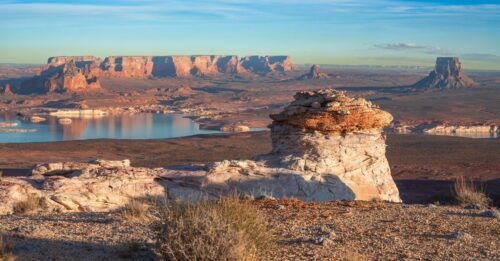
“Federal officials are sounding a major warning about the Colorado River system, saying long-term drought, record-low snowpack, and record-breaking heat are driving reservoir levels toward a dangerous threshold—threatening not only water deliveries across the West, but also hydropower generation. The Bureau of Reclamation says the Colorado River system is now at about 36% of capacity, an alarming figure that has prompted federal and state leaders to consider emergency-style actions. While low reservoir levels have been a concern for decades, water experts say this year is different because the region received little help from winter storms. “The causes of those declining water levels are multiple—it’s not one thing—but certainly this year we didn’t get any help from Mother Nature,” said Sarah Porter, a water policy expert at Arizona State University. … ” Read more from Arizona Family.
It’s a terrible year along the Colorado River — except for these fish
“A handful of massive, ancient fish species could emerge as the unlikely winners from the record-setting drought gripping the Colorado River that has sent states, farmers, cities and the federal government scrambling. The Trump administration announced Friday that it is planning to release an enormous amount of water from a reservoir upstream of Lake Powell as part of its emergency plan to head off a water and power disaster along the West’s most important river. To get to Lake Powell, that water must travel from Flaming Gorge Reservoir along the Utah-Wyoming border through a stretch of Utah’s Green River that is home to four species of endangered fish. Environmental advocates say that if the Interior Department times those releases to strategic periods of year, they could provide a major boost to the fish populations. … ” Read more from E&E News.
New Colorado River plans could harm native fish in Grand Canyon
“Environmental advocates are warning that recent changes to Colorado River management could seriously harm threatened fish in the Grand Canyon. Federal officials are tweaking the amount of water released from Lake Powell in an effort to keep water flowing normally through hydroelectric generators, but those changes may allow invasive species to pass downstream and hurt native fish that live there. It all has to do with the humpback chub, a species of fish that lives nowhere else on earth besides the Colorado River system. Named after a fleshy bump behind its head, the beleaguered species has become something of a folk mascot for the Colorado River, even inspiring a grassroots campaign to rename a Colorado baseball team. In 2021, the species was reclassified from “endangered” to “threatened,” but environmentalists said more work to protect the fish was still needed. Now, its most important habitat may face new threats. … ” Read more from KJZZ.
Commentary: Colorado River crisis: What Moab taught me about solving the impossible
, chair of the board of the Metropolitan Water District, writes, “Standing on the banks of the Colorado River near Moab, watching the last traces of 16 million tons of uranium tailings give way to open sky and cleared earth, I keep thinking about a Republican congressman from Utah and a Democratic congresswoman from Los Angeles — and what they understood about rivers that the seven states now locked in stalled post-2026 negotiations may learn from: The river doesn’t care who wins. As current chair of the Board of the Metropolitan Water District of Southern California, I’ve come here with former Congresswoman Grace Napolitano to mark the completion of the Moab uranium tailings cleanup — one of the most significant environmental remediation projects in the American West. Between 2000 and 2005, Grace and I worked to bring members of Congress to this site, to show them the pile of radioactive waste left by a former uranium-ore processing facility on the riverbank, threatening 30 million downstream water users and millions of acres of productive agriculture. Those visits built the coalitions that eventually secured the Department of Energy funding that made this cleanup possible. … ” Continue reading at the Moab Times-Independent.
Upstream Colorado River states call for federal mediation
“Representatives of the four upstream Colorado River states called Tuesday for the Interior Department’s Bureau of Reclamation to mediate talks among the Western states that are warring over a water-sharing deal for the drought-riddled waterway. “I think it’s worth us recommending that the seven states and Reclamation engage with us in a mediated process,” said Estevan López, New Mexico’s lead Colorado River negotiator and a former Obama-era Reclamation commissioner. “Every single state has said that litigation is not a good outcome; we ought to put our money where our mouth is,” he said, noting that talks have come down to the wire with rules governing the river set to expire at the end of August. “I think it would be worth all of us stepping back from this and seeking to get a mediated solution to solve this really difficult problem.” The request comes amid frustration from many state negotiators that the Trump administration has taken a hands-off approach to the high-stakes negotiations over the future of the 1,450-mile river that supplies water for cities, farms and industries from Wyoming to Mexico. … ” Read more from E&E News (sorry, subscription required).
Upper Colorado River Commission addresses water shortages in Colorado River Basin
“During the 316th Special Meeting on April 21, the Upper Colorado River Commission (UCRC), which includes Commissioners from Colorado, New Mexico, Utah and Wyoming, addressed ongoing water shortages across the Upper Basin amid worsening hydrologic conditions. Commissioners emphasized the dire situation at Lake Powell, which is the result of both a decade-long drought and a decades-long imbalance between releases and inflows. The UCRC urged that future operations at Lake Powell must reflect the available supply and encouraged Lower Basin states – Arizona, Nevada, and California – to rejoin negotiations to solve the Basin’s math problem, where uses are greater than the available supply in the Lower Basin. … ” Read more from the National Parks Traveler.
Colorado is bracing for significant water impact to the Colorado River
“Colorado is bracing for a significant water struggle, with Commissioner Rebecca Mitchell representing Colorado’s Upper Basin, recently visiting the Western Slope to discuss the Colorado River’s health. This year is marked as one of the worst for hydrology on record, driven by a lack of winter snow and critically low reservoir levels. The severe conditions stem from low snowpack and extreme temperatures in March, impacting not only Colorado but the entire Colorado River basin. Mitchell representing Colorado’s Upper Basin, described the situation as “dire.” She noted it “is a dire situation not just for Colorado, but the entire Colorado River basin, which spans seven states and two countries.” … ” Read more from Western Slope Now.
Colorado River states voice reluctant support for releases from Flaming Gorge
“Four upstream states in the Colorado River Basin, including Colorado, agreed to release up to 325 billion gallons of water out of a Wyoming reservoir to help one of the basin’s most important water supplies, Lake Powell. The lake’s water levels have fallen to historical lows after 20 years of prolonged drought, and this year’s record-poor snowpack is exacerbating an already tense situation. The Upper Basin states’ approval is the first step in finalizing the releases under a 2019 agreement to help the basin respond to extremely dry years. The Department of the Interior is expected to approve the plan this week after announcing the intended drought-response releases Friday. … ” Read more from the Colorado Sun.
Water to surge into drought-depleted Lake Powell but at costs elsewhere
“Canyons in eastern Utah will churn this spring with huge volumes of water — as much as 50,000 toilets flushing constantly at the same time — in a desperate attempt to maintain electricity generation for thousands of homes across much of the Western U.S. The Green and Colorado river flows might seem like a bounty of moisture in a parched desert of sandstone arches and prickly cacti, but in fact it’s just the opposite. After the driest winter on record, officials this spring want to raise the level of badly depleted Lake Powell on the Colorado River to keep its hydropower humming. To do so, they plan to eventually let out as much as a third of the water in Flaming Gorge Reservoir upstream on the Green River in Wyoming and Utah, which would exceed a record 2022 surge that kept electricity flowing. … ” Read more from SF Gate.
Assessing the impact of golf courses on water scarcity in the Colorado River Basin
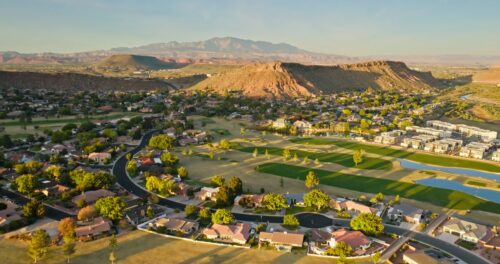
“In 2023, University of Delaware doctoral candidate Mehrnaz Haghdadi and doctoral student Nora Lucas headed to the Colorado River Basin to conduct fieldwork for Haghdadi’s research focused on indigenous water sovereignty. As they drove through the desert, they kept seeing patches of green rising from the arid landscape. Haghdadi, who is from Iran and had never seen a golf course in her home country, had absolutely no idea what she was looking at. “I’d never seen this much green in the desert before; it was something strange,” said Haghdadi, who, along with Lucas, studies in the Department of Geography and Spatial Sciences. “I couldn’t understand that the light green covered landscapes we kept seeing were golf courses in the middle of the desert. So, all the unique curiosities came after that, and I was wondering about where they get the water from.” Those unique curiosities turned into a paper, “Golf (dis)courses: A political ecology analysis of water usage in an arid area,” published in the journal Environment and Planning: Nature and Space. … ” Read more from the University of Deleware.
Gila County at the center of Arizona’s impending water war
“The environmental decay at San Carlos Lake serves as a grim preview of what state water officials describe as the “era of limits.” As of mid-April 2026, the reservoir has plummeted to a critical 1.93 percent capacity, with levels dropping roughly 0.5 percent every 10 days. This collapse coincides with a looming July 15 “dry-tap” date for the Town of Kearny, creating a perfect storm where legal seniority, aging infrastructure, and the expiration of Colorado River agreements converge. While larger metropolitan hubs prepare for a potential 77 percent loss of Colorado River water delivered via canal by the end of the year, Gila County’s groundwater reserves are increasingly being eyed as a source of interest to sustain urban growth. The regional crisis is no longer merely about a physical absence of water; it is a battle for legal fortification against urban encroachment. … ” Read more from the Silver Belt.
Kearny could run out of water by August amid drought, slashed supply
“The town of Kearny could use up its entire water allotment by August if current usage continues, leaving the community about 90 miles from Phoenix in a crisis. The town’s water supply was cut by roughly 85% due to ongoing drought conditions. Kearny normally receives about 600 acre-feet of water, but is now allocated only 77 acre-feet. The town uses an average of 280 acre-feet per year. “We will run out of water legally on August 1 at this point,” said Mayor Curtis Stacey. “There are 2,000 people here that I am responsible for.” The Gila River, which flows from San Carlos Lake, serves as Kearny’s water source. The supply is split among several eastern Arizona communities. Little snowpack in Arizona and New Mexico has left less water to distribute. … ” Read more from Arizona Family.
Arizona water agency regulations that restricted homebuilding were illegal, judge rules
“Arizona’s water agency acted illegally when it created new water regulations in 2024 that restricted homebuilding in the Phoenix area, a judge ruled Tuesday. In November 2024, the Arizona Department of Water Resources produced data showing the groundwater basin around the Phoenix metro area had low groundwater levels. ADWR stopped issuing certificates to housing developers for new projects that rely on groundwater as their sole source. The Homebuilders Association of Central Arizona filed a lawsuit against the department, accusing ADWR of overstepping its authority by creating new rules outside of the appropriate rulemaking channels. … ” Read more from KJZZ.
Nevada Supreme Court lets lawsuit over SNWA grass removal program proceed
“A legal challenge to the Southern Nevada Water Authority’s grass removal program is moving forward after the Nevada Supreme Court refused this week to shut down the lawsuit. The Water Authority had asked the state’s highest court to dissolve a lower court restraining order and dismiss the case entirely, calling it a “true emergency.” The justices declined to do so. … ” Read more from Channel 3.
In national water news today …
Farm runoff linked to elevated nitrate levels in drinking water serving more than 60 million Americans
“More than 60 million Americans get their water from sources contaminated with elevated levels of nitrate pollution, which is most likely coming from agricultural manure or fertilizer runoff, according to a new analysis. The report from the Environmental Working Group (EWG) used federal drinking water data and found that roughly 6,114 US water systems that serve roughly 62.1 million people had nitrate levels at or above 3 milligrams per liter (mg/L) in at least one test from 2021 to 2023. While the US Environmental Protection Agency (EPA) has a threshold of 10 mg/L for nitrates — which can be naturally occurring — in drinking water, the agency says that levels above 3 mg/L are indicative of manure or fertilizer runoff from large-scale farms or, less frequently, wastewater plant discharge. … ” Read more from The New Lede.
The President’s budget proposal slashes BLM staff, refuge and migratory bird funding, and much more
“Interior Secretary Doug Burgum spent Earth Day fielding questions from U.S. Senators as he defended deep cuts proposed by his agency to vast swaths of America’s public lands. President Trump’s proposed budget for 2027, released this month, includes many of the same cuts his office requested last year, like defunding the U.S. Geological Survey’s Ecosystems Mission Area that currently invests almost $700 million in university cooperative fish and wildlife units, and zeroing out the USDA’s Natural Resource Conservation Service. The proposed budget, if enacted by Congress, would take those staffing shortages to a whole different level, public land and wildlife advocates say. … ” Read more from Outdoor Life.
Fears over ‘God Squad’ derail endangered species bill
“Florida Republican lawmakers scuttled a planned House vote to advance a major overhaul of the Endangered Species Act, raising questions about whether the long-time GOP priority can still succeed. The development was a blow to House Natural Resources Committee Republicans who see the overhaul as one of their top priorities. They want to make sure protecting species doesn’t get in the way of energy projects and other development. Speaker Mike Johnson (R-La.) pulled the “ESA Amendments Act,” H.R. 1897, from consideration Wednesday and later explained he did so at the behest of “a few subsets of members.” “I’m trying to get a better understanding of that,” Johnson said Wednesday evening. “You can go to any of the Floridians, and they’ll tell you they have a lot of issues down there with some of the endangered species, and they just had concerns that we weren’t aware of in advance.” … ” Read more from E&E News.

