
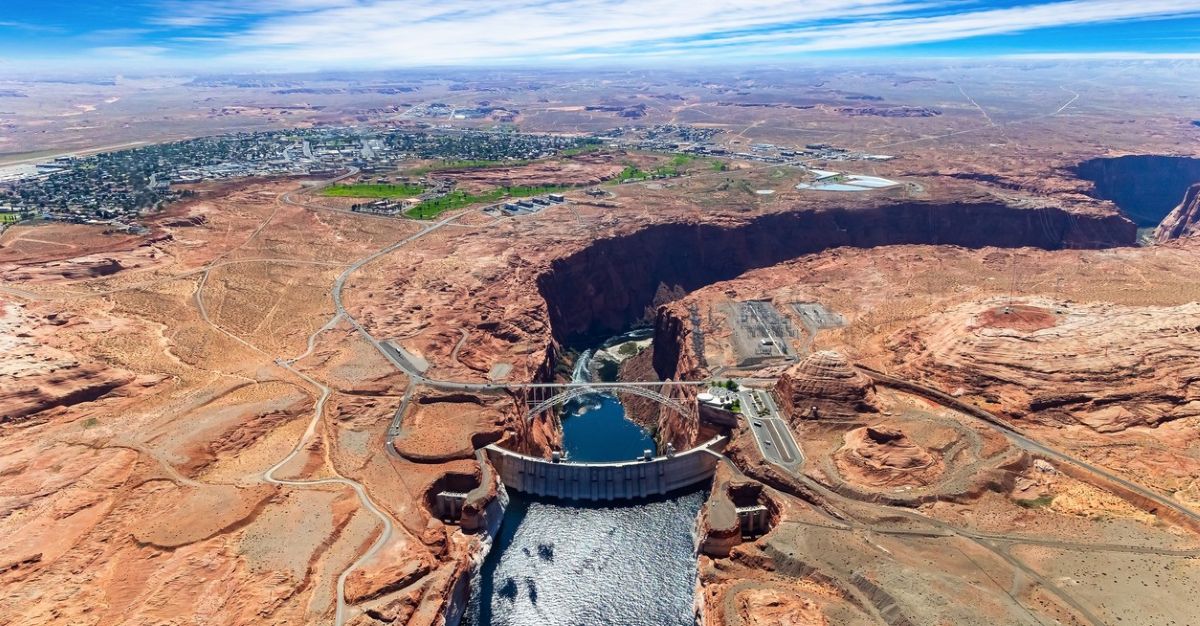
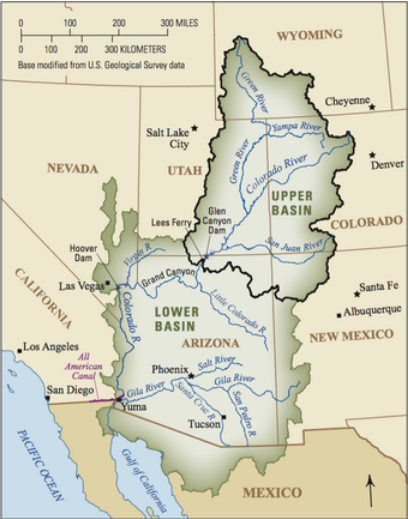
State officials and water managers from the seven states relying on the Colorado River have yet again failed to reach a consensus on future water cuts before a critical federal deadline. Despite months of negotiations aimed at preserving water levels in Lake Mead and Lake Powell, significant divides remain regarding how to share the burden of reduced flows. In response to the impasse, the Department of the Interior announced this morning that it is initiating the formal process to revise operating guidelines for the river, signaling federal intervention in the absence of a consensus-based state proposal. The following collection of news stories details the breakdown in talks, the specific points of contention between the Upper and Lower Basins, and what the federal government’s next steps mean for the region’s water supply.
Interior Department moves forward on guidelines for Colorado River absent full state consensus
The Department of the Interior is moving forward with the Post-2026 NEPA process to finalize operating guidelines for Colorado River reservoirs by Oct. 1, 2026. While the seven Basin States have not reached full consensus on an operating framework, the Department cannot delay action. Meeting this deadline is essential to ensure certainty and stability for the Colorado River system beyond 2026. “Negotiation efforts have been productive; we have listened to every state’s perspective and have narrowed the discussion by identifying key elements and issues necessary for an agreement. We believe that a fair compromise with shared responsibility remains within reach,” said Secretary of the Interior Doug Burgum. “I want to thank the governors of the seven Basin States for their constructive engagement and commitment to collaboration. We remain dedicated to working with them and their representatives to identify shared solutions and reduce litigation risk. Additionally, we will continue consultations with Tribal Nations and coordinate with Mexico to ensure we are prepared for Water Year 2027.” … Continue reading from the Department of the Interior.
As a Colorado River deadline passes, reservoirs keep declining
The leaders of seven states announced Friday, one day before a Trump administration deadline, that there is still no deal to share the diminishing waters of the Colorado River. That leaves the Southwest in a quagmire with uncertain repercussions while the river’s depleted reservoirs continue to decline. Former U.S. Interior Secretary Bruce Babbitt said in an interview with The Times that the impasse now appears so intractable that Trump administration officials should take a step back, abandon the current effort and begin all over again. Babbitt said he believes it would be a mistake for Interior Secretary Doug Burgum to “try to impose a long-term solution” by ordering major water cuts across the Southwest — which would likely set off a lengthy court battle. “We need a fresh start,” Babbitt said. “I believe that in the absence of a unanimous agreement, [the Interior Department] should renew the existing agreements for five years, and then we should start all over. We should scrap the entire process and invent a new one.” … Read more from the LA Times. | Read via Yahoo News.
Deadline looming for Colorado River agreement: Here’s how it could affect NorCal
… What does all of that have to do with us here in Northern California? We don’t get anything from the Colorado. People in the know told me, you can bet your bottom dollar that Southern California will look to us if it needs to increase its demand for water. … “In Northern California, we are just absolutely pulling for the folks on the Colorado River basin to come together and find a solution to help water supply for all seven basin states. But obviously the urban areas of Southern California need that water supply, and if they get that water supply, it takes pressure off of Northern California, and so we’re really pulling for them to come to an agreement,” said David Guy, president of the Northern California Water Association. … ” Read more from ABC 7.
Commentary: A shared river demands shared responsibility
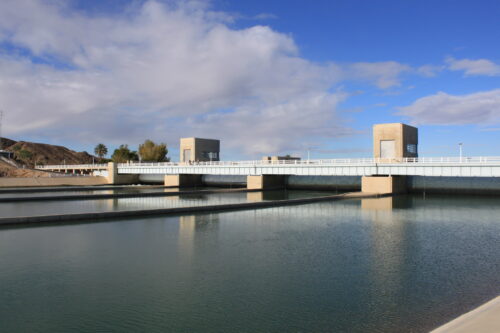
Imperial Irrigation District Director Karin Eugenio and GM Jamie Asbury write, “For the Imperial Valley, the stakes could not be higher. The Colorado River is our only water supply. It sustains more than 470,000 acres of farmland that produce roughly twothirds of the nation’s winter vegetables, directly supports one in six local jobs, and underpins food security far beyond Southern California. Protecting the river is not optional here—it is essential. As we approach the federal deadline in the post-2026 Colorado River planning process, clarity matters. February 14 is not a date for final decisions, nor does it trigger changes to water operations or delivery volumes. It is a planning target set by the U.S. Department of the Interior to identify a potential seven states agreement framework that could be used to refine the environmental analysis required by federal law. Any new operating framework would not take effect until later this Fall. What is at stake is whether the Basin States can come together to agree upon a durable, lawful path forward—or whether continued gridlock will force the federal government, and potentially the courts, to intervene. … ” Read more from the Holtville Tribune.
Former Metropolitan GM Jeff Kightlinger on why this round feels different
” … Gov. Gavin Newsom put out a joint statement on Friday with other Lower Basin leaders, Govs. Katie Hobbs of Arizona and Joe Lombardo of Nevada, acknowledging no deal is imminent and urging negotiators to keep working. But behind the public calls for unity, negotiators remain far apart. “They seem inclined to roll the dice a little bit and trust other outcomes rather than negotiating a deal,” said Jeff Kightlinger, the former general manager of Metropolitan Water District of Southern California, which delivers Colorado River supplies to 19 million people. Kightlinger, who was a key part of the landmark 2007 Colorado River agreement, is advising the Imperial Irrigation District, California’s other main user of Colorado River water, in the current negotiations. He spoke with POLITICO about how past mega-negotiations came together, what’s changed since then in politics and in the environment, and what will happen if there’s no deal. … ” Read the interview at Politico.
Colorado River: Tribes seek to be part of solution
“As the seven Colorado River Basin states seem unlikely to reach a water usage agreement by Feb. 14, tribes want more input in the new operating guidelines. … In the original 1922 Colorado River compact the only parties at the negotiating table were the seven basin states and the United States. None of the 30 Tribal nations who have claims to the river and its tributaries were present in negotiations. Thirty tribal nations have varying degrees of recognized water rights, with 22 Tribal Nations holding rights to use approximately 3.2 million acre-feet of Colorado river water annually. This equals approximately 25 percent of the basin’s annual water. There are currently 12 tribal nations with unresolved water right’s claims which once adjudicated or settled, would increase the total volume of water that must serve tribal nations. … ” Read more from Indian Country Today.
Arizona blasts Upper Basin states for refusing cuts as Colorado River talks fail
 Arizona Department of Water Resources Director Tom Buschatzke, the state’s chief negotiator, sharply criticized the four states in what is known as the Upper Basin — Colorado, New Mexico, Utah and Wyoming — for being adamantly opposed to making any cuts to water usage and stubbornly refusing to make even the smallest compromises. “In all this time, Arizona, California and Nevada have received one consistent message from our counterparts in the Upper Basin — there will be no firm commitment to reduce uses in the Upper Basin, no matter how dire the conditions of the river may be,” he said in a statement announcing the negotiations had ended. … Buschatzke said that the three Lower Basin states “began these discussions with a spirit of collaboration” and made numerous proposals, from dealing with evaporation of river water to increasing their water usage cuts to using a rolling average of the water flowing in the river to determine cuts for all seven states. Arizona has offered to reduce its Colorado River allocation by 27%, California by 10%, and Nevada by nearly 17%. All of them were rejected outright, he said, because the Upper Basin states won’t agree to any cuts and instead insist that the Lower Basin states feel all of the pain. “We have offered to do more,” Buschatzke said. “But we simply cannot take on the task of saving this precious river system on our own.” … ” Read more from the Arizona Mirror.
Nevada: Colorado River states miss deadline, compromise nowhere in sight
John Entsminger, Nevada’s lead negotiator and general manager of the Southern Nevada Water Authority, said negotiations between states have “yielded almost no headway” after years of being bogged down “by the same tired rhetoric and entrenched positions.” “The seven Colorado River Basin states have failed to reach an agreement to collectively protect our respective communities and economies in the face of almost certain reductions to our use of the river,” said Entsminger in a statement on Friday, ahead of the deadline. In recent years, Lower Basin states have undertaken significant conservation efforts and have reduced their consumption from 7.4 million acre-feet in 2015 to just over 6 million in 2024. In contrast, Upper Basin states have increased their usage in the past five years, from 3.9 million acre-feet in 2021 to 4.4 million in 2024. Governors for the river’s Lower Basin states – including Nevada’s Gov. Joe Lombardo – issued a joint statement reiterating their stance that all seven basin states should be required to cut water use under any new guidelines. … ” Read more from the Nevada Current.
Utah: Colorado River negotiations crumble as another deadline passes by
” … “Both the upper and lower river basin states insisted they’re acting in good faith and said they’ll keep talking. Utah Gov. Spencer Cox was optimistic, saying a solution is still within reach. “Utah is ready to make a deal,” Cox said in a prepared statement. “We will engage in good faith with partners who are committed to durable solutions, not soundbites.” … Utah’s primary negotiator said the upstream states pitched a method of sending water downstream based on the levels in Lake Powell on the Utah-Arizona border, but the two sides couldn’t agree on how much should be released to Nevada’s Lake Mead. They also sparred over which reservoirs would be managed under the new plan and how much water should part from upstream reservoirs like Flaming Gorge on the Utah-Wyoming line. “Their point that we’ve put nothing on the table, that couldn’t be further from the truth,” said Gene Shawcroft, Utah’s Colorado River commissioner. “I’m not going to get into a spitting match over this or that. We all have to have skin in the game, and that skin in the game is extremely painful.” ” … ” Read more from the Utah News Dispatch.
EXPLORE MORE COVERAGE:
- Another missed deadline casts doubt on Colorado River cooperation, from the New York Times
- No deal on Colorado River operations means federal takeover imminent, from the Courthouse News Service
- Colorado River states miss deadline on water-use cuts — as forecasts worsen, from the Arizona Daily Star
- ‘Posturing doesn’t fill the taps’: Open frustration as Colorado River deadline fails to produce 7-state agreement, from KLAS
- Utah: Colorado River states still locked in a stalemate over water allocations. Why?, from Deseret News
- Feds take over after Western states fail to strike Colorado River deal, from Straight Arrow News
Dry winter poses big water problem ahead at Lake Powell, maybe as soon as December
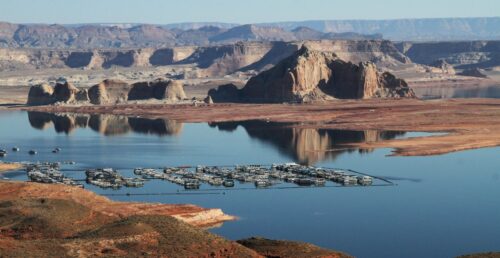 “An unusually dry winter is prompting federal officials to warn that Lake Powell could drop to critical levels earlier than expected, threatening production of electric power at Glen Canyon Dam as soon as December. The Bureau of Reclamation said inflow at Lake Powell could be far lower than projections last month. A lack of precipitation over the past month has reduced expectations for streamflow into the lake by 1.5 million acre feet (about 488 billion gallons). That loss is equivalent to almost 10% of normal streamflow into Lake Powell. And by March 2027, conditions at Lake Powell could potentially constrain water releases through the dam. It’s a warning about a problem that officials have known about for a long time, but it was only revealed publicly about three and a half years ago. … ” Read more from KLAS.
Meteorologist issues dire water warning for Upper Basin
A renowned meteorologist recently shared a dire message about the state of the upper Colorado River watershed, which is composed of Wyoming, Utah, Colorado and New Mexico, amid a prolonged snow drought across the region. “Even with average snow the rest of the season, we will NEVER make up the deficit in the upper Colorado River watershed,” The Weather Channel meteorologist Jim Cantore posted on X on Friday morning. “This could have serious power and water ramifications going forward.” … “Prior to this week, the amount of water locked up in the existing snow cover was close to a record minimum in Colorado and Utah. This zone constitutes a large part of the Colorado River basin, and with limited spring runoff available, it could be a major problem for summer water concerns on the river and man-made lakes,” AccuWeather senior meteorologist Brett Anderson told Newsweek in an email sent to reporters. … ” Read more from Newsweek.
STATEMENTS
Joint statement from Governor Gavin Newsom, Arizona Governor Katie Hobbs, and Nevada Governor Joe Lombardo
Friday, ahead of the federal deadline for Colorado River negotiations, Lower Basin Governors released the following joint statement:
“The federal deadline for a consensus agreement on managing the Colorado River after 2026 is passing for a second time without resolution. The stakes couldn’t be higher for our Lower Basin states of Arizona, California, and Nevada. Approximately 75% of the population, employment, and agricultural crop sales of the Colorado River Basin are in our states. This also includes 25 of the 30 sovereign Tribal Nations that live within the Basin.
Statement from JB Hamby, Colorado River Commissioner for California
For the past three years, California has worked in good faith with the seven basin states and the federal government to establish sustainable post-2026 operations for the Colorado River. The framework governing the river was built on hydrologic assumptions that no longer match reality. The 1922 Colorado River Compact requires the Upper Basin to deliver an average of 8.25 million acre-feet annually to the Lower Basin and Mexico. That delivery obligation is fixed in law, even when the river produces less water.
Statement from ADWR Director Tom Buschatzke, Arizona’s Colorado River negotiator
Throughout the negotiations of the post-2026 operating guidelines for the Colorado River, Arizona and its Lower Basin partners have offered numerous, good-faith compromises to the representatives of the Upper Basin states. In that time, virtually all of them have been rejected. We began these discussions with a spirit of collaboration. Two years ago, Arizona, California and Nevada offered to help stabilize the system and address evaporation and system losses. That was rejected as too little, too late. In all, representatives of the Lower Basin states have offered to respond to river shortages with substantial cuts to their Colorado River allocations: 27 percent for Arizona, 17 percent for Nevada and 10 percent for California. Not enough for the other states.
Statement from John Entsminger, Southern Nevada Water Authority General Manager and Nevada’s lead Colorado River negotiator
“The seven Colorado River Basin states have failed to reach an agreement to collectively protect our respective communities and economies in the face of almost certain reductions to our use of the river. As I talk with people throughout Southern Nevada, I hear their frustration that years of negotiations have yielded almost no headway in finding a path through these turbulent waters. As someone who has spent countless nights and weekends away from my family trying to craft a reasonable, mutually acceptable solution only to be confronted by the same tired rhetoric and entrenched positions, I share that frustration. “The hard truth is that Nevada cannot solve the Colorado River’s problems on our own. We receive only 1.8 percent of the river’s flows, so from a hydrological perspective we’re little more than a rounding error. The actions we have taken over the past two-plus decades are less about raising Lake Mead’s elevation than they are about protecting ourselves if things go from bad to worse.
Statement from the Upper Basin Governors
Today, Governors Jared Polis, Mark Gordon, Michelle Lujan Grisham and Spencer Cox released a statement on the ongoing Colorado River negotiations.
“We as Upper Basin states remain committed to working to reach a solution that works for each of the seven states, and all who rely on the Colorado River. We have come together in good faith throughout this process, and are putting every tool on the table available to us, including releases from our upstream reservoirs, meaningful voluntary conservation both now and in the future, and continued strict self-regulation of water supplies. Upper Basin water users live within the means of the River by adapting our uses every year based on available supplies. We continue pursuing a seven-state consensus, which would provide greater opportunity to pursue federal funding supporting conservation efforts and innovative water-saving technologies across the Basin. Together we can ensure a sustainable future for the river on which we all depend. We can and we must rise to this occasion.”

